



Tetrapleurodon spadiceus (Bean, 1887)
Mexican lamprey
ارفع صور و مقاطع فيديو
صور | صور قوقل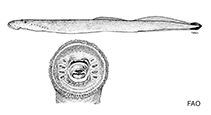 Tetrapleurodon spadiceus
صورة بواسطة FAO
صور | صور قوقل
صورة بواسطة FAO
التصنيف / الأسماء الأسماء الشائعة | مرادفات | Catalog of Fishes(جنس, الانواع) | ITIS | CoL | WoRMS | Cloffa
> Petromyzontiformes (Lampreys) > Petromyzontidae (Northern lampreys) > Lampetrinae
Etymology: Tetrapleurodon: tetra (Gr.) four; pleura, (Gr.) side, odon (Gr.), tooth. i.e., lateral teeth, referring to four enlarged teeth on each side of mouth of T. spadiceus (See ETYFish); spadiceus: Latin for light- or nut-brown, referring to its color (See ETYFish).
More on author: Bean.
Etymology: Tetrapleurodon: tetra (Gr.) four; pleura, (Gr.) side, odon (Gr.), tooth. i.e., lateral teeth, referring to four enlarged teeth on each side of mouth of T. spadiceus (See ETYFish); spadiceus: Latin for light- or nut-brown, referring to its color (See ETYFish).
More on author: Bean.
البيئة: الوسط / المنطقة المناخية / نطاق العمق / نطاق التوزيع البيئة
; المياه العذبة القاع; سمكة نهرية (Ref. 126106). Tropical; 21°N - 19°N
التوزيع الأقاليم | مناطق الفاو | النظام البيئي | الظهور | نقطة علي الخريطة | مقدمة | Faunafri
North America: Celio, Duero and Lerma rivers and Lake Chapala, Mexico.
الحجم / وزن / العمر
وصف مختصر مفاتيح التعريف | الوصف الخارجي | قياسات المظهر الخارجي
Adults: 18-31 cm TL. Body wet weight of individuals measuring 18.7-22.5 cm TL, 21.3-26.3 g. Body proportions, as percentage of TL [based on 54 specimens, TL range inferred to be roughly 18-31 cm TL, Álvarez del Villar (1966)]: prebranchial length, 10.9-15.7; branchial length, 8.2-13.6; trunk length, 41.0-50.3; tail length, 27.2-34.3. Trunk myomeres, 60-65. Dentition: supraoral lamina, 2 unicuspid teeth, but 20% of individuals had 1-2 additional unicuspid teeth on the bridge; infraoral lamina, 5-9 unicuspid teeth, of which 4-5 are large and 0-4 are small (84% of specimens possess both large and small cusps); 4 endolaterals on each side, exceptionally 3 or 5; endolateral formula, typically 2-2-2-2, rarely, one of the teeth is tricuspid; 3 rows of anterials; first row of anterials, 6 unicuspid teeth; 1 row of exolaterals; 1 rows of posterials; first row of posterials, 21 unicuspid teeth; transverse lingual lamina weakly u-shaped, 17-22 unicuspid teeth, the median one or two unicuspid teeth slightly enlarged; longitudinal lingual laminae parentheses-shaped, each with 24-25 unicuspid teeth. Velar tentacles, 19-21, with tubercles; the dorsal wings are long, reaching the median tentacle. Lateral line neuromasts unpigmented. Caudal fin pigmentation, 75% or more. Caudal fin shape, spade-like. Oral fimbriae, 109-136. Oral papillae, 13-27.
Body shape (shape guide): eel-like.
Body shape (shape guide): eel-like.
Freshwater (Ref. 89241). Found in streams, rivers, and lakes over substrates of firm mud, silt, and rock (Ref. 57533). Spawning habitat is a fast-flowing, clear-water stream with a stony substrate. Eggs hatch between the months of November and January and ammocoetes undergo metamorphosis at the end of three years (Ref. 89241). Ammocoete larval stage duration also cited as four years (Ref. 57533). Ammocoetes live in the mud and feed on plankton (algae of the genera Rhizosolenia, Pleurosigma, Pinularia, Stauroneis, Amphora, and Cocconema, filamentous Chlorophyceae, rotifers, ciliates, and occasionally euglenoid flagellates). The mean total length reached at the end of the first year of larval life is 83 mm; at the end of two years, 135 mm; and at the end of three years, 146 mm. During the rainy season (July) of their first year, ammocoetes exhibit a shrinkage in their total length. Metamorphosis occurs in April-August (Ref. 89241). Parasitic (Ref. 57533). Following metamorphosis, adults migrate to Lake Chapala or the Duero River (Lerma River Basin) where they live as ectoparasites of fishes (carp and catfish) for two years. The diet appears to be predominantly blood. A large number of scales of Moxostoma austrinum and either of Algansea popoche, Yuriria alta, or Y. chapalae, as well as possibly Chirostoma sp. has been found mixed with blood in the intestine of adults. Attacks on the small cyprinids and the atherinopsid almost certainly resulted in their death. Around late June, early July they begin to migrate upstream to the spawning grounds in the upper reaches of the Celio River and die after spawning. Nine individuals in spawning readiness were collected on 19 November (water temperature was about 20°C). Fecundity, 6,617-9,095 eggs/female. Egg diameter, 0.7-0.8 mm. Is presumed to kill a certain number of commercial fish species (Algansea popoche and Chirostoma sp.) in Lake Chapala (Ref. 89241).
دورة الحياة وسلوك التزاوج النضج | التكاثر | وضع البيض | بيض | الخصوبة | اليرقات
المرجع الرئيسي
قم بتحميل مراجعك | مراجع | المنظم | المتعاونين
Hardisty, M.W., 1986. A general introduction to lampreys. p. 19-84. In J. Holcík (ed.) The Freshwater fishes of Europe. Vol. 1, Part 1. Petromyzontiformes. AULA-Verlag GmbH, Wiesbaden. 313 p. (Ref. 12268)
حالة القائمة الحمراء للاتحاد الدولي لحفظ الطبيعة والموارد الطبيعية (Ref. 130435: Version 2025-2 (Global))
معرضه للخطر بشكل حرج (CR) (D); Date assessed: 04 December 2018
CITES
Not Evaluated
خطر للأنسان
Harmless
استخدامات بشرية
FAO - Publication: search | FishSource |
مزيد من المعلومات
علم البيئة الغذائية
المواد الغذائية (الفرائس)
التركيبة الغذائية
استهلاك الأغذية
الحصص الغذائية
مفتريسات
المواد الغذائية (الفرائس)
التركيبة الغذائية
استهلاك الأغذية
الحصص الغذائية
مفتريسات
الديناميكيات السكانية
معاملات النمو
الحد الأقصى للأعمار/الأحجام
علاقة الطول بالوزن.
علاقة الطول بالطول.
الطول- الترددات
التحويل الجماعي
توظيف
الوفرة
معاملات النمو
الحد الأقصى للأعمار/الأحجام
علاقة الطول بالوزن.
علاقة الطول بالطول.
الطول- الترددات
التحويل الجماعي
توظيف
الوفرة
التشريح
منطقة الخياشيم
الدماغ
الأوتوليث
منطقة الخياشيم
الدماغ
الأوتوليث
علم وظائف الأعضاء
تكوين الجسم
المغذيات
استهلاك الأوكسجين
نوع السباحة
سرعة السباحة
الأصباغ البصرية
صوت السمك
الأمراض والطفيليات
السمية (LC50s)
تكوين الجسم
المغذيات
استهلاك الأوكسجين
نوع السباحة
سرعة السباحة
الأصباغ البصرية
صوت السمك
الأمراض والطفيليات
السمية (LC50s)
جيني
الوراثة
جيني
التغاير
التوريث
التنوع الوراثي
الوراثة
جيني
التغاير
التوريث
التنوع الوراثي
ذات الصلة بالبشر
أنظمة الاستزراع المائي
ملامح تربية الأحياء المائية
سلالات
حالات سيغواتيرا
طوابع بريدية وعملات معدنية ومتنوعة
أنظمة الاستزراع المائي
ملامح تربية الأحياء المائية
سلالات
حالات سيغواتيرا
طوابع بريدية وعملات معدنية ومتنوعة
أدوات
كتاب إلكتروني | دليل الميدان | مفاتيح التعريف | معالج تردد الطول-التردد | أداة تاريخ الحياة | نقطة علي الخريطة |
Catch-MSY |
تقارير خاصة
البحث عن صيانت الأحواض المائيه | التحقق من وجود صفحات حقائق الأنواع | البحث عنا حقائق حول الأحواض المائيه
تنزيل XML
مصادر علي الأنترنت
AFORO (otoliths) | Aquatic Commons | BHL | Cloffa | Websites from users | البحث في مراقبي الأسماك | CISTI | Catalog of Fishes: جنس, الانواع | DiscoverLife | ECOTOX | FAO - Publication: search | Faunafri | Fishipedia | Fishtrace | GloBI | Google Books | Google Scholar | Google | IGFA World Record | OneZoom | Open Tree of Life | Otolith Atlas of Taiwan Fishes | PubMed | Reef Life Survey | Socotra Atlas | TreeBase | شجرة الحياة | Wikipedia: ذهب, بحث | World Records Freshwater Fishing | سجلات علم الحيوانات
تقديرات تستند إلى النماذج
مؤشر التنوع الشُعبي الوراثي (مرجع 82804): PD50 = 0.7500 [Uniqueness, from 0.5 = low to 2.0 = high].
Bayesian length-weight: a=0.00132 (0.00060 - 0.00290), b=2.99 (2.80 - 3.18), in cm total length, based on LWR estimates for this (Sub)family-body shape (Ref. 93245).
مستوى غذائي (مرجع 69278): 4.2 ±0.73 se; based on food items.
المرونه (مرجع 120179): منخفض, الحد الزمني الأدني لتضاعف عدد أفراد المجتمع 4.5-14 سنة (Semelparous species, assuming tm (= tmax) > 4).