



Masukkan pemerhatian anda di Fish Watcher
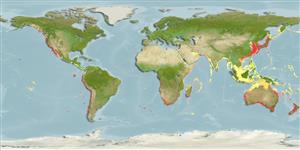
| Native range | All suitable habitat | Point map | Year 2050 |
|
| This map was computer-generated and has not yet been reviewed. |
| Sardinops sagax AquaMaps Data sources: GBIF OBIS |
muatnaik fotos/gambar dan video
Gambar | video | Perangko, koin, dll. | imej Google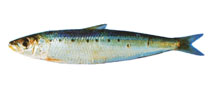 Sardinops sagax
foto/gambar oleh SeaFIC
Gambar | video | Perangko, koin, dll. | imej Google
foto/gambar oleh SeaFIC
klasifikasi / Nama Nama-nama umum | Sinonim (persamaan) | Catalog of Fishes(Marga, Jenis) | ITIS | CoL | WoRMS | Cloffa
> Clupeiformes (Herrings) > Alosidae (Shads and Sardines)
Etymology: Sardinops: Latin and Greek, sarda = sardine; name related to the island of Sardinia + Greek, ops = appearance (Ref. 45335); sagax: From the latin word 'sagax' which means of quick perception, acute, or alert (Ref. 6885).
More on author: Jenyns.
Etymology: Sardinops: Latin and Greek, sarda = sardine; name related to the island of Sardinia + Greek, ops = appearance (Ref. 45335); sagax: From the latin word 'sagax' which means of quick perception, acute, or alert (Ref. 6885).
More on author: Jenyns.
Lingkungan: lingkungan / zona iklim / kisaran kedalaman / jangkauan distribusi Ekologi
laut pelagic-neritic; oceanodromus (Ref. 138310); kisaran kedalaman 0 - 200 m (Ref. 188). Subtropical; 9°C - 21°C (Ref. 6390); 61°N - 47°S, 145°W - 180°E (Ref. 36641)
Penyebaran Wilayah | Daerah-daerah FAO | Ekosistem | Kemunculan | peta titik | Introduksi | Faunafri
Indo-Pacific: southern Africa to eastern Pacific (Ref. 27267). Three lineages were confirmed through cluster and parsimony analyses of haplotypic divergences: southern Africa (ocellatus) and Australia (neopilchardus); Chile (sagax) and California (caeruleus); and, Japan (melanostictus) (Ref. 36641).
Panjang pada saat jatuh tempo pertama / Ukuran / Berat / umur
Kematangan: Lm 9.0 range ? - ? cm
Max length : 39.5 cm SL jantan/; (Ref. 9291); common length : 20.0 cm SL jantan/; (Ref. 188); Berat maksimum terpublikasi: 486.00 g (Ref. 6885); Umur maksimum dilaporkan: 25 Tahun (Ref. 188)
Max length : 39.5 cm SL jantan/; (Ref. 9291); common length : 20.0 cm SL jantan/; (Ref. 188); Berat maksimum terpublikasi: 486.00 g (Ref. 6885); Umur maksimum dilaporkan: 25 Tahun (Ref. 188)
deskripsi pendek Kunci identifiaksi (pengenalan) | Morfologi | Morfometrik
Duri punggung (Keseluruhan (total)) : 0; duri punggung lunak (Keseluruhan (total)) : 13 - 21; Duri dubur: 0; Sirip dubur lunak: 12 - 23; vertebrata, bertulang belakang: 48 - 54. Body cylindrical and elongate; ventral part of operculum with clear cut bony striae radiating downwards; belly rounded with ventral scutes; back blue green; flanks white, with 1 to 3 series of dark spots along the middle (Ref. 55763). The radiating bony striae on the operculum distinguish this species from all other clupeids in the area. The radiating bony striae on the operculum distinguish this fish from all other clupeids in the area. In New Zealand the species appears to grow larger (21.3 cm standard length; cf. 19.7 cm), has slightly larger eggs and a higher mean number of vertebrae (50.52; cf. 49 to 50.08 in various samples) (Ref. 859).
Body shape (shape guide): fusiform / normal; Cross section: compressed.
Body shape (shape guide): fusiform / normal; Cross section: compressed.
Neritic (Ref. 11230). A coastal species that forms large schools (Ref. 188). Adults occur at temperatures ranging from 16° to 23°C in summer and from 10° to 18°C in winter. They feed mainly on planktonic crustaceans. Young fish feed on zooplankton such as copepod and adults on phytoplankton (Ref. 39882). Oviparous, with pelagic eggs, and pelagic larvae (Ref. 265). Possibly can live up to 25 years (Ref. 265). In the California region, pilchards make northward migrations early in summer and travel back south again in autumn. With each year of life, the migration becomes farther (Ref. 6885). Marketed fresh, frozen or canned. Utilized mainly for fish meal; but also eaten fried and broiled (Ref. 9988). Main source of landing: NE Pacific: Mexico (Ref. 4931).
Siklus hidup dan perilaku kawin Kematangan | Reproduksi, perkembang biakan | Pemijahan | telur-telur | Fekunditas | Larva
Oviparous (Ref. 265). In the Gulf of California, some individuals spawn in their first year, but most in their second (Ref. 188).
In Australia (as S. neopilchardus), this species breeds in spring and summer in southern part of range, and in summer and autumn in northern part, apparently related to seasonal movement of the limiting 14°C and 21°C isotherms, then autumn to early spring (Ref. 6390). It was believed that individual Australian pilchards only spawn once or twice in a season (Ref. 26422, 26424), but research on related species suggests that they may spawn a number of times (Ref. 6882). Batch fecundities range from about 10,000 eggs in 13 cm long females to about 45,000 eggs in females of about 18 cm (Ref. 26420).
rujukan utama
Unggah referensi Anda | Acuan | Koordinator | mitra
Whitehead, P.J.P., 1985. FAO Species Catalogue. Vol. 7. Clupeoid fishes of the world (suborder Clupeoidei). An annotated and illustrated catalogue of the herrings, sardines, pilchards, sprats, shads, anchovies and wolf-herrings. FAO Fish. Synop. 125(7/1):1-303. Rome: FAO. (Ref. 188)
Status IUCN Red List (Ref. 130435: Version 2025-2 (Global))
kurang bimbang (LC) ; Date assessed: 18 July 2018
CITES
Not Evaluated
ancaman kepada manusia
Harmless
penggunaan manusia
Perikanan: bernilai komersial tinggi; umpan: usually
FAO - Perikanan: pendaratan, profail spesis; Publication: search | FishSource | Laut di Sekitar Kita
informasi lanjut
Dinamika populasi
Parameter pertumbuhan
Maks. usia / ukuran
Panjang-berat rel.
Panjang-panjang rel.
ukuran frekuensi
Konversi massa
pemulihan
Kelimpahan
Parameter pertumbuhan
Maks. usia / ukuran
Panjang-berat rel.
Panjang-panjang rel.
ukuran frekuensi
Konversi massa
pemulihan
Kelimpahan
Siklus hidup
Reproduksi, perkembang biakan
Kematangan
Kedewasaan / insang rel.
Fekunditas
Pemijahan
Agregasi pemijahan
telur-telur
pekembangan telor
Larva
Dinamika larva
Reproduksi, perkembang biakan
Kematangan
Kedewasaan / insang rel.
Fekunditas
Pemijahan
Agregasi pemijahan
telur-telur
pekembangan telor
Larva
Dinamika larva
Fisiologi
Komposisi tubuh
Nutrisi
Konsumsi oksigen
Jenis renang
Kecepatan berenang
Pigmen visual
Suara ikan
Penyakit & Parasit
Toksisitas (LC50)
Komposisi tubuh
Nutrisi
Konsumsi oksigen
Jenis renang
Kecepatan berenang
Pigmen visual
Suara ikan
Penyakit & Parasit
Toksisitas (LC50)
Yang berhubungan dengan manusia
Sistem akuakultur
profil budidaya air
Strain
Kasus Ciguatera
Perangko, koin, dll.
Sistem akuakultur
profil budidaya air
Strain
Kasus Ciguatera
Perangko, koin, dll.
Alat, peralatan
E-book | Penuntun lapangan | Kunci identifiaksi (pengenalan) | tanda freqkuenci panjang | peringkat sejarah hidup | peta titik |
Tangkap-MSY |
laporan khas
muat turun XML
Sumber internet
AFORO (otoliths) | Aquatic Commons | BHL | Cloffa | Websites from users | semak peneliti ikan | CISTI | Catalog of Fishes: Marga, Jenis | DiscoverLife | ECOTOX | FAO - Perikanan: pendaratan, profail spesis; Publication: search | Faunafri | Fishipedia | Fishtrace | GloBI | Google Books | Google Scholar | Google | IGFA World Record | Pangkalan data nasional | OceanAdapt | OneZoom | Open Tree of Life | OsteoBase: skull, spine | Otolith Atlas of Taiwan Fishes | Akuarium publik | PubMed | Reef Life Survey | Socotra Atlas | TreeBase | Tree of Life | Wikipedia: pergi, Cari | World Records Freshwater Fishing | Catatan Zoologi
Estimasi berdasarkan model
Suhu yang disukai (Acuan 123201): 9.5 - 25.2, mean 17.9 °C (based on 938 cells).
Indeks keanekaragaman filogenetik (Acuan 82804): PD50 = 1.0000 [Uniqueness, from 0.5 = low to 2.0 = high].
Bayesian length-weight: a=0.00776 (0.00640 - 0.00942), b=3.10 (3.05 - 3.15), in cm total length, based on LWR estimates for this species (Ref. 93245).
Tingkat Trofik (Acuan 69278): 2.8 ±0.1 se; based on diet studies.
Generation time: 2.6 (2.2 - 2.8) years. Estimated as median ln(3)/K based on 58 growth studies.
Daya lenting (Acuan 120179): sedang, Waktu penggandaan populasi minimum 1.4 - 4.4 tahun (K=0.45; tm=2; tmax=13-25; Fec=10,000).
Prior r = 0.54, 95% CL = 0.36 - 0.81, Based on 6 full stock assessments.
Nutrisi (Ref. 124155): Calcium = 185 [49, 457] mg/100g; Iron = 2.12 [0.69, 5.66] mg/100g; Protein = 20.5 [17.9, 22.6] %; Omega3 = 0.762 [0.385, 1.536] g/100g; Selenium = 43.3 [13.0, 137.7] μg/100g; VitaminA = 14.8 [2.9, 62.4] μg/100g; Zinc = 1.85 [0.57, 3.60] mg/100g (wet weight); based on nutrient studies.