



Adicionar o seu Fotografias e vídeos
Fotografias | Imagem do Google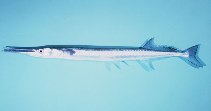 Tylosurus acus
Fotografia de Randall, J.E.
Fotografias | Imagem do Google
Fotografia de Randall, J.E.
Classificação / Nomes Nomes comuns | Sinónimos | Catalog of Fishes(Género, Espécies) | ITIS | CoL | WoRMS | Cloffa
> Beloniformes (Needle fishes) > Belonidae (Needlefishes)
Etymology: Tylosurus: Greek, tylos = callus + Greek, oura = tail (Ref. 45335).
More on author: Lacepède.
Etymology: Tylosurus: Greek, tylos = callus + Greek, oura = tail (Ref. 45335).
More on author: Lacepède.
Taxonomic Remarks
The 3 subspecies were upraised at species rank, as provisionally accepted names, , until more works are conducted on T. acus susbepcies to fix their status.
Ambiente: milieu / zona climática / intervalo de profundidade / gama de distribuição Ecologia
marinhas associadas(os) a recifes; intervalo de profundidade 0 - ? m. Subtropical; 43°N - , 98°W - 36°E
Distribuição Territórios | Áreas FAO | Ecossistemas | Ocorrências | Mapa dos pontos | Introduções | Faunafri
Western Atlantic: Massachusetts, USA to Brazil. Eastern Atlantic: off Morocco and the Mediterranean (Ref. 5505).
Comprimento na primeira maturidade / Tamanho / Peso / Idade
Maturidade: Lm 47.3, range 45 - 50 cm
Max length : 153 cm TL macho/indeterminado; (Ref. 26340); common length : 90.0 cm SL macho/indeterminado; (Ref. 3129); peso máx. Publicado: 3.7 kg (Ref. 4699)
Max length : 153 cm TL macho/indeterminado; (Ref. 26340); common length : 90.0 cm SL macho/indeterminado; (Ref. 3129); peso máx. Publicado: 3.7 kg (Ref. 4699)
Descrição breve Chaves de identificação | Morfologia | Morfometria
Espinhos dorsais (total) : 0; Raios dorsais moles (total) : 20 - 27; Espinhos anais: 0; Raios anais moles: 20 - 24; Vértebras: 90 - 95. Diagnosis: body elongate; upper and lower jaws extremely long, forming a stout beak armed with very sharp teeth; gill rakers absent (Ref. 57228, 90102). Nostrils in depression before eyes (nasal pit); pelvic fins abdominal; 20-26 dorsal-fin rays; anal fin short, 9.7-11.7 times in body length; small, black lateral keel on either sides of caudal peduncle; caudal fin deeply forked (Ref. 57228).
Body shape (shape guide): elongated; Cross section: circular.
Body shape (shape guide): elongated; Cross section: circular.
Inhabits oceanic and neritic waters (Ref. 26340). Feeds on small fishes. Oviparous (Ref. 205). Eggs may be found attached to objects in the water by tendrils on the egg's surface (Ref. 205). Although sold fresh and salted, its market is limited due to the green-colored flesh (Ref. 5217). Circumglobal in tropical seas and divisible into four subspecies (Ref 90102).
Ciclo de vida e comportamento de acasalamento Maturidade | Reprodução | Desova | Ovos | Fecundidade | Larvas
Referência principal
Carregar as suas referências | Referências | Coordenador : Collette, Bruce B. | Colaboradores
Robins, C.R. and G.C. Ray, 1986. A field guide to Atlantic coast fishes of North America. Houghton Mifflin Company, Boston, U.S.A. 354 p. (Ref. 7251)
Categoria na Lista Vermelha da IUCN (Ref. 130435: Version 2025-2 (Global))
Preocupação menor (LC) ; Date assessed: 10 July 2012
CITES
Not Evaluated
Ameaça para o homem
Traumatogenic (Ref. 26235)
Utilização humana
Pescarias: espécies comerciais; peixe desportivo: sim
FAO - Publication: search | FishSource |
Mais informação
Ecologia Trófica
Produtos alimentares (presas)
Composição da dieta
Consumo alimentar
Rações alimentares
Predadores
Produtos alimentares (presas)
Composição da dieta
Consumo alimentar
Rações alimentares
Predadores
Dinâmica das populações
Parâmetros de crescimento
Idades / tamanhos máximos
Comprimento-peso rel.
Comprimento-comprimento rel.
Frequência de comprimento
Conversão de massa
Recrutamento
Abundância
Parâmetros de crescimento
Idades / tamanhos máximos
Comprimento-peso rel.
Comprimento-comprimento rel.
Frequência de comprimento
Conversão de massa
Recrutamento
Abundância
Ciclo de vida
Reprodução
Maturidade
Maturidade/Rel. das guelras
Fecundidade
Desova
Agregações de desova
Ovos
Desenvolvimento dos ovos
Larvas
Dinâmica larvar
Reprodução
Maturidade
Maturidade/Rel. das guelras
Fecundidade
Desova
Agregações de desova
Ovos
Desenvolvimento dos ovos
Larvas
Dinâmica larvar
Anatomia
Área branquial
Cérebro
Otólitos
Área branquial
Cérebro
Otólitos
Fisiologia
Composição corporal
Nutrientes
Consumo de oxigénio
Tipo de natação
Velocidade de natação
Pigmentos visuais
Som de peixe
Doenças e Parasitas
Toxicidade (LC50s)
Composição corporal
Nutrientes
Consumo de oxigénio
Tipo de natação
Velocidade de natação
Pigmentos visuais
Som de peixe
Doenças e Parasitas
Toxicidade (LC50s)
Genética
genoma
Genética
Heterozigotia
Hereditariedade
Diversidade genética
genoma
Genética
Heterozigotia
Hereditariedade
Diversidade genética
Relacionado com o ser humano
Sistemas de aquacultura
Perfis para aquacultura
Estirpes
Casos de Ciguatera
Selos, moedas, diversos.
Sistemas de aquacultura
Perfis para aquacultura
Estirpes
Casos de Ciguatera
Selos, moedas, diversos.
Ferramentas
E-book | Guia de campo | Chaves de identificação | Ferramenta auxiliar de frequências de comprimento | Ferramenta sobre a história de vida | Mapa dos pontos |
Captura-MSY |
Relatórios especiais
Descarregue XML
Fontes da internet
AFORO (otoliths) | Aquatic Commons | BHL | Cloffa | Websites from users | Consultar FishWatcher | CISTI | Catalog of Fishes: Género, Espécies | DiscoverLife | ECOTOX | FAO - Publication: search | Faunafri | Fishipedia | Fishtrace | GloBI | Google Books | Google Scholar | Google | IGFA World Record | Bases de dados nacionais | OneZoom | Open Tree of Life | Otolith Atlas of Taiwan Fishes | PubMed | Reef Life Survey | Socotra Atlas | TreeBase | Árvore da vida | Wikipedia: ir para, procurar | World Records Freshwater Fishing | Registo zoológico
Estimativas baseadas em modelos
Temperatura preferida (Ref. 123201): 20 - 28.5, mean 26.5 °C (based on 1282 cells).
Índice de diversidade filogenética (Ref. 82804): PD50 = 0.5010 [Uniqueness, from 0.5 = low to 2.0 = high].
Bayesian length-weight: a=0.00093 (0.00049 - 0.00177), b=3.10 (2.94 - 3.26), in cm total length, based on LWR estimates for this species & (Sub)family-body (Ref. 93245).
Nível Trófico (Ref. 69278): 4.5 ±0.6 se; based on diet studies.
Generation time: 2.5 ( na - na) years. Estimated as median ln(3)/K based on 1 growth studies.
Resiliência (Ref. 120179): Elevada, tempo mínimo de duplicação da população menor que 15 meses (Preliminary K or Fecundity.).
Nutrientes (Ref. 124155): Calcium = 33 [8, 135] mg/100g; Iron = 0.498 [0.212, 1.475] mg/100g; Protein = 17.2 [14.4, 20.3] %; Omega3 = 0.16 [0.06, 0.47] g/100g; Selenium = 16.9 [6.9, 46.1] μg/100g; VitaminA = 102 [14, 608] μg/100g; Zinc = 0.447 [0.259, 0.773] mg/100g (wet weight);