Пластиножаберные (акулы и скаты) (sharks and rays) >
Squatiniformes (Angel sharks) >
Squatinidae (Angel sharks)
Etymology: Squatina: Latin for skate, which angel sharks superficially resemble, presumably tautonymous with Squalus squatina Linnaeus 1758 (no species mentioned) (See ETYFish); californica: -ica (L.), belonging to: California (USA), referring to type locality in San Francisco Bay (See ETYFish).
More on author: Ayres.
Issue
It is sympatric with S. armata.
Environment: milieu / climate zone / пределы глубины / distribution range
экология
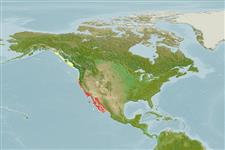
морской демерсальный; пределы глубины 3 - 205 m (Ref. 9253), usually 3 - 46 m (Ref. 54903). Subtropical; 52°N - 7°N, 130°W - 77°W
Eastern Pacific: Canada to Gulf of California, south to Panama.
Length at first maturity / Size / Вес / Возраст
половая зрелость: Lm 97.0, range 86 - 108 cm
Max length : 152 cm TL самец/пол неопределен; (Ref. 247); наибольший возраст (опубликованны данные): 35 годы (Ref. 6147)
Краткое описание
определительные ключи | морфология | морфометрия
колючие лучи спинного плавника (общее число) : 0; колючие лучи анального плавника: 0.
Body shape (shape guide): other.
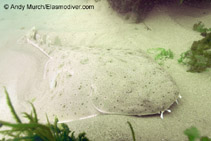
Found on the continental shelf and littoral areas (Ref. 247).A sluggish and inactive species that buries itself in sand or mud (Ref. 247). Also found around rocks, heads of submarine canyons, and sometimes near kelp forests (Ref. 247). Feeds on bottom and epibenthic fishes, including croakers, California halibut, and squid (Ref. 247). Ovoviviparous (Ref. 50449). Can whip up its head and snap very quickly when touched, provoked, harassed, or speared, and can inflict painful lacerations (Ref. 247).
Ovoviviparous, embryos feed solely on yolk (Ref. 50449).
Compagno, L.J.V., 1984. FAO Species Catalogue. Vol. 4. Sharks of the world. An annotated and illustrated catalogue of shark species known to date. Part 1 - Hexanchiformes to Lamniformes. FAO Fish. Synop. 125(4/1):1-249. Rome, FAO. (Ref. 247)
Статус Красного Списка МСОП (Ref. 130435: Version 2025-1)
Использование человеком
рыболовство: коммерческий
дополнительная информация
инструменты
Специальные отчеты
Скачать в формате XML
ресурсы в Интернет
Estimates based on models
Preferred temperature (ссылка
123201): 12.5 - 25.9, mean 21 °C (based on 60 cells).
Phylogenetic diversity index (ссылка
82804): PD
50 = 0.5000 [Uniqueness, from 0.5 = low to 2.0 = high].
Bayesian length-weight: a=0.00676 (0.00295 - 0.01551), b=3.07 (2.88 - 3.26), in cm total length, based on LWR estimates for this Genus-body shape (Ref.
93245).
Trophic level (ссылка
69278): 4.1 ±0.4 se; based on diet studies.
устойчивость к внешним воздействиям (ссылка
120179): очень низкий, минимальное время удвоения популяции более 14 лет (K=0.15-0.16; tm=8-13; tmax=35; Fec=6).
Fishing Vulnerability (Ref.
59153): High to very high vulnerability (67 of 100).
🛈
Nutrients (Ref.
124155): Calcium = 17.5 [3.6, 86.6] mg/100g; Iron = 0.795 [0.206, 2.275] mg/100g; Protein = 19.9 [17.8, 21.8] %; Omega3 = 0.363 [0.162, 0.801] g/100g; Selenium = 26.5 [7.5, 76.0] μg/100g; VitaminA = 9.99 [3.53, 27.74] μg/100g; Zinc = 0.421 [0.203, 0.760] mg/100g (wet weight);