



Cyphocharax biocellatus Vari, Sidlauskas & Le Bail, 2012
Ανεβάστε το φωτογραφίες και Βίντεο
Google image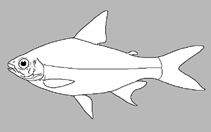 No image available for this species;
drawing shows typical species in Curimatidae.
Google image
drawing shows typical species in Curimatidae.
Ταξινόμηση / Ονόματα Κοινά ονόματα | Συνώνυμα | Catalog of Fishes(Γένος, Είδη) | ITIS | CoL | WoRMS | Cloffa
> Characiformes (Characins) > Curimatidae (Toothless characins)
Etymology: Cyphocharax: Greek, kyphos = curved, humpback + Greek, charax = a marine fish without identification (Ref. 45335); biocellatus: The specific name is derived from the Latin bi, meaning two, and ocellatus, meaning having little eyes, in reference to the two small dark spots on the lateral surface of the body in the species, one under the dorsal fin and the second on the middle of the caudal peduncle.
More on authors: Vari, Sidlauskas & LeBail.
Etymology: Cyphocharax: Greek, kyphos = curved, humpback + Greek, charax = a marine fish without identification (Ref. 45335); biocellatus: The specific name is derived from the Latin bi, meaning two, and ocellatus, meaning having little eyes, in reference to the two small dark spots on the lateral surface of the body in the species, one under the dorsal fin and the second on the middle of the caudal peduncle.
More on authors: Vari, Sidlauskas & LeBail.
Περιβάλλον: περιβάλλον / κλιματική ζώνη / εύρος βάθους / εύρος διανομής Οικολογία
; Γλυκού νερού βενθοπελαγικό. Tropical
Κατανομή Εδάφη | Περιοχές FAO | Οικοσυστήματα | Παρουσίες | Σημειακός χάρτης | Εισαγωγές | Faunafri
South America: Marowijne River/Maroni River system in eastern Suriname and western French Guiana, and the Mana basin in French Guiana.
Μέγεθος / Βάρος / Ηλικία
Σύντομη περιγραφή Κλείδες προσδιορισμού | Μορφολογία | Μορφομετρία
Μαλακές ραχιαίες ακτίνες (συνολικά) : 12; Μαλακές εδρικές ακτίνες: 10; Σπόνδυλοι: 31 - 32. Can be diagnosed from all congeners by the possession in all but the smallest examined specimens of a midlateral spot of dark pigmentation in the region ventral to the dorsal fin, with the spot when present ranging in intensity from a diffuse concentration of dark chromatophores in smaller specimens to a distinct black spot in the larger examined individuals. Can be further separated from many congeners by its pigmentation features which include the presence of a dark, midlateral somewhat longitudinally-ovoid spot on the posterior portion of the caudal peduncle and scales overlying the basal portions of the middle caudal-fin rays; the absence of a series of dark stripes running between the scale rows; the lack of a patch of dark pigmentation on the dorsal fin; the hyaline or lightly speckled adipose fin. Further differs meristically from various other congeners in the number of lateral line scales 29 to 31; the number of scales above the lateral line 5; the number of scales below the lateral line 4 or 5, and the number of vertebrae 31 or 32 (Ref. 90234).
Body shape (shape guide): elongated.
Body shape (shape guide): elongated.
The type locality of the holotype is a side channel of Litani River that isolated a small, elongate, forested island. The channel dominantly consists of shallow cataracts over a bedrock substrate strewn with boulders in the upper portions and a small, shallow (less than 2 m deep) backwater over a sand substrate in the downstream portion. The channel margins are composed of shallow pockets of slackwater habitat, often with submerged vegetation and shaded by overhanging bank vegetation extending into the water. Found in shallow (0.50 m deep) tributary to the main river in an area with relatively rapid water flow (around 1m/s) and principally sandy substrate with some rocky bars and large pieces of dead wood (Ref. 90234).
Κύκλος ζωής και συμπεριφορά ζευγαρώματος Γεννητική Ωρίμανση | Αναπαραγωγή | Γεννοβολία | Αβγά | Γονιμότητα | Προνύμφες
Κύρια αναφορά
Ανεβάστε τις αναφορές σας | Αναφορές | Συντονιστής : Vari, Richard P. | Συνεργάτες
Vari, R.P., B.L. Sidlauskas and P.-Y. Le Bail, 2012. New species of Cyphocharax (Ostariophysi: Characiformes: Curimatidae) from Suriname and French Guiana and a discussion of curimatid diversity on the Guiana Shield. Cybium 36(1):63-69. (Ref. 90234)
Κατάσταση Κόκκινου Καταλόγου IUCN (Ref. 130435: Version 2025-2 (Global))
Near Threatened (NT) (B1b(iii,v)); Date assessed: 12 March 2023
CITES
Not Evaluated
Απειλή για τον άνθρωπο
Harmless
Ανθρώπινες χρήσεις
αλιεία: χωρίς ενδιαφέρον
FAO - Publication: search | FishSource |
Περισσότερες πληροφορίες
Τροφική Οικολογία
Τρόφιμα (θηράματα)
Σύσταση δίαιτας
Κατανάλωση τροφής
Μερίδες τροφίμων
Θηρευτές
Τρόφιμα (θηράματα)
Σύσταση δίαιτας
Κατανάλωση τροφής
Μερίδες τροφίμων
Θηρευτές
Οικολογία
Οικολογία
Οικολογία
Πληθυσμιακή δυναμική
Παράμετροι Αύξησης
Μέγιστες ηλικίες / μεγέθη
Μήκος-βάρος σχετ.
Μήκος-μήκος rel.
Μήκος-συχνότητες
Μετατροπή μάζας
Στρατολόγηση
Αφθονία
Παράμετροι Αύξησης
Μέγιστες ηλικίες / μεγέθη
Μήκος-βάρος σχετ.
Μήκος-μήκος rel.
Μήκος-συχνότητες
Μετατροπή μάζας
Στρατολόγηση
Αφθονία
Κύκλος ζωής
Αναπαραγωγή
Γεννητική Ωρίμανση
Ωριμότητα / Gills rel.
Γονιμότητα
Γεννοβολία
Συγκεντρώσεις αναπαραγωγής
Αβγά
Ανάπτυξη αυγών
Προνύμφες
Δυναμική προνυμφών
Αναπαραγωγή
Γεννητική Ωρίμανση
Ωριμότητα / Gills rel.
Γονιμότητα
Γεννοβολία
Συγκεντρώσεις αναπαραγωγής
Αβγά
Ανάπτυξη αυγών
Προνύμφες
Δυναμική προνυμφών
Ανατομία
Επιφάνεια βραγχίων
Εγκέφαλος
Ωτόλιθος
Επιφάνεια βραγχίων
Εγκέφαλος
Ωτόλιθος
Φυσιολογία
Σύνθεση σώματος
Θρεπτικά συστατικά
Κατανάλωση οξυγόνου
Τύπος κολύμβησης
Ταχύτητα κολύμβησης
Οπτικές χρωστικές ουσίες
Ήχος ψαριών
Ασθένειες & παράσιτα
Τοξικότητα (LC50)
Σύνθεση σώματος
Θρεπτικά συστατικά
Κατανάλωση οξυγόνου
Τύπος κολύμβησης
Ταχύτητα κολύμβησης
Οπτικές χρωστικές ουσίες
Ήχος ψαριών
Ασθένειες & παράσιτα
Τοξικότητα (LC50)
Γενετική
Γονιδίωμα
Γενετική
Ετεροζυγωτία
Κληρονομικότητα
Γενετική ποικιλομορφία
Γονιδίωμα
Γενετική
Ετεροζυγωτία
Κληρονομικότητα
Γενετική ποικιλομορφία
Ανθρώπινη σχέση
Συστήματα υδατοκαλλιέργειας
Προφίλ υδατοκαλλιεργειών
Στελέχοι
Περιπτώσεις Ciguatera
Γραμματόσημα, νομίσματα, διάφορα.
Συστήματα υδατοκαλλιέργειας
Προφίλ υδατοκαλλιεργειών
Στελέχοι
Περιπτώσεις Ciguatera
Γραμματόσημα, νομίσματα, διάφορα.
Εργαλεία
Ηλεκτρονικό βιβλίο | Οδηγός πεδίου | Ανάλυση κατά μήκος συνθέσεων | Εργαλείο ιστορίας ζωής | Σημειακός χάρτης |
Catch-MSY |
Ειδικές εκθέσεις
Έλεγχος για συντήρηση ενυδρείου | Ελέγξτε για ενημερωτικά δελτία ειδών | Ελέγξτε για ενημερωτικά δελτία υδατοκαλλιέργειας
Λήψη XML
Διαδικτυακές πηγές
AFORO (otoliths) | Aquatic Commons | BHL | Cloffa | Websites from users | Check FishWatcher | CISTI | Catalog of Fishes: Γένος, Είδη | DiscoverLife | ECOTOX | FAO - Publication: search | Faunafri | Fishipedia | Fishtrace | GloBI | Google Books | Google Scholar | Google | IGFA World Record | OneZoom | Open Tree of Life | Otolith Atlas of Taiwan Fishes | PubMed | Reef Life Survey | Socotra Atlas | TreeBase | Δέντρο Ζωής | Wikipedia: Go, αναζήτηση | World Records Freshwater Fishing | Zoobank | Zoological Record