



Προσθέστε την παρατήρησή σας στο Fish Watcher
| Native range | All suitable habitat | Point map | Year 2050 |

|
| This map was computer-generated and has not yet been reviewed. |
| Lophiodes endoi AquaMaps Data sources: GBIF OBIS |
Ανεβάστε το φωτογραφίες και Βίντεο
Φωτογραφίες | Google image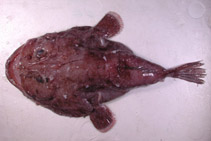 Lophiodes endoi
Εικόνα από Shao, K.T.
Φωτογραφίες | Google image
Εικόνα από Shao, K.T.
Ταξινόμηση / Ονόματα Κοινά ονόματα | Συνώνυμα | Catalog of Fishes(Γένος, Είδη) | ITIS | CoL | WoRMS | Cloffa
> Lophiiformes (Anglerfishes) > Lophiidae (Goosefishes)
Etymology: Lophiodes: Greek, lophos = crest + Greek, suffix oides = similar to (Ref. 45335); endoi: Lophiodes endoi is named in honor of Dr. Hiromitsu Endo, Associate Professor of Faculty of Science, Kochi University, in recognition of his excellent work in ichthyology, his friendship, and for supplying specimens for this study.
Eponymy: Dr Hiromitsu Endo (d: 1964) of the Laboratory of Marine Biology is a Professor (since 1996) in the Faculty of Science, Kochi University, and Curator there. [...] (Ref. 128868), visit book page.
Etymology: Lophiodes: Greek, lophos = crest + Greek, suffix oides = similar to (Ref. 45335); endoi: Lophiodes endoi is named in honor of Dr. Hiromitsu Endo, Associate Professor of Faculty of Science, Kochi University, in recognition of his excellent work in ichthyology, his friendship, and for supplying specimens for this study.
Eponymy: Dr Hiromitsu Endo (d: 1964) of the Laboratory of Marine Biology is a Professor (since 1996) in the Faculty of Science, Kochi University, and Curator there. [...] (Ref. 128868), visit book page.
Περιβάλλον: περιβάλλον / κλιματική ζώνη / εύρος βάθους / εύρος διανομής Οικολογία
Θαλασσινό(ά) βενθοπελαγικό; εύρος βάθους 261 - 750 m (Ref. 79601). Temperate
Κατανομή Εδάφη | Περιοχές FAO | Οικοσυστήματα | Παρουσίες | Σημειακός χάρτης | Εισαγωγές | Faunafri
Western Pacific: off Japan, Taiwan and Australia. Collected from southeastern Japan (Okinawa trough, Tosa Bay, and Kyushu–Palau Ridge) at depth range 261–600 m. In Taiwanese waters this species is usually captured together with Lophiodes mutilus at depths of about 280–310 m, and some may range deeper. Specimens were collected from the Tasman Sea of southeastern Australia at depths of 300–750 m, and a series of photographs were taken of a specimen at a depth of 288 m at Greenwell Point, New South Wales, Australia, by an underwater vehicle (K. Aitken, personal communication, 20 March 2005). Two specimens were collected from the northwest shelf off Australia at depths of 492–520 m (Ref. 79601).
Μέγεθος / Βάρος / Ηλικία
Γεννητική Ωρίμανση: Lm ? range ? - ? cm
Max length : 38.0 cm SL αρσενικό/απροσδιόριστο; (Ref. 79601)
Max length : 38.0 cm SL αρσενικό/απροσδιόριστο; (Ref. 79601)
Σύντομη περιγραφή Κλείδες προσδιορισμού | Μορφολογία | Μορφομετρία
A species of the Lophiodes mutilus group differing from congeners by the following characters: a rounded esca with paler tip; third dorsal spine bearing a pair of black tendrils located at two-thirds of illicial length; 18–22 (mainly 20–21) pectoral fin rays; a relatively short head (33.4–39.6% SL); a relatively short illicium (16.5–26.7% SL); a relatively short third dorsal spine (30.0–42.3% SL); fifth dorsal spine relatively long, when folded back reaching base of third dorsal fin ray, and anterior frontal spine enlarged (Ref. 79601).
Tail cylindrical, somewhat depressed, tapering posteriorly; eye large; gill openings extending in front of pectoral fins; both maxilla and frontal ridge smooth, without knobs; frontal divided into three spines, anterior one enlarged, directed forward, sometimes divided into two sub-spines; sphenotic with two spines, inner spine well developed, straight and directed upward; inner frontal spine present in specimens smaller than 300 mm and reduced in specimens larger than 300 mm; single interopercular spine; parietal spine present at either side of third dorsal spine base, reduced in larger specimens; hyomandibula with two spines, anterior spine smaller, becoming blunt with three knobs in larger specimens; humeral spine well developed with three to four spines. All dorsal fin spines, except for the third, devoid of tendrils; second to sixth dorsal spines bearing a tiny dark bulb at tip in most specimens; illicium lightly pigmented, relatively short (16.5–26.7% SL), when folded back reaching third dorsal spine base, reaching sphenotic spines in larger specimens; esca a rounded bulb, slightly darker than illicium, tip pale; second dorsal spine slightly longer than illicium, when folded back reaching between third dorsal spine base and end of neurocranium; third dorsal spine relatively short (30.0–42.3% SL), bearing one pair of darkly pigmented tendrils at about two-thirds its length, when folded back reaches third dorsal fin ray base, reaching origin of soft dorsal fin in larger specimens; fourth dorsal spine absent; fifth dorsal spine relatively long, when folded back reaching base of third dorsal fin ray, reaching origin of soft dorsal fin in larger specimens; sixth dorsal spine very short, when folded back not reaching origin of dorsal fin, embedded under skin in larger specimens. Anal fin extending beyond caudal fin base in smaller specimens, reaching caudal fin base in larger specimens (Ref. 79601).
Coloration in life: based on a series of underwater photographs of a male specimen taken from Greenwell Point, New South Wales, Australia: dorsal surface pale brown with numerous medium-sized, diffuse light blue or gray patches; illicium paler; esca darker at base and paler at tip; some darker patches associated with head spines and upper jaw; pectoral fin margin pale, dorsal surface with some diffuse pale blue spots (Ref. 79601).
Body shape (shape guide): short and / or deep.
Body shape (shape guide): short and / or deep.
Κύκλος ζωής και συμπεριφορά ζευγαρώματος Γεννητική Ωρίμανση | Αναπαραγωγή | Γεννοβολία | Αβγά | Γονιμότητα | Προνύμφες
Κύρια αναφορά
Ανεβάστε τις αναφορές σας | Αναφορές | Συντονιστής : Ho, Hsuan-Ching | Συνεργάτες
Ho, H.-C. and K.-T. Shao, 2008. A new species of anglerfish (Lophiidae: Lophiodes) from the western Pacific. Ichthyol. Res. 55(4):367-373. (Ref. 79601)
Κατάσταση Κόκκινου Καταλόγου IUCN (Ref. 130435: Version 2025-2 (Global))
Least Concern (LC) ; Date assessed: 12 August 2019
CITES
Not Evaluated
Απειλή για τον άνθρωπο
Harmless
Ανθρώπινες χρήσεις
FAO - Publication: search | FishSource |
Περισσότερες πληροφορίες
Τροφική Οικολογία
Τρόφιμα (θηράματα)
Σύσταση δίαιτας
Κατανάλωση τροφής
Μερίδες τροφίμων
Θηρευτές
Τρόφιμα (θηράματα)
Σύσταση δίαιτας
Κατανάλωση τροφής
Μερίδες τροφίμων
Θηρευτές
Οικολογία
Οικολογία
Οικολογία
Πληθυσμιακή δυναμική
Παράμετροι Αύξησης
Μέγιστες ηλικίες / μεγέθη
Μήκος-βάρος σχετ.
Μήκος-μήκος rel.
Μήκος-συχνότητες
Μετατροπή μάζας
Στρατολόγηση
Αφθονία
Παράμετροι Αύξησης
Μέγιστες ηλικίες / μεγέθη
Μήκος-βάρος σχετ.
Μήκος-μήκος rel.
Μήκος-συχνότητες
Μετατροπή μάζας
Στρατολόγηση
Αφθονία
Κύκλος ζωής
Αναπαραγωγή
Γεννητική Ωρίμανση
Ωριμότητα / Gills rel.
Γονιμότητα
Γεννοβολία
Συγκεντρώσεις αναπαραγωγής
Αβγά
Ανάπτυξη αυγών
Προνύμφες
Δυναμική προνυμφών
Αναπαραγωγή
Γεννητική Ωρίμανση
Ωριμότητα / Gills rel.
Γονιμότητα
Γεννοβολία
Συγκεντρώσεις αναπαραγωγής
Αβγά
Ανάπτυξη αυγών
Προνύμφες
Δυναμική προνυμφών
Ανατομία
Επιφάνεια βραγχίων
Εγκέφαλος
Ωτόλιθος
Επιφάνεια βραγχίων
Εγκέφαλος
Ωτόλιθος
Φυσιολογία
Σύνθεση σώματος
Θρεπτικά συστατικά
Κατανάλωση οξυγόνου
Τύπος κολύμβησης
Ταχύτητα κολύμβησης
Οπτικές χρωστικές ουσίες
Ήχος ψαριών
Ασθένειες & παράσιτα
Τοξικότητα (LC50)
Σύνθεση σώματος
Θρεπτικά συστατικά
Κατανάλωση οξυγόνου
Τύπος κολύμβησης
Ταχύτητα κολύμβησης
Οπτικές χρωστικές ουσίες
Ήχος ψαριών
Ασθένειες & παράσιτα
Τοξικότητα (LC50)
Γενετική
Γονιδίωμα
Γενετική
Ετεροζυγωτία
Κληρονομικότητα
Γενετική ποικιλομορφία
Γονιδίωμα
Γενετική
Ετεροζυγωτία
Κληρονομικότητα
Γενετική ποικιλομορφία
Ανθρώπινη σχέση
Συστήματα υδατοκαλλιέργειας
Προφίλ υδατοκαλλιεργειών
Στελέχοι
Περιπτώσεις Ciguatera
Γραμματόσημα, νομίσματα, διάφορα.
Συστήματα υδατοκαλλιέργειας
Προφίλ υδατοκαλλιεργειών
Στελέχοι
Περιπτώσεις Ciguatera
Γραμματόσημα, νομίσματα, διάφορα.
Εργαλεία
Ηλεκτρονικό βιβλίο | Οδηγός πεδίου | Ανάλυση κατά μήκος συνθέσεων | Εργαλείο ιστορίας ζωής | Σημειακός χάρτης |
Catch-MSY |
Ειδικές εκθέσεις
Έλεγχος για συντήρηση ενυδρείου | Ελέγξτε για ενημερωτικά δελτία ειδών | Ελέγξτε για ενημερωτικά δελτία υδατοκαλλιέργειας
Λήψη XML
Διαδικτυακές πηγές
AFORO (otoliths) | Aquatic Commons | BHL | Cloffa | Websites from users | Check FishWatcher | CISTI | Catalog of Fishes: Γένος, Είδη | DiscoverLife | ECOTOX | FAO - Publication: search | Faunafri | Fishipedia | Fishtrace | GloBI | Google Books | Google Scholar | Google | IGFA World Record | Εθνικές βάσεις δεδομένων | OneZoom | Open Tree of Life | Otolith Atlas of Taiwan Fishes | PubMed | Reef Life Survey | Socotra Atlas | TreeBase | Δέντρο Ζωής | Wikipedia: Go, αναζήτηση | World Records Freshwater Fishing | Zoobank | Zoological Record
Εκτιμήσεις βάσει μοντέλων
Προτιμώμενη θερμοκρασία (Αναφ. 123201): 7 - 12.7, mean 9.3 °C (based on 150 cells).
Δείκτης φυλογενετικής ποικιλότητας (Αναφ. 82804): PD50 = 0.5000 [Uniqueness, from 0.5 = low to 2.0 = high].
Bayesian length-weight: a=0.01905 (0.00877 - 0.04141), b=3.01 (2.82 - 3.20), in cm total length, based on LWR estimates for this (Sub)family-body shape (Ref. 93245).
Τροφικό Επίπεδο (Αναφ. 69278): 4.5 ±0.8 se; based on size and trophs of closest relatives
Ελαστικότητα (Αναφ. 120179): Μεσαίο(α), ελάχιστος χρόνος για διπλασιασμό πληθυσμού 1,4 - 4,4 έτη (Preliminary K or Fecundity.).