



Ανεβάστε το φωτογραφίες και Βίντεο
Google image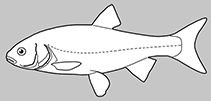 No image available for this species;
drawing shows typical species in Leuciscidae.
Google image
drawing shows typical species in Leuciscidae.
Ταξινόμηση / Ονόματα Κοινά ονόματα | Συνώνυμα | Catalog of Fishes(Γένος, Είδη) | ITIS | CoL | WoRMS | Cloffa
> Cypriniformes (Carps) > Leuciscidae (Minnows) > Leuciscinae
Etymology: Alburnus: From the city of Al Bura, where the fish was known (Ref. 45335); leobergi: Named after Leo S. Bergi who first realized that there are different shemayas in the Black and Azov Sea basin.
Eponymy: Lev (Leo) Semionovitch (Semenovich) Berg (1876–1950). (See Berg) (Ref. 128868), visit book page.
More on authors: Freyhof & Kottelat.
Etymology: Alburnus: From the city of Al Bura, where the fish was known (Ref. 45335); leobergi: Named after Leo S. Bergi who first realized that there are different shemayas in the Black and Azov Sea basin.
Eponymy: Lev (Leo) Semionovitch (Semenovich) Berg (1876–1950). (See Berg) (Ref. 128868), visit book page.
More on authors: Freyhof & Kottelat.
Περιβάλλον: περιβάλλον / κλιματική ζώνη / εύρος βάθους / εύρος διανομής Οικολογία
; Γλυκού νερού; Υφάλμυρο βενθοπελαγικό. Temperate
Κατανομή Εδάφη | Περιοχές FAO | Οικοσυστήματα | Παρουσίες | Σημειακός χάρτης | Εισαγωγές | Faunafri
Europe: Sea of Azov basin in Russia and Ukraine. Landlocked population in Tsimlyansk Reservoir (Don drainage).
Μέγεθος / Βάρος / Ηλικία
Γεννητική Ωρίμανση: Lm ? range ? - ? cm
Max length : 40.3 cm TL αρσενικό/απροσδιόριστο; (Ref. 75106)
Max length : 40.3 cm TL αρσενικό/απροσδιόριστο; (Ref. 75106)
Σύντομη περιγραφή Κλείδες προσδιορισμού | Μορφολογία | Μορφομετρία
Differs from other species of shemayas by the combination of the following characters: origin of anal fin about 1½ -2½ scales behind dorsal-fin base; anal fin with 15-17½ branched rays; gill rakers 24-28; length of gill raker at angle between upper and lower limbs of first gill arch 30-50% of opposite inner gill filament; lateral line scales 54-64 + 4-5; ventral keel exposed for 4-6 scales in front of anus; head length 21-23% SL; predorsal length 55-57% SL; caudal peduncle depth 9-11% SL,1.7-2.0 times in its length; eye diameter 4.7-5.5% SL, 1.4-1.5 times in interorbital distance; absence of faint grey midlateral stripe; in adult spawners, base of paired fins grey; and presence of numerous small tubercles in nuptial males (Ref. 75106).
Body shape (shape guide): fusiform / normal.
Body shape (shape guide): fusiform / normal.
Inhabit lower reaches of rivers, coastal lakes, estuaries, and open sea. Occur close to surface and tolerate salinities up to 12 ppt at the sea. Adults predominantly prey on planktonic crustaceans, terrestrial insects, and small fish. Larvae and young juveniles feed on zooplankton, algae, and insect larvae. Undertake migration for long distances, up to upper reaches of streams in piedmont and montane zones. Spawns in rivers or streams with heavy current on gravel bottom. Landlocked population breeds in reservoir tributaries. Adults migrate back to the sea soon after spawning to forage while young juveniles move downriver in autumn of same year or next spring. Commonly hybridizes with Squalius cephalus. Populations sharply declined in the early and middle 20th century due to the constructed dams that hindered in reaching the spawning grounds. Remaining populations spawn below these dams (Ref. 59043).
Κύκλος ζωής και συμπεριφορά ζευγαρώματος Γεννητική Ωρίμανση | Αναπαραγωγή | Γεννοβολία | Αβγά | Γονιμότητα | Προνύμφες
Anadromous populations begin to enter rivers during autumn (September in Kuban) and move upstream during winter and/or in spring. Males assemble and wait at the spawning grounds for ripe females, which arrive later. Lay sticky eggs which adhere on pebbles or stones. Adults migrate back to the sea soon after spawning to forage while young juveniles move downriver in autumn of same year or next spring (Ref. 59043).
Κύρια αναφορά
Ανεβάστε τις αναφορές σας | Αναφορές | Συντονιστής | Συνεργάτες
Freyhof, J. and M. Kottelat, 2007. Review of the Alburnus mento species group with description of two new species (Teleostei: Cyprinidae). Ichthyol. Explor. Freshwat. 18(3):213-225. (Ref. 75106)
Κατάσταση Κόκκινου Καταλόγου IUCN (Ref. 130435: Version 2025-2 (Global))
Ευάλωτο (VU) (A2c); Date assessed: 26 April 2022
CITES
Not Evaluated
Απειλή για τον άνθρωπο
Harmless
Ανθρώπινες χρήσεις
FAO - Publication: search | FishSource |
Περισσότερες πληροφορίες
Τροφική Οικολογία
Τρόφιμα (θηράματα)
Σύσταση δίαιτας
Κατανάλωση τροφής
Μερίδες τροφίμων
Θηρευτές
Τρόφιμα (θηράματα)
Σύσταση δίαιτας
Κατανάλωση τροφής
Μερίδες τροφίμων
Θηρευτές
Οικολογία
Οικολογία
Οικολογία
Πληθυσμιακή δυναμική
Παράμετροι Αύξησης
Μέγιστες ηλικίες / μεγέθη
Μήκος-βάρος σχετ.
Μήκος-μήκος rel.
Μήκος-συχνότητες
Μετατροπή μάζας
Στρατολόγηση
Αφθονία
Παράμετροι Αύξησης
Μέγιστες ηλικίες / μεγέθη
Μήκος-βάρος σχετ.
Μήκος-μήκος rel.
Μήκος-συχνότητες
Μετατροπή μάζας
Στρατολόγηση
Αφθονία
Κύκλος ζωής
Αναπαραγωγή
Γεννητική Ωρίμανση
Ωριμότητα / Gills rel.
Γονιμότητα
Γεννοβολία
Συγκεντρώσεις αναπαραγωγής
Αβγά
Ανάπτυξη αυγών
Προνύμφες
Δυναμική προνυμφών
Αναπαραγωγή
Γεννητική Ωρίμανση
Ωριμότητα / Gills rel.
Γονιμότητα
Γεννοβολία
Συγκεντρώσεις αναπαραγωγής
Αβγά
Ανάπτυξη αυγών
Προνύμφες
Δυναμική προνυμφών
Ανατομία
Επιφάνεια βραγχίων
Εγκέφαλος
Ωτόλιθος
Επιφάνεια βραγχίων
Εγκέφαλος
Ωτόλιθος
Φυσιολογία
Σύνθεση σώματος
Θρεπτικά συστατικά
Κατανάλωση οξυγόνου
Τύπος κολύμβησης
Ταχύτητα κολύμβησης
Οπτικές χρωστικές ουσίες
Ήχος ψαριών
Ασθένειες & παράσιτα
Τοξικότητα (LC50)
Σύνθεση σώματος
Θρεπτικά συστατικά
Κατανάλωση οξυγόνου
Τύπος κολύμβησης
Ταχύτητα κολύμβησης
Οπτικές χρωστικές ουσίες
Ήχος ψαριών
Ασθένειες & παράσιτα
Τοξικότητα (LC50)
Γενετική
Γονιδίωμα
Γενετική
Ετεροζυγωτία
Κληρονομικότητα
Γενετική ποικιλομορφία
Γονιδίωμα
Γενετική
Ετεροζυγωτία
Κληρονομικότητα
Γενετική ποικιλομορφία
Ανθρώπινη σχέση
Συστήματα υδατοκαλλιέργειας
Προφίλ υδατοκαλλιεργειών
Στελέχοι
Περιπτώσεις Ciguatera
Γραμματόσημα, νομίσματα, διάφορα.
Συστήματα υδατοκαλλιέργειας
Προφίλ υδατοκαλλιεργειών
Στελέχοι
Περιπτώσεις Ciguatera
Γραμματόσημα, νομίσματα, διάφορα.
Εργαλεία
Ηλεκτρονικό βιβλίο | Οδηγός πεδίου | Ανάλυση κατά μήκος συνθέσεων | Εργαλείο ιστορίας ζωής | Σημειακός χάρτης |
Catch-MSY |
Ειδικές εκθέσεις
Έλεγχος για συντήρηση ενυδρείου | Ελέγξτε για ενημερωτικά δελτία ειδών | Ελέγξτε για ενημερωτικά δελτία υδατοκαλλιέργειας
Λήψη XML
Διαδικτυακές πηγές
AFORO (otoliths) | Aquatic Commons | BHL | Cloffa | Websites from users | Check FishWatcher | CISTI | Catalog of Fishes: Γένος, Είδη | DiscoverLife | ECOTOX | FAO - Publication: search | Faunafri | Fishipedia | Fishtrace | GloBI | Google Books | Google Scholar | Google | IGFA World Record | OneZoom | Open Tree of Life | Otolith Atlas of Taiwan Fishes | PubMed | Reef Life Survey | Socotra Atlas | TreeBase | Δέντρο Ζωής | Wikipedia: Go, αναζήτηση | World Records Freshwater Fishing | Zoobank | Zoological Record
Εκτιμήσεις βάσει μοντέλων
Δείκτης φυλογενετικής ποικιλότητας (Αναφ. 82804): PD50 = 0.5000 [Uniqueness, from 0.5 = low to 2.0 = high].
Bayesian length-weight: a=0.00661 (0.00315 - 0.01385), b=3.13 (2.96 - 3.30), in cm total length, based on LWR estimates for this Genus-body shape (Ref. 93245).
Τροφικό Επίπεδο (Αναφ. 69278): 2.7 ±0.3 se; based on size and trophs of closest relatives
Ελαστικότητα (Αναφ. 120179): Μεσαίο(α), ελάχιστος χρόνος για διπλασιασμό πληθυσμού 1,4 - 4,4 έτη (Assuming Fec < 10,000).