



Thêm quan sát của bạn vào Fish Watcher
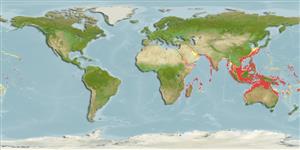
| Native range | All suitable habitat | Point map | Year 2050 |
|
| This map was computer-generated and has not yet been reviewed. |
| Neotrygon kuhlii AquaMaps Data sources: GBIF OBIS |
Tải lên của bạn hình ảnh Và Video
Các tranh (Ảnh) | Video | Google image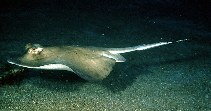 Neotrygon kuhlii
Hình ảnh của Randall, J.E.
Các tranh (Ảnh) | Video | Google image
Hình ảnh của Randall, J.E.
Phân loại / Tên Tên thường gặp | Các synonym ( Các tên trùng) | Catalog of Fishes(Giống, Các loài) | ITIS | CoL | WoRMS | Cloffa
Lớp phụ Cá sụn (cá mập và cá đuối) (sharks and rays) > Myliobatiformes (Stingrays) > Dasyatidae (Stingrays) > Neotrygoninae
Eponymy: Dr Heinrich Kuhl (1797–1821) was a German naturalist and zoologist. [...] (Ref. 128868), visit book page.
More on authors: Müller & Henle.
Eponymy: Dr Heinrich Kuhl (1797–1821) was a German naturalist and zoologist. [...] (Ref. 128868), visit book page.
More on authors: Müller & Henle.
Taxonomic Remarks
Formerly a widespread species, but forms a species complex with three other species. Information (data from references) collated undergoing modifications (in progress).
Môi trường: môi trường / vùng khí hậu / Mức độ sâu / phạm vi phân phối Sinh thái học
biển cùng sống ở rạn san hô; mức độ sâu 0 - 170 m (Ref. 89055), usually ? - 90 m (Ref. 9840). Tropical; 6°S - 12°S, 156°E - 164°E
Sự phân bố Lãnh thổ | Các khu vực của FAO | Các hệ sinh thái | Những lần xuất hiện | Bản đồ điểm | Những chỉ dẫn | Faunafri
Southwest Pacific: Solomon Islands, but probably more widespread in Oceania (limits of its distribution need to be defined).
Forms a species complex with Neotrygon australiae (Australia, New Guinea and eastern Indonesia), N. caeruleopunctata (Indian Ocean), and N. orientale (North-West Pacific).
Chiều dài lúc trưởng thành đầu tiên / Bộ gần gũi / Khối lượng (Trọng lượng) / Tuổi
Chín muồi sinh dục: Lm 27.6, range 12 - 46.5 cm
Max length : 70.0 cm TL con đực/không giới tính; (Ref. 5578)
Max length : 70.0 cm TL con đực/không giới tính; (Ref. 5578)
Mô tả ngắn gọn Khóa để định loại | Hình thái học | Sinh trắc học
This medium-sized Neotrygon of the kuhlii-complex (reaching at least 30 cm DW) is distinguished by the following set of characters: disc is broader than long, its width ca. 1.2 times length; pectoral apices are narrowly rounded; snout rather fleshy, broadly angular, its angle ca. 107°, its length 1.7-2.1 times interorbital width; maximum width is relatively well back on disc, the length from snout tip to pectoral-fin insertion 1.8-1.9 times and disc width 2.5-2.6 times horizontal distance from snout tip to maximum disc width; preoral length is 2.4-2.8 times mouth width; internasal distance is 1.5-1.8 in prenasal length; interspiracular distance is 13-15% DW; nostril length is 2.8-4.1% DW; nasal curtain width is 8-8.3% DW; mouth small, its width 6.4-6.8% DW; horizontal distance from cloaca to caudal sting base ca. 55% of disc length; nuchal region with thornlets, none from tail in all sizes; no dermal denticles; 113 pectoral-fin radials (based on new specimen); 133 total vertebral centra (including synarcual), 39 trunk centra (including synarcual); presence of blue spots that are very small and sparse, largest spot on disc 0.3-0.5 times eye width; median belt with 0-6 (mean 3.0) blue spots, largest ~2.1% DW; pronounced mask-like marking, not covered with dark peppery spots; ventral surface of disc and pelvic fins with broad dark greyish submarginal bands; when fresh, ventral tail fold and adjacent tail bluish grey (Ref. 116741).
Body shape (shape guide): other; Cross section: flattened.
Body shape (shape guide): other; Cross section: flattened.
A solitary species found on sandy bottoms near rocky or coral reefs (Ref. 12951). Usually found in deeper water but moves onto the reef flat and into shallow lagoons at high tide (Ref. 12951). Occasionally covers itself with sand, leaving only its eyes and tail visible (Ref. 37816). Feeds on crabs and shrimps (Ref. 5578). Ovoviviparous (Ref. 50449). The venomous spine can inflict a painful wound (Ref.4690). Caught in very large quantities in the bottom trawl, trammel and fish trap fisheries. Utilized for its meat but of limited value due to its small size (Ref. 58048). It is parasitised by the monogenean Dendromonocotyle kuhlii on the dorsal skin surface (Ref. 124051).
Vòng đời và hành vi giao phối Chín muồi sinh dục | Sự tái sinh sản | Đẻ trứng | Các trứng | Sự sinh sản | Ấu trùng
Exhibit ovoviparity (aplacental viviparity), with embryos feeding initially on yolk, then receiving additional nourishment from the mother by indirect absorption of uterine fluid enriched with mucus, fat or protein through specialised structures (Ref. 50449). Distinct pairing with embrace (Ref. 205). Litters size at birth 16 cm (Ref. 37816); Java form born at 11-16 cm WD, Bali form born at ~17 cm WD. Gives birth to litters of 1-2 pups; no reproductive synchronicity (Ref. 58048).
Tài liệu tham khảo chính
Tải lên tài liệu tham khảo của bạn | Các tài liệu tham khảo | Người điều phối : McEachran, John | Người cộng tác
Last, P.R., White, W.T. and B. Séret, 2016. Taxonomic status of maskrays of the Neotrygon kuhlii species complex (Myliobatoidei: Dasyatidae) with the description of three new species from the Indo-West Pacific. Zootaxa 4083(4):533-561. (Ref. 116741)
Tình trạng Sách đỏ IUCN (Ref. 130435: Version 2025-2 (Global))
Data deficient (DD) ; Date assessed: 22 June 2017
CITES
Not Evaluated
Mối đe dọa đối với con người
Venomous (Ref. 4690)
Sử dụng của con người
Các nghề cá: tính thương mại; cá để chơi: đúng; Bể nuôi cá: Tính thương mại
FAO - Publication: search | FishSource | Biển chung quanh ta
Thêm thông tin
Sinh thái dinh dưỡng
Thức ăn (con mồi)
Thành phần thức ăn
Thành phần thức ăn
Khẩu phần ăn
Các động vật ăn mồi
Thức ăn (con mồi)
Thành phần thức ăn
Thành phần thức ăn
Khẩu phần ăn
Các động vật ăn mồi
Biến động dân số
Các thông số tăng trưởng
Độ tuổi / kích thước tối đa
Chiều dài-trọng lượng tương đối
Chiều dài-chiều dài tương đối.
Chiều dài-tần số
Chuyển đổi khối lượng
Bổ xung
Sự phong phú
Các thông số tăng trưởng
Độ tuổi / kích thước tối đa
Chiều dài-trọng lượng tương đối
Chiều dài-chiều dài tương đối.
Chiều dài-tần số
Chuyển đổi khối lượng
Bổ xung
Sự phong phú
Vòng đời
Sự tái sinh sản
Chín muồi sinh dục
Độ trưởng thành/Mang liên quan
Sự sinh sản
Đẻ trứng
Tập hợp sinh sản
Các trứng
Sự phát triển của trứng
Ấu trùng
Sự biến động ấu trùng
Sự tái sinh sản
Chín muồi sinh dục
Độ trưởng thành/Mang liên quan
Sự sinh sản
Đẻ trứng
Tập hợp sinh sản
Các trứng
Sự phát triển của trứng
Ấu trùng
Sự biến động ấu trùng
Sự phân bố
Lãnh thổ
Các khu vực của FAO
Các hệ sinh thái
Những lần xuất hiện
Những chỉ dẫn
BRUVS - Video
Lãnh thổ
Các khu vực của FAO
Các hệ sinh thái
Những lần xuất hiện
Những chỉ dẫn
BRUVS - Video
Sinh lý học
Thành phần cơ thể
Chất dinh dưỡng
Thành phần ô-xy
Kiểu bơi
Tốc độ bơi
Sắc tố thị giác
Tiếng cá
Bệnh tật & Ký sinh trùng
Độc tính (LC50)
Thành phần cơ thể
Chất dinh dưỡng
Thành phần ô-xy
Kiểu bơi
Tốc độ bơi
Sắc tố thị giác
Tiếng cá
Bệnh tật & Ký sinh trùng
Độc tính (LC50)
Liên quan đến con người
Hệ thống nuôi trồng thủy sản
Các tổng quan nuôi trồng thủy sản
Các giống
Các trường hợp ngộ độc Ciguatera
Tem, tiền xu, v.v.
Hệ thống nuôi trồng thủy sản
Các tổng quan nuôi trồng thủy sản
Các giống
Các trường hợp ngộ độc Ciguatera
Tem, tiền xu, v.v.
Các công cụ
Trắc nghiệm sinh học | Sách điện tử | Hướng dẫn hiện trường | Khóa để định loại | Tần suất chiều dài Wizard | Công cụ của vòng đời | Bản đồ điểm |
Bắt-MSY |
Báo cáo đặc biệt
Kiểm tra bảo trì bể cá | Kiểm tra các tờ thông tin về loài | Kiểm tra các tờ thông tin về nuôi trồng thủy sản
Tải xuống XML
Các nguồn internet
AFORO (otoliths) | Aquatic Commons | BHL | Cloffa | Websites from users | Check FishWatcher | CISTI | Catalog of Fishes: Giống, Các loài | DiscoverLife | ECOTOX | FAO - Publication: search | Faunafri | Fishipedia | Fishtrace | GloBI | Google Books | Google Scholar | Google | IGFA World Record | Các cơ sở dữ liệu quốc gia | OneZoom | Open Tree of Life | Otolith Atlas of Taiwan Fishes | Bể cá công cộng | PubMed | Reef Life Survey | Socotra Atlas | TreeBase | Cây Đời sống | Wikipedia: Go, tìm | World Records Freshwater Fishing | Tạp chí Zoological Record
Ước tính dựa trên mô hình
Nhiệt độ ưa thích (Tài liệu tham khảo 123201): 23.9 - 29, mean 27.8 °C (based on 2546 cells).
Chỉ số đa dạng phát sinh loài (Tài liệu tham khảo 82804): PD50 = 0.5000 [Uniqueness, from 0.5 = low to 2.0 = high].
Bayesian length-weight: a=0.01096 (0.00352 - 0.03419), b=3.12 (2.87 - 3.37), in cm total length, based on LWR estimates for this (Sub)family-body shape (Ref. 93245).
Mức dinh dưỡng (Tài liệu tham khảo 69278): 3.3 ±0.3 se; based on diet studies.
Generation time: 8.5 ( na - na) years. Estimated as median ln(3)/K based on 2 growth studies.
Thích nghi nhanh (Tài liệu tham khảo 120179): Rất thấp, thời gian nhân đôi của chủng quần tối thiểu là hơn 14 năm (Fec=1-3).
Chất dinh dưỡng (Ref. 124155): Calcium = 14.2 [3.0, 58.7] mg/100g; Iron = 0.446 [0.109, 1.168] mg/100g; Protein = 22.2 [19.3, 25.3] %; Omega3 = 0.117 [0.035, 0.325] g/100g; Selenium = 32.2 [8.9, 82.3] μg/100g; VitaminA = 57.4 [22.8, 143.3] μg/100g; Zinc = 0.977 [0.477, 1.924] mg/100g (wet weight);