



अपना अवलोकन जोड़ें Fish Watcher
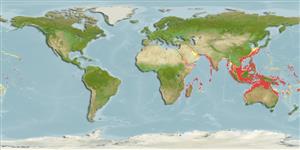
| Native range | All suitable habitat | Point map | Year 2050 |
|
| This map was computer-generated and has not yet been reviewed. |
| Neotrygon kuhlii AquaMaps Data sources: GBIF OBIS |
अपना अपलोड करें तस्वीरें और वीडियो
तस्वीरे | वीडियो | Google image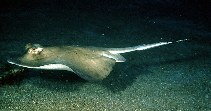 Neotrygon kuhlii
चित्र स्रोत: AP Randall, J.E.
तस्वीरे | वीडियो | Google image
चित्र स्रोत: AP Randall, J.E.
वर्गीकरण / नाम आम नाम | उपशब्द | Catalog of Fishes(वर्ग, प्रजाति) | ITIS | CoL | WoRMS | Cloffa
इलाज़मौबरांकी (शारक और रेज़) (sharks and rays) > Myliobatiformes (Stingrays) > Dasyatidae (Stingrays) > Neotrygoninae
Eponymy: Dr Heinrich Kuhl (1797–1821) was a German naturalist and zoologist. [...] (Ref. 128868), visit book page.
More on authors: Müller & Henle.
Eponymy: Dr Heinrich Kuhl (1797–1821) was a German naturalist and zoologist. [...] (Ref. 128868), visit book page.
More on authors: Müller & Henle.
Taxonomic Remarks
Formerly a widespread species, but forms a species complex with three other species. Information (data from references) collated undergoing modifications (in progress).
पर्यावरण: पर्यावरण / जलवायु क्षेत्र / गहराई सीमा / वितरण सीमा पारिस्थितिकी
समुद्री प्रवाल-भित्ति संयुक्त; गहराई सीमा 0 - 170 m (Ref. 89055), usually ? - 90 m (Ref. 9840). Tropical; 6°S - 12°S, 156°E - 164°E
वितरण प्रदेशों | ऐफ ऐ ओ क्षेत्र | पारिस्थितिकी प्रणालियों | संयोग | बिन्दु नक्शा | भूमिका | Faunafri
Southwest Pacific: Solomon Islands, but probably more widespread in Oceania (limits of its distribution need to be defined).
Forms a species complex with Neotrygon australiae (Australia, New Guinea and eastern Indonesia), N. caeruleopunctata (Indian Ocean), and N. orientale (North-West Pacific).
प्रथम परिपक्वता पर लंबाई / आकार / वज़न / आयु
संक्षिप्त वर्णन पहचान कुंजी | आकृति विज्ञान | मौरफोमैटरिक्स
This medium-sized Neotrygon of the kuhlii-complex (reaching at least 30 cm DW) is distinguished by the following set of characters: disc is broader than long, its width ca. 1.2 times length; pectoral apices are narrowly rounded; snout rather fleshy, broadly angular, its angle ca. 107°, its length 1.7-2.1 times interorbital width; maximum width is relatively well back on disc, the length from snout tip to pectoral-fin insertion 1.8-1.9 times and disc width 2.5-2.6 times horizontal distance from snout tip to maximum disc width; preoral length is 2.4-2.8 times mouth width; internasal distance is 1.5-1.8 in prenasal length; interspiracular distance is 13-15% DW; nostril length is 2.8-4.1% DW; nasal curtain width is 8-8.3% DW; mouth small, its width 6.4-6.8% DW; horizontal distance from cloaca to caudal sting base ca. 55% of disc length; nuchal region with thornlets, none from tail in all sizes; no dermal denticles; 113 pectoral-fin radials (based on new specimen); 133 total vertebral centra (including synarcual), 39 trunk centra (including synarcual); presence of blue spots that are very small and sparse, largest spot on disc 0.3-0.5 times eye width; median belt with 0-6 (mean 3.0) blue spots, largest ~2.1% DW; pronounced mask-like marking, not covered with dark peppery spots; ventral surface of disc and pelvic fins with broad dark greyish submarginal bands; when fresh, ventral tail fold and adjacent tail bluish grey (Ref. 116741).
Body shape (shape guide): other; Cross section: flattened.
Body shape (shape guide): other; Cross section: flattened.
A solitary species found on sandy bottoms near rocky or coral reefs (Ref. 12951). Usually found in deeper water but moves onto the reef flat and into shallow lagoons at high tide (Ref. 12951). Occasionally covers itself with sand, leaving only its eyes and tail visible (Ref. 37816). Feeds on crabs and shrimps (Ref. 5578). Ovoviviparous (Ref. 50449). The venomous spine can inflict a painful wound (Ref.4690). Caught in very large quantities in the bottom trawl, trammel and fish trap fisheries. Utilized for its meat but of limited value due to its small size (Ref. 58048). It is parasitised by the monogenean Dendromonocotyle kuhlii on the dorsal skin surface (Ref. 124051).
जीवन चक्र और संभोग व्यवहार परिपक्व अवधि | पुनरुत्पत्ति | मछलीऔ का अंडे देना | अंडे | उपजाऊपन | लार्वा
Exhibit ovoviparity (aplacental viviparity), with embryos feeding initially on yolk, then receiving additional nourishment from the mother by indirect absorption of uterine fluid enriched with mucus, fat or protein through specialised structures (Ref. 50449). Distinct pairing with embrace (Ref. 205). Litters size at birth 16 cm (Ref. 37816); Java form born at 11-16 cm WD, Bali form born at ~17 cm WD. Gives birth to litters of 1-2 pups; no reproductive synchronicity (Ref. 58048).
मुख्य संदर्भ
अपने संदर्भ अपलोड करें | संदर्भ | संयोजक : McEachran, John | सहयोगीयो
Last, P.R., White, W.T. and B. Séret, 2016. Taxonomic status of maskrays of the Neotrygon kuhlii species complex (Myliobatoidei: Dasyatidae) with the description of three new species from the Indo-West Pacific. Zootaxa 4083(4):533-561. (Ref. 116741)
आईयूसीएन रेड लिस्ट स्थिति (Ref. 130435: Version 2025-2 (Global))
Data deficient (DD) ; Date assessed: 22 June 2017
CITES
Not Evaluated
मनुष्यों के लिए ख़तरा
Venomous (Ref. 4690)
मानव उपयोग
मात्स्यिकी: व्यापारिक; आखेट मत्स्य: हां; जलजीवालय: व्यापारिक
FAO - Publication: search | FishSource | हमारे चारों ओर समुद्र
अधिक जानकारी
जनसंख्या गतिशीलता
विकास मापदंड
अधिकतम आयु/आकार
लंबाई-वजन संबंध
लंबाई-लंबाई संबंध
लंबाई-आवृत्तियाँ
सामूहिक रूपांतरण
भर्ती
बहुतायत
विकास मापदंड
अधिकतम आयु/आकार
लंबाई-वजन संबंध
लंबाई-लंबाई संबंध
लंबाई-आवृत्तियाँ
सामूहिक रूपांतरण
भर्ती
बहुतायत
जीवन चक्र
पुनरुत्पत्ति
परिपक्व अवधि
परिपक्वता/गिल्स संबंध
उपजाऊपन
मछलीऔ का अंडे देना
स्पॉनिंग एकत्रीकरण
अंडे
अंडे का विकास
लार्वा
लारवल गतिकी
पुनरुत्पत्ति
परिपक्व अवधि
परिपक्वता/गिल्स संबंध
उपजाऊपन
मछलीऔ का अंडे देना
स्पॉनिंग एकत्रीकरण
अंडे
अंडे का विकास
लार्वा
लारवल गतिकी
फिजियोलॉजी
शारीरिक संरचना
पोषक तत्व
प्राणवायु की खपत
तैराकी का प्रकार
तैराकी की गति
दृश्य वर्णक
मछली की आवाज
रोग एवं परजीवी
विषाक्तता (LC50s)
शारीरिक संरचना
पोषक तत्व
प्राणवायु की खपत
तैराकी का प्रकार
तैराकी की गति
दृश्य वर्णक
मछली की आवाज
रोग एवं परजीवी
विषाक्तता (LC50s)
मानव संबंधी
जलकृषि प्रणालियाँ
जलीयकृषि रूपरेखाऐ
खींच
सिगुएटेरा के मामले
टिकट, सिक्के, विविध.
जलकृषि प्रणालियाँ
जलीयकृषि रूपरेखाऐ
खींच
सिगुएटेरा के मामले
टिकट, सिक्के, विविध.
साधन
बायो क्विज़ | ई-पुस्तक | कार्यक्षेत्र पथप्रदर्शक | पहचान कुंजी | लंबाई आवृति इंद्रजालिक | जीवन-इतिहास उपकरण | बिन्दु नक्शा |
कैच-एमएसवाई |
विशेष रिपोर्ट
एक्वेरियम के रखरखाव की जांच करें | प्रजातियों के तथ्य पत्रक की जाँच करें | जलीय कृषि तथ्य पत्रक की जाँच करें
XML डाउनलोड करें
सारांश पृष्ठ | बिंदु डेटा | आम नाम | तस्वीरें
इंटरनेट स्रोत
AFORO (otoliths) | Aquatic Commons | BHL | Cloffa | Websites from users | Check FishWatcher | CISTI | Catalog of Fishes: वर्ग, प्रजाति | DiscoverLife | ECOTOX | FAO - Publication: search | Faunafri | Fishipedia | Fishtrace | GloBI | Google Books | Google Scholar | Google | IGFA World Record | राष्ट्रीय आंकड़ासंचय | OneZoom | Open Tree of Life | Otolith Atlas of Taiwan Fishes | सार्वजनिक लजीवालय | PubMed | Reef Life Survey | Socotra Atlas | TreeBase | Tree of Life | Wikipedia: Go, खोज | World Records Freshwater Fishing | प्राणीशास्त्रीय अभिलेख
मॉडल पर आधारित अनुमान
पसंदीदा तापमान (संदर्भ 123201): 23.9 - 29, mean 27.8 °C (based on 2546 cells).
जातिवृति विविधता सूचकांक (संदर्भ 82804): PD50 = 0.5000 [Uniqueness, from 0.5 = low to 2.0 = high].
Bayesian length-weight: a=0.01096 (0.00352 - 0.03419), b=3.12 (2.87 - 3.37), in cm total length, based on LWR estimates for this (Sub)family-body shape (Ref. 93245).
ट्रॉफिक स्तर (संदर्भ 69278): 3.3 ±0.3 se; based on diet studies.
Generation time: 8.5 ( na - na) years. Estimated as median ln(3)/K based on 2 growth studies.
लौटाव (संदर्भ 120179): बहुत नीचे, न्यूनतम जनसंख्या दुगनी समय अवलागत 14 महीने। (Fec=1-3).
पोषक तत्व (Ref. 124155): Calcium = 14.2 [3.0, 58.7] mg/100g; Iron = 0.446 [0.109, 1.168] mg/100g; Protein = 22.2 [19.3, 25.3] %; Omega3 = 0.117 [0.035, 0.325] g/100g; Selenium = 32.2 [8.9, 82.3] μg/100g; VitaminA = 57.4 [22.8, 143.3] μg/100g; Zinc = 0.977 [0.477, 1.924] mg/100g (wet weight);