



Προσθέστε την παρατήρησή σας στο Fish Watcher
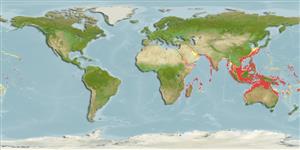
| Native range | All suitable habitat | Point map | Year 2050 |
|
| This map was computer-generated and has not yet been reviewed. |
| Neotrygon kuhlii AquaMaps Data sources: GBIF OBIS |
Ανεβάστε το φωτογραφίες και Βίντεο
Φωτογραφίες | Βίντεο | Google image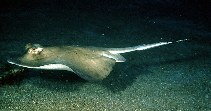 Neotrygon kuhlii
Εικόνα από Randall, J.E.
Φωτογραφίες | Βίντεο | Google image
Εικόνα από Randall, J.E.
Ταξινόμηση / Ονόματα Κοινά ονόματα | Συνώνυμα | Catalog of Fishes(Γένος, Είδη) | ITIS | CoL | WoRMS | Cloffa
Ελασμοβράγχιοι (καρχαρίες και σαλάχια) (sharks and rays) > Myliobatiformes (Stingrays) > Dasyatidae (Stingrays) > Neotrygoninae
Eponymy: Dr Heinrich Kuhl (1797–1821) was a German naturalist and zoologist. [...] (Ref. 128868), visit book page.
More on authors: Müller & Henle.
Eponymy: Dr Heinrich Kuhl (1797–1821) was a German naturalist and zoologist. [...] (Ref. 128868), visit book page.
More on authors: Müller & Henle.
Taxonomic Remarks
Formerly a widespread species, but forms a species complex with three other species. Information (data from references) collated undergoing modifications (in progress).
Περιβάλλον: περιβάλλον / κλιματική ζώνη / εύρος βάθους / εύρος διανομής Οικολογία
Θαλασσινό(ά) Υφαλόφιλο(α); εύρος βάθους 0 - 170 m (Ref. 89055), usually ? - 90 m (Ref. 9840). Tropical; 6°S - 12°S, 156°E - 164°E
Κατανομή Εδάφη | Περιοχές FAO | Οικοσυστήματα | Παρουσίες | Σημειακός χάρτης | Εισαγωγές | Faunafri
Southwest Pacific: Solomon Islands, but probably more widespread in Oceania (limits of its distribution need to be defined).
Forms a species complex with Neotrygon australiae (Australia, New Guinea and eastern Indonesia), N. caeruleopunctata (Indian Ocean), and N. orientale (North-West Pacific).
Μήκος κατά την πρώτη ωρίμανση / Μέγεθος / Βάρος / Ηλικία
Γεννητική Ωρίμανση: Lm 27.6, range 12 - 46.5 cm
Max length : 70.0 cm TL αρσενικό/απροσδιόριστο; (Ref. 5578)
Max length : 70.0 cm TL αρσενικό/απροσδιόριστο; (Ref. 5578)
Σύντομη περιγραφή Κλείδες προσδιορισμού | Μορφολογία | Μορφομετρία
This medium-sized Neotrygon of the kuhlii-complex (reaching at least 30 cm DW) is distinguished by the following set of characters: disc is broader than long, its width ca. 1.2 times length; pectoral apices are narrowly rounded; snout rather fleshy, broadly angular, its angle ca. 107°, its length 1.7-2.1 times interorbital width; maximum width is relatively well back on disc, the length from snout tip to pectoral-fin insertion 1.8-1.9 times and disc width 2.5-2.6 times horizontal distance from snout tip to maximum disc width; preoral length is 2.4-2.8 times mouth width; internasal distance is 1.5-1.8 in prenasal length; interspiracular distance is 13-15% DW; nostril length is 2.8-4.1% DW; nasal curtain width is 8-8.3% DW; mouth small, its width 6.4-6.8% DW; horizontal distance from cloaca to caudal sting base ca. 55% of disc length; nuchal region with thornlets, none from tail in all sizes; no dermal denticles; 113 pectoral-fin radials (based on new specimen); 133 total vertebral centra (including synarcual), 39 trunk centra (including synarcual); presence of blue spots that are very small and sparse, largest spot on disc 0.3-0.5 times eye width; median belt with 0-6 (mean 3.0) blue spots, largest ~2.1% DW; pronounced mask-like marking, not covered with dark peppery spots; ventral surface of disc and pelvic fins with broad dark greyish submarginal bands; when fresh, ventral tail fold and adjacent tail bluish grey (Ref. 116741).
Body shape (shape guide): other; Cross section: flattened.
Body shape (shape guide): other; Cross section: flattened.
A solitary species found on sandy bottoms near rocky or coral reefs (Ref. 12951). Usually found in deeper water but moves onto the reef flat and into shallow lagoons at high tide (Ref. 12951). Occasionally covers itself with sand, leaving only its eyes and tail visible (Ref. 37816). Feeds on crabs and shrimps (Ref. 5578). Ovoviviparous (Ref. 50449). The venomous spine can inflict a painful wound (Ref.4690). Caught in very large quantities in the bottom trawl, trammel and fish trap fisheries. Utilized for its meat but of limited value due to its small size (Ref. 58048). It is parasitised by the monogenean Dendromonocotyle kuhlii on the dorsal skin surface (Ref. 124051).
Κύκλος ζωής και συμπεριφορά ζευγαρώματος Γεννητική Ωρίμανση | Αναπαραγωγή | Γεννοβολία | Αβγά | Γονιμότητα | Προνύμφες
Exhibit ovoviparity (aplacental viviparity), with embryos feeding initially on yolk, then receiving additional nourishment from the mother by indirect absorption of uterine fluid enriched with mucus, fat or protein through specialised structures (Ref. 50449). Distinct pairing with embrace (Ref. 205). Litters size at birth 16 cm (Ref. 37816); Java form born at 11-16 cm WD, Bali form born at ~17 cm WD. Gives birth to litters of 1-2 pups; no reproductive synchronicity (Ref. 58048).
Κύρια αναφορά
Ανεβάστε τις αναφορές σας | Αναφορές | Συντονιστής : McEachran, John | Συνεργάτες
Last, P.R., White, W.T. and B. Séret, 2016. Taxonomic status of maskrays of the Neotrygon kuhlii species complex (Myliobatoidei: Dasyatidae) with the description of three new species from the Indo-West Pacific. Zootaxa 4083(4):533-561. (Ref. 116741)
Κατάσταση Κόκκινου Καταλόγου IUCN (Ref. 130435: Version 2025-2 (Global))
Data deficient (DD) ; Date assessed: 22 June 2017
CITES
Not Evaluated
Απειλή για τον άνθρωπο
Venomous (Ref. 4690)
Ανθρώπινες χρήσεις
αλιεία: Εμπορικό(ά); αλιεία αναψυχής: ναί; Ενυδρείο: Εμπορικό(ά)
FAO - Publication: search | FishSource | Η θάλασσα γύρω μας
Περισσότερες πληροφορίες
Πληθυσμιακή δυναμική
Παράμετροι Αύξησης
Μέγιστες ηλικίες / μεγέθη
Μήκος-βάρος σχετ.
Μήκος-μήκος rel.
Μήκος-συχνότητες
Μετατροπή μάζας
Στρατολόγηση
Αφθονία
Παράμετροι Αύξησης
Μέγιστες ηλικίες / μεγέθη
Μήκος-βάρος σχετ.
Μήκος-μήκος rel.
Μήκος-συχνότητες
Μετατροπή μάζας
Στρατολόγηση
Αφθονία
Κύκλος ζωής
Αναπαραγωγή
Γεννητική Ωρίμανση
Ωριμότητα / Gills rel.
Γονιμότητα
Γεννοβολία
Συγκεντρώσεις αναπαραγωγής
Αβγά
Ανάπτυξη αυγών
Προνύμφες
Δυναμική προνυμφών
Αναπαραγωγή
Γεννητική Ωρίμανση
Ωριμότητα / Gills rel.
Γονιμότητα
Γεννοβολία
Συγκεντρώσεις αναπαραγωγής
Αβγά
Ανάπτυξη αυγών
Προνύμφες
Δυναμική προνυμφών
Φυσιολογία
Σύνθεση σώματος
Θρεπτικά συστατικά
Κατανάλωση οξυγόνου
Τύπος κολύμβησης
Ταχύτητα κολύμβησης
Οπτικές χρωστικές ουσίες
Ήχος ψαριών
Ασθένειες & παράσιτα
Τοξικότητα (LC50)
Σύνθεση σώματος
Θρεπτικά συστατικά
Κατανάλωση οξυγόνου
Τύπος κολύμβησης
Ταχύτητα κολύμβησης
Οπτικές χρωστικές ουσίες
Ήχος ψαριών
Ασθένειες & παράσιτα
Τοξικότητα (LC50)
Ανθρώπινη σχέση
Συστήματα υδατοκαλλιέργειας
Προφίλ υδατοκαλλιεργειών
Στελέχοι
Περιπτώσεις Ciguatera
Γραμματόσημα, νομίσματα, διάφορα.
Συστήματα υδατοκαλλιέργειας
Προφίλ υδατοκαλλιεργειών
Στελέχοι
Περιπτώσεις Ciguatera
Γραμματόσημα, νομίσματα, διάφορα.
Εργαλεία
Βιολογικό κουίζ | Ηλεκτρονικό βιβλίο | Οδηγός πεδίου | Κλείδες προσδιορισμού | Ανάλυση κατά μήκος συνθέσεων | Εργαλείο ιστορίας ζωής | Σημειακός χάρτης |
Catch-MSY |
Ειδικές εκθέσεις
Έλεγχος για συντήρηση ενυδρείου | Ελέγξτε για ενημερωτικά δελτία ειδών | Ελέγξτε για ενημερωτικά δελτία υδατοκαλλιέργειας
Λήψη XML
Διαδικτυακές πηγές
AFORO (otoliths) | Aquatic Commons | BHL | Cloffa | Websites from users | Check FishWatcher | CISTI | Catalog of Fishes: Γένος, Είδη | DiscoverLife | ECOTOX | FAO - Publication: search | Faunafri | Fishipedia | Fishtrace | GloBI | Google Books | Google Scholar | Google | IGFA World Record | Εθνικές βάσεις δεδομένων | OneZoom | Open Tree of Life | Otolith Atlas of Taiwan Fishes | Δημόσια ενυδρεία | PubMed | Reef Life Survey | Socotra Atlas | TreeBase | Δέντρο Ζωής | Wikipedia: Go, αναζήτηση | World Records Freshwater Fishing | Zoological Record
Εκτιμήσεις βάσει μοντέλων
Προτιμώμενη θερμοκρασία (Αναφ. 123201): 23.9 - 29, mean 27.8 °C (based on 2546 cells).
Δείκτης φυλογενετικής ποικιλότητας (Αναφ. 82804): PD50 = 0.5000 [Uniqueness, from 0.5 = low to 2.0 = high].
Bayesian length-weight: a=0.01096 (0.00352 - 0.03419), b=3.12 (2.87 - 3.37), in cm total length, based on LWR estimates for this (Sub)family-body shape (Ref. 93245).
Τροφικό Επίπεδο (Αναφ. 69278): 3.3 ±0.3 se; based on diet studies.
Generation time: 8.5 ( na - na) years. Estimated as median ln(3)/K based on 2 growth studies.
Ελαστικότητα (Αναφ. 120179): Πολύ χαμηλό, ελάχιστος χρόνος για διπλασιασμό πληθυσμού > 14 έτη (Fec=1-3).
Θρεπτικά συστατικά (Ref. 124155): Calcium = 14.2 [3.0, 58.7] mg/100g; Iron = 0.446 [0.109, 1.168] mg/100g; Protein = 22.2 [19.3, 25.3] %; Omega3 = 0.117 [0.035, 0.325] g/100g; Selenium = 32.2 [8.9, 82.3] μg/100g; VitaminA = 57.4 [22.8, 143.3] μg/100g; Zinc = 0.977 [0.477, 1.924] mg/100g (wet weight);