This website uses cookies to enhance your browsing experience and ensure the functionality of our site. For more detailed information about the types of cookies we use and how we protect your privacy, please visit our Privacy Information page.
×
Cookie Settings
This website uses different types of cookies to enhance your experience. Please select your preferences below:
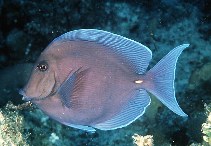
Acanthurus coeruleus, Blue tang surgeonfish : fisheries, aquarium, bait
Western Atlantic: New York, USA and Bermuda to the Gulf of Mexico and Brazil. Eastern Atlantic: Ascension Island (Ref. 7345).
Длина при первой зрелости / Размер / Вес / Возраст
половая зрелость: Lm?, range 13 - ? cm Max length : 39.0 cm TL самец/пол неопределен; (Ref. 36453); common length : 25.0 cm TL самец/пол неопределен; (Ref. 5217)
колючие лучи спинного плавника (общее число) : 9; членистые (мягкие) лучи спинного плавника (общее число) : 26 - 28; колючие лучи анального плавника: 3; членистые (мягкие) лучи анального плавника: 24 - 26. A deep-bodied surgeonfish (body depth 1.7 in SL) with a conspicuous yellow caudal spine. Has the most distinctive coloration of all western Atlantic surgeonfishes (Ref. 26938). Body shape (shape guide): short and / or deep.
Inhabits coral reefs, inshore grassy or rocky areas. Forms small groups (Ref. 26235). Mainly diurnal. Feeds entirely on algae (Ref. 5521). At Fernando de Noronha Archipelago in southwestern Atlantic, juveniles hold cleaning stations together with the doctorfish (Acanthurus chirurgus) and sergeant major (Abudefduf saxatilis) and graze algae as well as pick molted skin and parasites from green turtles (Chelonia mydas). This behavior is preceded by a characteristic inspection usually followed by feeding nips on the turtles’ skin (head, limbs, and tail), as well as on the carapace. The most inspected and cleaned body parts are the flippers (Ref. 51385). Diurnal species (Ref. 3194). It forms resident spawning aggregations in late afternoon after high tide (Ref. 27825, 120681, 120682). The spine on both sides of the caudal peduncle may inflict painful wounds (Ref. 5217). Marketed fresh. Maximum depth reported taken from Ref. 127989.
Физиология Состав тела Питательные вещества Потребление кислорода Тип плавания Скорость плавания Зрительные пигменты Звук рыбы Болезни и паразиты Токсичность (LC50s)
Предпочтительная температура (ссылка 123201): 23.7 - 28.1, mean 27.4 °C (based on 783 cells).
Индекс филогенетического разнообразия (ссылка 82804): PD50 = 0.5000 [Uniqueness, from 0.5 = low to 2.0 = high].
Bayesian length-weight: a=0.02570 (0.01565 - 0.04223), b=2.96 (2.82 - 3.10), in cm total length, based on LWR estimates for this species & Genus-body shape (Ref. 93245).
Трофический уровень (ссылка 69278): 2.2 ±0.00 se; based on food items.
Generation time: 9.8 ( na - na) years. Estimated as median ln(3)/K based on 2 growth studies.
устойчивость к внешним воздействиям (ссылка 120179): средний (среднего размера), минимальное время удвоения популяции 1.4-4.4 года (K=0.11-0.50).
Уязвимость рыбной ловли (Ref. 59153): High vulnerability (59 of 100). 🛈