



Isistius brasiliensis (Quoy & Gaimard, 1824)
Cookie cutter shark
Masukkan pemerhatian anda di Fish Watcher
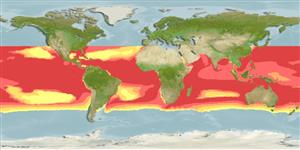
| Native range | All suitable habitat | Point map | Year 2050 |
|
| This map was computer-generated and has not yet been reviewed. |
| Isistius brasiliensis AquaMaps Data sources: GBIF OBIS |
muatnaik fotos/gambar dan video
Gambar | video | imej Google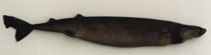 Isistius brasiliensis
Female foto/gambar oleh Harris, M.
Gambar | video | imej Google
Female foto/gambar oleh Harris, M.
klasifikasi / Nama Nama-nama umum | Sinonim (persamaan) | Catalog of Fishes(Marga, Jenis) | ITIS | CoL | WoRMS | Cloffa
Ikan bertulang rawan (sharks and rays) > Squaliformes (Sleeper and dogfish sharks) > Dalatiidae (Sleeper sharks)
Etymology: Isistius: Etymology not explained, probably iso-, from isos (Gr.), equal; istius, from histion (Gr.), sail (i.e., dorsal fin), referring to its two similarly shaped and sized (and posterior) dorsal fins, a character Gill used to diagnose genus. José I. Castro, The Sharks of North America (Oxford University Press, 2011), suggests name may allude to the Egyptian goddess Isis, represented in statuary with her head veiled, or to the dark collar encircling throat of I. brasiliensis, “which could also suggest a veil over the head” (p. 145). This interpretation is rejected by the fact that Gill often used “istius” in the names of several genera distinguished (at least in part) by their dorsal fins (Acanthistius, Brachyistius, Caristius, Dichistius, Goniistius, Iniistius, Micromesistius, Nematistius) (See ETYFish); brasiliensis: -ensis, Latin suffix denoting place: off the coast of Brazil, type locality (See ETYFish).
More on authors: Quoy & Gaimard.
Etymology: Isistius: Etymology not explained, probably iso-, from isos (Gr.), equal; istius, from histion (Gr.), sail (i.e., dorsal fin), referring to its two similarly shaped and sized (and posterior) dorsal fins, a character Gill used to diagnose genus. José I. Castro, The Sharks of North America (Oxford University Press, 2011), suggests name may allude to the Egyptian goddess Isis, represented in statuary with her head veiled, or to the dark collar encircling throat of I. brasiliensis, “which could also suggest a veil over the head” (p. 145). This interpretation is rejected by the fact that Gill often used “istius” in the names of several genera distinguished (at least in part) by their dorsal fins (Acanthistius, Brachyistius, Caristius, Dichistius, Goniistius, Iniistius, Micromesistius, Nematistius) (See ETYFish); brasiliensis: -ensis, Latin suffix denoting place: off the coast of Brazil, type locality (See ETYFish).
More on authors: Quoy & Gaimard.
Lingkungan: lingkungan / zona iklim / kisaran kedalaman / jangkauan distribusi Ekologi
laut batipelagis; oceanodromus (Ref. 51243); kisaran kedalaman 0 - 3700 m (Ref. 55584), usually 0 - 1000 m (Ref. 89423). Deep-water; 35°N - 47°S, 180°W - 180°E
Penyebaran Wilayah | Daerah-daerah FAO | Ekosistem | Kemunculan | peta titik | Introduksi | Faunafri
Western Atlantic: Bahamas and southern Brazil. Eastern Atlantic: Cape Verde, Guinea to Sierra Leone, southern Angola and South Africa, including Ascension Island. Indo-Pacific: Mauritius to New Guinea, Lord Howe Island, and New Zealand (Ref. 26346), north to Japan and east to the Hawaiian Islands. Eastern Pacific: Easter Island (Ref. 9068) and the Galapagos.
Panjang pada saat jatuh tempo pertama / Ukuran / Berat / umur
Kematangan: Lm 41.0, range 38 - 44 cm
Max length : 42.0 cm TL jantan/; (Ref. 48844); 56.0 cm TL (female)
Max length : 42.0 cm TL jantan/; (Ref. 48844); 56.0 cm TL (female)
deskripsi pendek Kunci identifiaksi (pengenalan) | Morfologi | Morfometrik
Duri punggung (Keseluruhan (total)) : 0; Duri dubur: 0; vertebrata, bertulang belakang: 81 - 89. The cookiecutter shark Isistius brasiliensis is distinctive for the prominent dark collar marking around its throat, large nearly symmetrical caudal fin with a long ventral lobe over 2/3 length of dorsal caudal margin, and moderately large lower teeth in 25-32 rows. Eyes set anterior of head but sufficiently far back to lack an extensive anterior binocular field. Pectoral fins subquadrate; pelvic fins larger than dorsal fins (Ref.247). Tooth count: 30-37/25-31. Vertebral count: 81-89. Spiral valve count: 8-10 (Ref. 48844). Dark brown dorsally, paler ventrally except for blackish band across throat; tips of caudal lobe blackish (Ref. 6577). As with the other member of the genus Isistius , it has a characteristic small cigar-shaped body with two small close-set spineless dorsal fins far posterior on back, no anal fin, huge, triangular-cusped teeth without blades, short, bulbous snout and a unique suctorial lips (Ref. 247).
Body shape (shape guide): elongated.
Body shape (shape guide): elongated.
Oceanic species (Ref. 247). Epi- to bathypelagic at 1-3500 m (Ref. 58302). Makes diurnal vertical migrations from below 1,000 m in the day to or near the surface at night (Ref. 6871, 58302). Travels long vertical distances in excess of 2,000 to 3,000 m on a diel cycle (Ref. 247). Feeds free-living deepwater prey such as large squid, gonostomatids, crustaceans but is also a facultative ectoparasite on larger pelagic animals such as wahoo, tuna, billfishes, and cetaceans (Ref. 247). Ovoviviparous (Ref. 205), with 6-12 young per litter (Ref. 48844). The cookiecutter shark has specialized suctorial lips and a strongly modified pharynx that allow it to attach to the sides of it prey (Ref. 247). It then drives its saw-like lower dentition into the skin and flesh of its victim, twists about to cut out a conical plug of flesh, then pull free with the plug cradled by its scoop-like lower jaw and held by the hook-like upper teeth (Ref. 247). Teeth are shed as a complete unit; the lower teeth are swallowed, perhaps to maintain sufficient calcium levels in its body (Ref. 247). Interconnection at the bases of individual tooth allows a whole row of teeth to move if one tooth is touched. This shark is reported to radiate light for as long as three hours after its death. Not dangerous to people because of its small size and habitat preferences (Ref. 247).
Siklus hidup dan perilaku kawin Kematangan | Reproduksi, perkembang biakan | Pemijahan | telur-telur | Fekunditas | Larva
Presumably ovoviviparous; 6 or 7 large eggs have been found in ovaries (Ref. 247). Distinct pairing with embrace (Ref. 205). Viviparous, without a yolk sac placenta, 6-12 young per litter. Males mature at about 36 cm, with a maximum length of 42 cm; females mature at 39 cm, with a maximum length of 56 cm. Size at birth is unknown. (Ref. 48844).
rujukan utama
Unggah referensi Anda | Acuan | Koordinator : Compagno, Leonard J.V. | mitra
Compagno, L.J.V., 1984. FAO Species Catalogue. Vol. 4. Sharks of the world. An annotated and illustrated catalogue of shark species known to date. Part 1 - Hexanchiformes to Lamniformes. FAO Fish. Synop. 125(4/1):1-249. Rome, FAO. (Ref. 247)
Status IUCN Red List (Ref. 130435: Version 2025-2 (Global))
kurang bimbang (LC) ; Date assessed: 04 July 2017
CITES
Not Evaluated
ancaman kepada manusia
Harmless (Ref. 247)
penggunaan manusia
Perikanan: nilai komersial kecil
FAO - Publication: search | FishSource |
informasi lanjut
Dinamika populasi
Parameter pertumbuhan
Maks. usia / ukuran
Panjang-berat rel.
Panjang-panjang rel.
ukuran frekuensi
Konversi massa
pemulihan
Kelimpahan
Parameter pertumbuhan
Maks. usia / ukuran
Panjang-berat rel.
Panjang-panjang rel.
ukuran frekuensi
Konversi massa
pemulihan
Kelimpahan
Siklus hidup
Reproduksi, perkembang biakan
Kematangan
Kedewasaan / insang rel.
Fekunditas
Pemijahan
Agregasi pemijahan
telur-telur
pekembangan telor
Larva
Dinamika larva
Reproduksi, perkembang biakan
Kematangan
Kedewasaan / insang rel.
Fekunditas
Pemijahan
Agregasi pemijahan
telur-telur
pekembangan telor
Larva
Dinamika larva
Fisiologi
Komposisi tubuh
Nutrisi
Konsumsi oksigen
Jenis renang
Kecepatan berenang
Pigmen visual
Suara ikan
Penyakit & Parasit
Toksisitas (LC50)
Komposisi tubuh
Nutrisi
Konsumsi oksigen
Jenis renang
Kecepatan berenang
Pigmen visual
Suara ikan
Penyakit & Parasit
Toksisitas (LC50)
Genetika
genom
Genetika
Heterozigositas
Diturunkan
Keanekaragaman Genetik
genom
Genetika
Heterozigositas
Diturunkan
Keanekaragaman Genetik
Yang berhubungan dengan manusia
Sistem akuakultur
profil budidaya air
Strain
Kasus Ciguatera
Perangko, koin, dll.
Sistem akuakultur
profil budidaya air
Strain
Kasus Ciguatera
Perangko, koin, dll.
Alat, peralatan
E-book | Penuntun lapangan | Kunci identifiaksi (pengenalan) | tanda freqkuenci panjang | peringkat sejarah hidup | peta titik |
Tangkap-MSY |
laporan khas
muat turun XML
Sumber internet
AFORO (otoliths) | Aquatic Commons | BHL | Cloffa | Websites from users | semak peneliti ikan | CISTI | Catalog of Fishes: Marga, Jenis | DiscoverLife | ECOTOX | FAO - Publication: search | Faunafri | Fishipedia | Fishtrace | GloBI | Google Books | Google Scholar | Google | IGFA World Record | Pangkalan data nasional | OneZoom | Open Tree of Life | Otolith Atlas of Taiwan Fishes | PubMed | Reef Life Survey | Socotra Atlas | TreeBase | Tree of Life | Wikipedia: pergi, Cari | World Records Freshwater Fishing | Catatan Zoologi
Estimasi berdasarkan model
Suhu yang disukai (Acuan 123201): 3.1 - 9.7, mean 4.8 °C (based on 2327 cells).
Indeks keanekaragaman filogenetik (Acuan 82804): PD50 = 0.7510 [Uniqueness, from 0.5 = low to 2.0 = high].
Bayesian length-weight: a=0.00309 (0.00143 - 0.00669), b=3.14 (2.94 - 3.34), in cm total length, based on LWR estimates for this (Sub)family-body shape (Ref. 93245).
Tingkat Trofik (Acuan 69278): 4.3 ±0.3 se; based on diet studies.
Daya lenting (Acuan 120179): sangat rendah, Waktu penggandaan populasi minimum lebih dari 14 tahun (Fec = 6).