



Curculionichthys sagarana Roxo, Silva, Ochoa & Oliveira, 2015
را بارگذاری کني تصاوير و فيلم ها
تصوير گوگل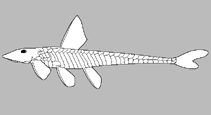 No image available for this species;
drawing shows typical species in Loricariidae.
تصوير گوگل
drawing shows typical species in Loricariidae.
رده بندی / نامها اسامي عام | مترادف | Catalog of Fishes(جنس, گونه ها) | ITIS | CoL | WoRMS | Cloffa
> Siluriformes (Catfishes) > Loricariidae (Armored catfishes) > Hypoptopomatinae
Etymology: Curculionichthys: Derived from the from the Latin 'curculionem' (elongated snout) and from the Greek 'ichthys' (fishes), in reference to the relatively elongated snouts of the fish species included in this genus; sagarana: The specific name sagarana is derived from two words, 'saga' of Germanic origin, meaning heroic song, and 'rana' from Tupi-Guarani language, meaning similarity. The name is in reference to the book of a Brazilian author João Guimarães Rosa published in 1946 about the history of people from Minas Gerais State living in the region of Rio das Velhas.
Etymology: Curculionichthys: Derived from the from the Latin 'curculionem' (elongated snout) and from the Greek 'ichthys' (fishes), in reference to the relatively elongated snouts of the fish species included in this genus; sagarana: The specific name sagarana is derived from two words, 'saga' of Germanic origin, meaning heroic song, and 'rana' from Tupi-Guarani language, meaning similarity. The name is in reference to the book of a Brazilian author João Guimarães Rosa published in 1946 about the history of people from Minas Gerais State living in the region of Rio das Velhas.
محیط زیست: محیط زیست / منطقه آب و هوایی / تغييرات عمق / محدوده توزیع بوم شناسي
; آب شيرين نزديك كف زي. Tropical
پراكنش سرزمینها | مناطق سازمان خوار و بار جهاني (FAO) | اکوسیستمها | ظهور | نقشه نقطه ای | معرفي | Faunafri
South America: Rio das Velhas drainage, Rio São Francisco basin in Brazil.
اندازه / وزن / سن
بلوغ: Lm ? range ? - ? cm
Max length : 2.3 cm SL جنس نر / بدون خواص جنسي; (Ref. 113800); 2.4 cm SL (female)
Max length : 2.3 cm SL جنس نر / بدون خواص جنسي; (Ref. 113800); 2.4 cm SL (female)
توصيف مختصر كليدهاي شناسايي | ريخت شناسي | ريخت ستجي بوسيله انداره گيري
شعاع نرم باله پشتي (کل) : 9; شعاع نرم باله مخرجي: 6; مهره ها: 28. Curculionichthys sagarana can be distinguised from all congeners by the possession of one unpaired platelet on the dorsal portion of the caudal peduncle (vs. dorsal por¬tion of caudal peduncle without unpaired platelets). It further differs from all congeners, with the exception of Curculionichthys insperatus and C. luteofrenatus by having the caudal fin hyaline, with dark blotch limited to caudal peduncle base (vs. caudal fin hyaline, with one dark stripe extending from caudal peduncle base to the middle caudal fin rays, and for dark chromatophores irregularly distributed almost forming one or two bands); from C. insperatus, C. paresi and C. sabaji by having 15-19 premaxillary teeth (vs. 10?12 in C. insperatus; 6?10 in C. paresi and 7?12 in C. sabaji) and 12-18 dentary teeth (vs. 8?12 in C. insperatus, 4?7 in C. paresi and 7?12 in C. sabaji); from all congeners, except C. piracanjuba and C. oliveirai, by having all papillae on the lower lip randomly distributed (vs. lower lip with some papillae arranged in a medial longitudinal series extending posterior to dentaries through middle portion of lower lip); from C. oliveirai and C. coxipone by having the anterior profile of the head pointed (vs. rounded); from C. paresi by the absence of contrasting dark-brown geometric spots on the anterodorsal region of the body (vs. presence); from C. piracanjuba by having odontodes forming longitudinally aligned rows on the head and trunk (vs. odontodes not forming longitudinally aligned rows on the head and trunk); from C. sabaji, C. coxipone and C. paresi by having the cleithrum completely covered with odontodes (vs. the cleithrum with an area free of odontodes); from C. insperatus by having small, inconspicuous odontodes forming rows on the head and trunk (vs. large, conspicuous odontodes forming rows on the head and the trunk); from C. oliveirai by having 6?9 lateral abdomen plates (vs. 4?5); from C. piracanjuba by not having hypertrophied odontodes on the snout tip (vs. hypertrophied odontodes on the snout tip). In addition, Curculionichthys sagarana can be diagnosed by the following characters: deeper caudal peduncle (8.4-9.6 % of SL, vs. 10.8-12.5% of SL in C. oliveirai; 10.2-11.3% in C. paresi); greater head length (34.8-40.5% of SL, vs. 28.8-33.3% of SL in C. luteofrenatus; 27.9-32.2% of SL in C. piracanjuba); shorter snout (46.3-52.4% of HL, vs. 67.0-75.3% of HL in C. luteofrenatus; 67.7-72.7% of HL in C. piracanjuba); shorter interorbital width (27.4-33.6% of SL, vs. 33.3-45.4% of HL in C. luteofrenatus; 36.7-40.9% of HL in C. piracanjuba; 33.8-37.8% of HL in C. coxipone); deeper head (41.2-49.1% of HL, vs. 51.6-59.2% of HL in C. oliveirai); shorter dorsal-spine (19.9-24.4% of SL, vs. 25.2-27.0% of SL in C. paresi); and shorter pectoral-spine (21.5-25.2% of SL, vs. 27.0-30.1% of SL in C. paresi) (Ref. 113800).
Body shape (shape guide): elongated.
Body shape (shape guide): elongated.
چرخه زندگی و رفتار جفتگیری بلوغ | تولید مثل | تخم ریزی | تخم ها | باروری | توزاد ( لارو)
مآخذ اصلی
مراجع خود را بارگذاری کنید | مراجع | هماهنگ كننده : Fisch-Muller, Sonia | همكاران
Roxo, F.F., G.S.C. Silva, L.E. Ochoa and C. Oliveira, 2015. Description of a new genus and three new species of Otothyrinae (Siluriformes, Loricariidae). Zookeys 534:103-134. (Ref. 113800)
وضعيت در فهرست قرمز IUCN (Ref. 130435: Version 2025-2 (Global))
حداقل نگرانی (LC) ; Date assessed: 13 November 2020
CITES
Not Evaluated
خطر برای انسان ها
Harmless
استفاده انسانی
ماهي گيري – شيلات: از بی علاقه گی
FAO - Publication: search | FishSource |
اطلاعات بيشتر
بومشناسی گرمسیری
اقلام غذایی (طعمهها)
تركيب غذايي
مصرف غذايي
جیره غذایی
شکارچیان
اقلام غذایی (طعمهها)
تركيب غذايي
مصرف غذايي
جیره غذایی
شکارچیان
پویایی جمعیت
پارامترهای رشد
حداکثر سن/اندازه
نسبت طول-وزن.
طول-طول نسبی.
نوسانات طولی
تبدیل انبوه
بازسازی
فراواني
پارامترهای رشد
حداکثر سن/اندازه
نسبت طول-وزن.
طول-طول نسبی.
نوسانات طولی
تبدیل انبوه
بازسازی
فراواني
چرخه زندگی
تولید مثل
بلوغ
بلوغ/آبششها
باروری
تخم ریزی
تجمعات تخمریزی
تخم ها
نمو تخم
توزاد ( لارو)
پويايي لاروي
تولید مثل
بلوغ
بلوغ/آبششها
باروری
تخم ریزی
تجمعات تخمریزی
تخم ها
نمو تخم
توزاد ( لارو)
پويايي لاروي
آناتومی
منطقه آبششي
مغز
اتولیت
منطقه آبششي
مغز
اتولیت
فیزیولوژی
ترکیب بدن
مواد مغذی
مصرف اکسیژن
نوع شنا
سرعت شنا
رنگدانههای بصری
صدای ماهی
بیماریها و انگلها
سمیت (LC50s)
ترکیب بدن
مواد مغذی
مصرف اکسیژن
نوع شنا
سرعت شنا
رنگدانههای بصری
صدای ماهی
بیماریها و انگلها
سمیت (LC50s)
ژنتيك
ژنوم
ژنتيك
هتروزیگوسیتی
وارث
تنوع ژنتیکی
ژنوم
ژنتيك
هتروزیگوسیتی
وارث
تنوع ژنتیکی
مرتبط با انسان
سیستمهای آبزیپروری
نمايه هاي آبزي پروري
نژادها
موارد سیگواترا
تمبر، سکه، متفرقه.
سیستمهای آبزیپروری
نمايه هاي آبزي پروري
نژادها
موارد سیگواترا
تمبر، سکه، متفرقه.
ابزارها
کتاب الکترونیکی | راهنماي صحرايي | امكان نرم افزاري بسامد طولي | ابزار تاريخ زيستي | نقشه نقطه ای |
گرفتن-MSY |
گزارش های ويژه
راجع به نگهداری آکواريم ملاحظه کنيد | برگه اطلاعات و مشخصات گونه ها را ملاحظه کنيد | برگه اطلاعات و مشخصات آبزی پروری را ببينيد
بارگيری XML
منابع اينترنتي
AFORO (otoliths) | Aquatic Commons | BHL | Cloffa | Websites from users | فيش واچر را ببينيد | CISTI | Catalog of Fishes: جنس, گونه ها | DiscoverLife | ECOTOX | FAO - Publication: search | Faunafri | Fishipedia | Fishtrace | GloBI | Google Books | Google Scholar | Google | IGFA World Record | OneZoom | Open Tree of Life | Otolith Atlas of Taiwan Fishes | PubMed | Reef Life Survey | Socotra Atlas | TreeBase | Tree of Life | Wikipedia: برو, جستجو | World Records Freshwater Fishing | Zoobank | سوابق جانورشناسی
تخمینها بر اساس مدلها
شاخص تنوع فیلوژنتیکی (مرجع 82804): PD50 = 0.5001 [Uniqueness, from 0.5 = low to 2.0 = high].
Bayesian length-weight: a=0.00977 (0.00434 - 0.02202), b=3.06 (2.87 - 3.25), in cm total length, based on LWR estimates for this (Sub)family-body shape (Ref. 93245).
سطح تروفیک (مرجع 69278): 2.6 ±0.1 se; based on size and trophs of closest relatives
جهندگی (مرجع 120179): زياد, كمينه زمان لازم براي دو برابر شدن جمعيت ، كمتر از 15 ماه (Preliminary K or Fecundity.).