Classification / Names
Nombres comunes | Sinónimos | Catalog of Fishes(Género, Especie) | ITIS | CoL | WoRMS | Cloffa
>
Cichliformes (Cichlids, convict blennies) >
Cichlidae (Cichlids) > Cichlinae
Etymology: Cichla: Greek, kichle = wrasse (Ref. 45335); pleiozona: Name from the Greek 'pleios' meaning more, and 'zona' for girdle, for the additional vertical bar on the caudal peduncle and also for also the usually distinct occipital bar; noun in apposition.
More on authors: Kullander & Ferreira.
Environment: milieu / climate zone / rango de profundidad / distribution range
Ecología
; agua dulce bentopelágico. Tropical
South America: Bolivian Amazon basin including the Rio Madre de Dios, Beni, Mamoré, and Guaporé river drainages of Bolivia and Brazil; and in Rio Jamari, a tributary of the Rio Madeira.
Tamaño / Peso / Age
Madurez: Lm ? range ? - ? cm
Max length : 44.2 cm SL macho / no sexado; (Ref. 111115); peso máximo publicado: 2.4 kg (Ref. 111115)
Short description
Claves de identificación | Morfología | Morfometría
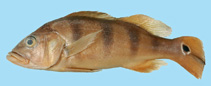
Diagnosis. Similar to C. kelberi and C. monoculus and distinct from all remaining species of Cichla in possessing three dark vertical bars on side, presence of pronounced occipital bar in large specimens, absence of black or ocellated markings laterally on head, and presence of irregular dark blotches on anterior abdominal side. Cichla pleiozona have more scales in lateral row 84-93 (vs. 76-83 in kelberi and 68-87 in monoculus) ) and presence (with occasional exceptions) of dark vertical bar (bar 4) anteriorly on caudal peduncle which is typically absent in both kelberi and monoculus, and from kelberi by absence of light spots on anal and pelvic fins and lower lobe of caudal fin (Ref. 57716).
Body shape (shape guide): fusiform / normal.
Life cycle and mating behavior
Madurez | Reproducción | Puesta | Huevos | Fecundidad | Larva
Kullander, S.O. and E.J.G. Ferreira, 2006. A review of the South American cichlid genus Cichla, with descriptions of nine new species. Ichthyol. Explor. Freshwat. 17(4):289-398. (Ref. 57716)
IUCN Red List Status (Ref. 130435: Version 2025-1)
Threat to humans
Harmless
Human uses
Herramientas
Special reports
Download XML
Fuentes de Internet
Estimates based on models
Phylogenetic diversity index (Referencia
82804): PD
50 = 0.5000 [Uniqueness, from 0.5 = low to 2.0 = high].
Bayesian length-weight: a=0.01288 (0.00750 - 0.02214), b=3.08 (2.93 - 3.23), in cm total length, based on LWR estimates for this species & Genus-body shape (Ref.
93245).
Nivel trófico (Referencia
69278): 4.3 ±0.5 se; based on size and trophs of closest relatives
Resiliencia (Referencia
120179): Medio, población duplicada en un tiempo mínimo de 1.4-4.4 años (Preliminary K or Fecundity.).
Fishing Vulnerability (Ref.
59153): Moderate vulnerability (42 of 100).
🛈