This website uses cookies to enhance your browsing experience and ensure the functionality of our site. For more detailed information about the types of cookies we use and how we protect your privacy, please visit our Privacy Information page.
×
Cookie Settings
This website uses different types of cookies to enhance your experience. Please select your preferences below:
Môi trường: môi trường / vùng khí hậu / Mức độ sâu / phạm vi phân phối Sinh thái học
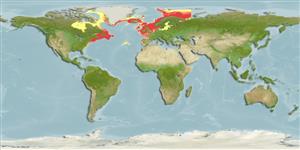
biển sống nổi và đáy; Ở đại duơng, biển (Ref. 51243); mức độ sâu 0 - 868 m (Ref. 58496), usually 50 - 150 m (Ref. 4701). Polar; 3°C - 11°C (Ref. 127841); 80°N - 32°N, 95°W - 49°E
Western Atlantic: Nunavut, Hudson Bay to James Bay and Labrador in Canada to New Jersey in USA; rarely to Chesapeake Bay in USA and Bermuda. Eastern Atlantic: Barents Sea, Iceland and Greenland to Spain (Ref. 4701).
Bộ gần gũi / Khối lượng (Trọng lượng) / Tuổi
Chín muồi sinh dục: Lm? range ? - ? cm Max length : 61.0 cm TL con đực/không giới tính; (Ref. 58426); 42.9 cm SL (female); Khối lượng cực đại được công bố: 9.5 kg (Ref. 4701); Khối lượng cực đại được công bố: 9.5 kg; Tuổi cực đại được báo cáo: 13 các năm (Ref. 54207)
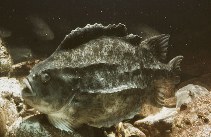
Các tia vây lưng cứng (tổng cộng) : 5 - 9; Các vây lưng mềm (tổng cộng) : 9 - 11; Tia cứng vây hậu môn: 0; Tia mềm vây hậu môn: 9 - 10; Động vật có xương sống: 28 - 29. First dorsal fin present but covered by thick layer of skin forming a characteristic high crest with embedded spines. Bony tubercles present, arranged in 3 widely separated rows of large flattened tubercles on each side of body. Gill openings large, extend- extending below level of upper pectoral fin ray. Pyloric present 36-79. Ventral sucking disc formed by the modified pelvic fin (Ref. 232). Body shape (shape guide): short and / or deep; Cross section: angular.
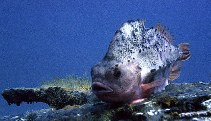
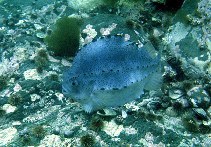
Basically solitary rather than a schooling fish. They exhibit a homing instinct (Ref. 9737). Adults inhabit rocky bottoms but may occur among floating seaweed. They migrate considerable distances in an annual cycle between deeper waters in winter and shallower waters in summer (Ref. 26141). Maximum depth reported at 868 m (Ref. 58426). Epibenthic-pelagic (Ref. 58426). Juveniles are found among algal clumps in bays and fjords moving offshore as they mature (Ref. 96431). During the spawning season the males become reddish in color on the underside, whereas females turn blue-green. Adults feed on ctenophores, medusas, small crustaceans, polychaetes, jelly fish and small fishes. Valued for their eggs, which make an inexpensive caviar (Ref. 9988). Eaten in Nordic countries, marketed fresh or smoked. Male flesh is most demanded and roe is sold fresh (Ref. 35388).
Stein, D.L., 1986. Cyclopteridae. p. 1269-1274. In P.J.P. Whitehead, M.-L. Bauchot, J.-C. Hureau, J. Nielsen and E. Tortonese (eds.) Fishes of the North-eastern Atlantic and the Mediterranean. UNESCO, Paris. Vol. III. (Ref. 4701)
Tình trạng Sách đỏ IUCN (Ref. 130435: Version 2025-2 (Global))
Nhiệt độ ưa thích (Tài liệu tham khảo 123201): 0.6 - 11.4, mean 7.1 °C (based on 732 cells).
Chỉ số đa dạng phát sinh loài (Tài liệu tham khảo 82804): PD50 = 1.0000 [Uniqueness, from 0.5 = low to 2.0 = high].
Bayesian length-weight: a=0.02630 (0.01101 - 0.06285), b=2.99 (2.77 - 3.21), in cm total length, based on LWR estimates for this (Sub)family-body shape (Ref. 93245).
Mức dinh dưỡng (Tài liệu tham khảo 69278): 3.9 ±0.0 se; based on diet studies.
Thích nghi nhanh (Tài liệu tham khảo 120179): thấp, thời gian nhân đôi của chủng quần tối thiểu là 4.5 - 14 năm (K=0.12; tm=3-5; tmax=13; Fec=100,000).
Prior r = 0.15, 95% CL = 0.10 - 0.22, Based on 1 full stock assessment.
Sự dễ bị tổn thương của nghề đánh cá (Ref. 59153): Moderate to high vulnerability (47 of 100). 🛈
Sự dễ bị tổn thương của khí hậu (Ref. 125649): Low to moderate vulnerability (26 of 100). 🛈