>
Clupeiformes (Herrings) >
Engraulidae (Anchovies) > Coiliinae
Etymology: Thryssa: Greek, thrissa, -es = shad (Ref. 45335).
Eponymy: Major-General Sir Peter Henry Scratchley (1835–1885) was the first High Commissioner of New Guinea. [...] (Ref. 128868), visit book page.
More on authors: Ramsay & Ogilby.
Environment: milieu / climate zone / نطاق العمق / distribution range
البيئة
بحري; المياه العذبة; مياه مخلوطة pelagic-neritic; أسماك نازلة (Ref. 51243). Tropical; 5°S - 15°S
Asia and Oceania: Papua New Guinea (Strickland and Fly Rivers), Indonesia (Lorentz River in Irian Jaya) and Australia (rivers entering the Gulf of Carpentaria).
الحجم / وزن / العمر
النضج: Lm ? range ? - ? cm
Max length : 40.0 cm SL ذكر/ مختلط الجنس; (Ref. 44894); common length : 20.0 cm SL ذكر/ مختلط الجنس; (Ref. 44894)
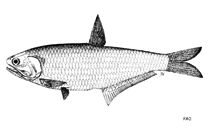
الأشواك الظهرية (المجموع) : 0; الأشعة الظهرية الناعمة (المجموع) : 12 - 13; شوكة شرجية: 0; أشعه شرجية لينه: 35 - 42. Belly with 19 + 12 = 31 keeled scutes from isthmus to anus. Maxilla short, only reaching to front border of pre-operculum; first supra-maxilla about two thirds of second. No dark blotches on nape or behind upper part of gill opening.
Body shape (shape guide): elongated; Cross section: compressed.
Inhabits streams and associated lagoons, in clear or turbid water; also in brackish estuaries (Ref. 44894). A riverine species reaching nearly 900 km up the Fly River, but also down to the estuary. Found in main river channels as well as smaller tributaries (Ref. 2847). It forms shoals in deeper water of lagoons. Breeding biology is poorly understood, but it seems likely that spawning takes place in fresh water as juveniles have been collected from the upper reaches of some Queensland rivers. The diet consists of small crustaceans, fishes, insects and some plant material (Ref. 44894). Piscivorous (at least as large adults), recorded as feeding on Clupeoides papuensis and Melanotaenia nigra in the Fly River. The only anchovy that is restricted to mainly freshwater habitats (Ref. 44894). The largest anchovy known so far.
Life cycle and mating behavior
النضج | التكاثر | وضع البيض | بيض | الخصوبة | Larvae
Wongratana, T., T.A. Munroe and M. Nizinski, 1999. Order Clupeiformes. Engraulidae. Anchovies. p. 1698-1753. In K.E. Carpenter and V.H. Niem (eds.) FAO species identification guide for fishery purposes. The living marine resources of the WCP. Vol. 3. Batoid fishes, chimaeras and bony fishes part 1 (Elopidae to Linophrynidae). FAO, Rome. (Ref. 9822)
IUCN Red List Status (Ref. 130435: Version 2025-1)
استخدامات بشرية
مصائد: مصائد تستهلك محلينا
أدوات
تقارير خاصة
Download XML
مصادر علي الأنترنت
Estimates based on models
Phylogenetic diversity index (مرجع
82804): PD
50 = 0.5000 [Uniqueness, from 0.5 = low to 2.0 = high].
Bayesian length-weight: a=0.00427 (0.00181 - 0.01006), b=3.11 (2.93 - 3.29), in cm total length, based on LWR estimates for this Genus-body shape (Ref.
93245).
مستوى غذائي (مرجع
69278): 4.2 ±0.73 se; based on food items.
المرونه (مرجع
120179): وسيط, الحد الزمني الأدني لتضاعف عدد أفراد المجتمع 1.4-4.4 سنة (Preliminary K or Fecundity.).
Fishing Vulnerability (Ref.
59153): Moderate vulnerability (39 of 100).
🛈