



Загрузить свой Фото и Видео
изображения | Изображение на Google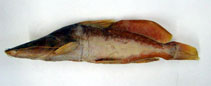 Bagrus bajad
Изображение сделано Musschoot, T.
изображения | Изображение на Google
Изображение сделано Musschoot, T.
Классификация / Имена народные названия | синонимы | Catalog of Fishes(род, виды) | ITIS | CoL | WoRMS | Cloffa
> Siluriformes (Catfishes) > Bagridae (Bagrid catfishes)
Etymology: Bagrus: Mozarabic, bagre, taken from Greek, pagros = a fish (Dentex sp.) (Ref. 45335).
Etymology: Bagrus: Mozarabic, bagre, taken from Greek, pagros = a fish (Dentex sp.) (Ref. 45335).
Окружающая среда: среда / климатическая зона / пределы глубины / диапазон распространения экология
; пресноводный демерсальный; мигрирует в реке (Ref. 51243); пределы глубины ? - 60 m (Ref. 43507). Tropical; 22°C - 28°C (Ref. 12468)
распространение Территории | регионы FAO | Экосистемы | места находок | карта точек | интродукции | Faunafri
Africa: Nile River, Lake Chad, Niger and Senegal rivers, lakes Mobutu [=Lake Albert] and Turkana (Ref. 3236). Reported from Sanaga River basin (Ref. 27691).
Длина при первой зрелости / Размер / Вес / Возраст
половая зрелость: Lm 37.4, range 29 - 34 cm
Max length : 112 cm FL самец/пол неопределен; (Ref. 43434); common length : 50.0 cm TL самец/пол неопределен; (Ref. 13851); наибольший вес (опубликованные данные): 12.5 kg (Ref. 43434); наибольший возраст (опубликованны данные): 8 годы (Ref. 51644)
Max length : 112 cm FL самец/пол неопределен; (Ref. 43434); common length : 50.0 cm TL самец/пол неопределен; (Ref. 13851); наибольший вес (опубликованные данные): 12.5 kg (Ref. 43434); наибольший возраст (опубликованны данные): 8 годы (Ref. 51644)
Краткое описание определительные ключи | морфология | морфометрия
колючие лучи спинного плавника (общее число) : 1; членистые (мягкие) лучи спинного плавника (общее число) : 8 - 12; колючие лучи анального плавника: 0; членистые (мягкие) лучи анального плавника: 13 - 15; позвонки: 48 - 53. Diagnosis: head much depressed, often ridged (Ref. 4903), roundly pointed when viewed from above (Ref. 28714). Head width 1.6-2.2 times in head length (Ref. 28714, 57125) or 47.5-63% HL (Ref. 81641). Body rather elongate, 5-6 times longer than deep (Ref. 7324, 57125). Premaxillary tooth plate 6-7 times as long as broad, a little shorter than the vomerine tooth plate (Ref. 43434). Occipital process 4-6 times longer than broad (Ref. 57125). 9-11 branched dorsal-fin rays (Ref. 57125), the first prolonged into short filaments (Ref. 13851, 31256, 57125). Longest filament comprised 3-4 times in standard length (Ref. 7324, 57125). Predorsal length 2.4-2.6 times in standard length (Ref. 57125). Adipose fin long, its origin well in front of the anal fin (Ref. 28714), narrowly separated from dorsal fin (Ref. 43434). Width of premaxillary tooth plate 2.5-2.8 times in head length (Ref. 57125). Lobes of caudal fin often with short filaments (Ref. 7324, 13851, 57125). Upper caudal-fin lobe comprised 2-3 times in standard length (Ref. 57125).
Body shape (shape guide): fusiform / normal; Cross section: circular.
Body shape (shape guide): fusiform / normal; Cross section: circular.
Found in lakes, swamps and rivers (Ref. 31256). Avoids salt water (Ref. 31439). Spends nearly the whole of the daylight hours in crevices of rocks and is therefor seldom seen (Ref. 51850). Lives and feeds on or near the bottom (Ref. 3034). Adults exclusively piscivorous (Ref. 31256). Preys on small fish, particularly Alestes spp. (Ref. 13851), or Chrysichthys auratus as in Lake Kainji (Ref. 3034), but also feeds on insects, crustaceans and molluscs (some debris and vegetable matter may also be ingested) (Ref. 28714). Efficiency of catching prey catfish is maximised by face to face attack, avoiding damage by dorsal and pectoral spines of the prey (Ref. 33614). There is some indication that the species comes to shallower water to breed (Ref. 43507). Spawning season extends from April to July (Ref. 51850). Parents build and guard the nest, which is like a flat disc with a central hole where the eggs are dropped; size of the nest and the central hole depend on the fish size (Ref. 51638). Males become up to 7 years old, females 8 years (Ref. 51644). Mean sizes and weight of males are less than those of females from the same age (Ref. 51644, 51645). An important food fish. Flesh is good eating and of economic importance (Ref. 36900), commonly sold as food (Ref. 43521). Reputed to reach 100,000 g.
Жизненный цикл и брачное поведение половая зрелость | размножение | нерест | икра | Плодовитость | личинки
Reproduction takes place during high water (Ref. 2756). There is some indication that the species comes to shallower water to breed (Ref. 43507). From 4 breeding fish taken, 3 were from inshore waters and 1 from 40m depth in the open water (Ref. 49805). The nest is a relatively large depression with the shape of a flat dish and proportions relative to the size of the fish (Ref. 51638). A single well formed hole of about 10-15cm in diameter and 10-15cm depth is present nearly in the middle (Ref. 51638). Eggs are laid inside this hole (Ref. 51638). Eggs are white, having a diameter of little more than 1 millimeter (Ref. 45962). Larvae stay in the hole a couple of days after hatching (Ref. 51638). They swim above the nest when disturbed and return to hole after disturbance has stopped (Ref. 51638).
Основная ссылка
Загрузите свои рекомендации | ссылки | координатор | соавторы
Risch, L.M., 1986. Bagridae. p. 2-35. In J. Daget, J.-P. Gosse and D.F.E. Thys van den Audenaerde (eds.) Check-list of the freshwater fishes of Africa (CLOFFA). ISNB, Brussels; MRAC, Tervuren; and ORSTOM, Paris. Vol. 2. (Ref. 3236)
Статус Красного Списка МСОП (Ref. 130435: Version 2025-2 (Global))
Не вызывающий беспокойства (LC) ; Date assessed: 13 January 2020
CITES
Not Evaluated
Угроза для людей
Harmless
Использование человеком
рыболовство: коммерческий; объект спортивного рыболовства: да
FAO - Системы аквакультуры: Производство; ; Publication: search | FishSource |
дополнительная информация
Трофическая экология
Пищевые предметы (добыча)
состав пищи
потребление пищи
Продовольственные пайки
хищники
Пищевые предметы (добыча)
состав пищи
потребление пищи
Продовольственные пайки
хищники
Динамика численности населения
Параметры роста
Макс. возраст / размер
Отношение длины к весу.
Отношение длины к длине.
Размерный состав
Преобразование массы
пополнение
численность
Параметры роста
Макс. возраст / размер
Отношение длины к весу.
Отношение длины к длине.
Размерный состав
Преобразование массы
пополнение
численность
Жизненный цикл
размножение
половая зрелость
Зрелость/Жиры относительно.
Плодовитость
нерест
Нерестовые скопления
икра
Развитие икры
личинки
динамика численности личинок
размножение
половая зрелость
Зрелость/Жиры относительно.
Плодовитость
нерест
Нерестовые скопления
икра
Развитие икры
личинки
динамика численности личинок
Анатомия
жаберная область
Мозг
Отолит
жаберная область
Мозг
Отолит
Физиология
Состав тела
Питательные вещества
Потребление кислорода
Тип плавания
Скорость плавания
Зрительные пигменты
Звук рыбы
Болезни и паразиты
Токсичность (LC50s)
Состав тела
Питательные вещества
Потребление кислорода
Тип плавания
Скорость плавания
Зрительные пигменты
Звук рыбы
Болезни и паразиты
Токсичность (LC50s)
генетика
Геном
генетика
Гетерозиготность
наследуемость
Генетическое разнообразие
Геном
генетика
Гетерозиготность
наследуемость
Генетическое разнообразие
Связанные с человеком
Системы аквакультуры
особенности рыбоводства
степень растяжения
Случаи заболевания сигуатерой
Марки, монеты и прочее.
Системы аквакультуры
особенности рыбоводства
степень растяжения
Случаи заболевания сигуатерой
Марки, монеты и прочее.
инструменты
Органическая викторина | Электронная книга | полевой определитель | определительные ключи | Длина-Частота | онтогенез | карта точек |
Catch-MSY |
Специальные отчеты
Проверить содержание в аквариумах | Проверить опубликованные видовые данные | Проверить опубликованные данные по аквакультуре
Скачать в формате XML
ресурсы в Интернет
AFORO (otoliths) | Aquatic Commons | BHL | Cloffa | Websites from users | Проверить FishWatcher | CISTI | Catalog of Fishes: род, виды | DiscoverLife | ECOTOX | FAO - Системы аквакультуры: Производство; ; Publication: search | Faunafri | Fishipedia | Fishtrace | GloBI | Google Books | Google Scholar | Google | IGFA World Record | OneZoom | Open Tree of Life | Otolith Atlas of Taiwan Fishes | PubMed | Reef Life Survey | Socotra Atlas | TreeBase | Tree of Life | Wikipedia: Вперёд, поиск | World Records Freshwater Fishing | Зоологическая летопись
Оценки, основанные на моделях
Индекс филогенетического разнообразия (ссылка 82804): PD50 = 0.5005 [Uniqueness, from 0.5 = low to 2.0 = high].
Bayesian length-weight: a=0.01072 (0.00855 - 0.01343), b=2.95 (2.89 - 3.01), in cm total length, based on LWR estimates for this species (Ref. 93245).
Трофический уровень (ссылка 69278): 4.0 ±0.2 se; based on diet studies.
Generation time: 5.6 (4.0 - 13.6) years. Estimated as median ln(3)/K based on 10 growth studies.
устойчивость к внешним воздействиям (ссылка 120179): низкий, минимальное время удвоения популяции 4.5-14 лет (tm=4-5; tmax=8; K=0.07-0.18; Fec=18,630-47,920).
Питательные вещества (Ref. 124155): Calcium = 61.2 [28.1, 126.1] mg/100g; Iron = 1.58 [0.87, 2.84] mg/100g; Protein = 17.4 [16.1, 18.7] %; Omega3 = 0.412 [0.145, 1.122] g/100g; Selenium = 99.4 [38.0, 226.6] μg/100g; VitaminA = 36.8 [10.7, 134.3] μg/100g; Zinc = 0.968 [0.617, 1.478] mg/100g (wet weight);