Environment: milieu / climate zone / depth range / distribution range
Écologie
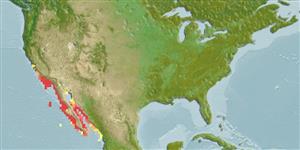
marin démersal; profondeur 30 - 137 m (Ref. 9330). Subtropical; 37°N - 20°N, 123°W - 105°W
Eastern Pacific: Monterey Bay in California, USA to the Gulf of California.
Taille / Poids / Âge
Maturity: Lm ? range ? - ? cm
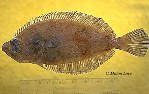
Max length : 40.0 cm TL mâle / non sexé; (Ref. 2850); common length : 35.0 cm TL mâle / non sexé; (Ref. 9330)
Utilized fresh and is said to be an excellent foodfish.
Life cycle and mating behavior
Maturité | Reproduction | Frai | Œufs | Fécondité | Larves
Oviparous (Ref. 101737). Distinct pairing (Ref. 205). Females produce numerous eggs in multiple spawnings during a prolonged spawning period (Ref. 101737).
Eschmeyer, W.N., E.S. Herald and H. Hammann, 1983. A field guide to Pacific coast fishes of North America. Boston (MA, USA): Houghton Mifflin Company. xii+336 p. (Ref. 2850)
Statut dans la liste rouge de l'IUCN (Ref. 130435)
Menace pour l'homme
Harmless
Utilisations par l'homme
Pêcheries: pêcheries vivrières
Plus d'informations
RéférencesAquacultureProfil d'aquacultureSouchesGénétiqueElectrophoresesHéritabilitéPathologiesTraitementNutrientsMass conversion
Outils
Articles particuliers
Télécharger en XML
Sources Internet
Estimates based on models
Preferred temperature (Ref.
123201): 13.2 - 19.8, mean 17.1 °C (based on 16 cells).
Phylogenetic diversity index (Ref.
82804): PD
50 = 0.5078 [Uniqueness, from 0.5 = low to 2.0 = high].
Bayesian length-weight: a=0.00912 (0.00470 - 0.01771), b=3.08 (2.90 - 3.26), in cm total length, based on LWR estimates for this species & (Sub)family-body (Ref.
93245).
Niveau trophique (Ref.
69278): 4.0 ±0.2 se; based on size and trophs of closest relatives
Generation time: 6.3 ( na - na) years. Estimated as median ln(3)/K based on 1
growth studies.
Résilience (Ref.
120179): Milieu, temps minimum de doublement de population : 1,4 à 4,4 années (tm=3; K=0.17).
Fishing Vulnerability (Ref.
59153): Moderate to high vulnerability (48 of 100).