



อัพโหลดของคุณ ภาพถ่าย และ วิดีโอ
รูปภาพหลายรูป | Google image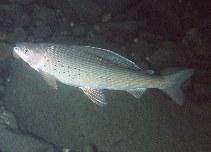 Thymallus arcticus
ภาพโดย Keeley, E.R.
รูปภาพหลายรูป | Google image
ภาพโดย Keeley, E.R.
การจำแนกประเภท / ชื่อ ชื่อสามัญ | ชื่อพ้อง | Catalog of Fishes(สกุล, ชนิด) | ITIS | CoL | WoRMS | Cloffa
> Salmoniformes (Salmons) > Salmonidae (Salmonids) > Thymallinae
Etymology: Thymallus: Greek, thymallos, -ou = a kind of fish similar to salmon (Ref. 45335); arcticus: arcticus meaning of the arctic (Ref. 1998).
More on author: Pallas.
Etymology: Thymallus: Greek, thymallos, -ou = a kind of fish similar to salmon (Ref. 45335); arcticus: arcticus meaning of the arctic (Ref. 1998).
More on author: Pallas.
สิ่งแวดล้อม : สิ่งแวดล้อม / เขตภูมิอากาศ / ระดับความลึก / ระยะการกระจายสินค้า นิเวศวิทยา
; น้ำจืด กลุ่มสัตว์หน้าดิน,กลุ่มสัตว์พื้นท้องน้ำ; สัตว์น้ำจืดที่มีการอพยพอย่างแท้จริงภายในแหล่งน้ำจืดเท่านั้น (Ref. 126106); ระดับความลึก 30 - ? m (Ref. 5723). Temperate; 71°N - 44°N
การแพร่กระจาย อาณาเขต | พื้นที่จำแนกตาม FAO | ระบบนิเวศหลายระบบ | การปรากฏขึ้น,การเกิดขึ้น,พบ | ตำแหน่งบนแผนที่ | การแนะนำ | Faunafri
North America: widespread in Arctic drainages from Hudson Bay, Canada to Alaska and in Arctic and Pacific drainages to central Alberta and British Columbia in Canada; upper Missouri River drainage in Montana, USA. Formerly in Great Lakes basin in Michigan, USA (Ref. 5723). Arctic Ocean basin in Siberia from Ob to Yenisei drainages and in Europe in some tributaries of Pechora (Usa, Kosyu, Kozhim), Korotaikha and Kara (Ref. 59043).
ความยาวเมื่อครบกำหนดครั้งแรก / ขนาด / น้ำหนัก / อายุ
วัยเจริญพันธุ์: Lm 24.5, range 23 - 26 cm
Max length : 76.0 cm TL เพศผู้/กระเทย; (Ref. 5723); common length : 34.3 cm TL เพศผู้/กระเทย; (Ref. 12193); น้ำหนักสูงสุดที่มีการรายงาน: 3.8 kg (Ref. 40637); อายุสูงสุดที่ได้รายงาน: 18 ปี (Ref. 33969)
Max length : 76.0 cm TL เพศผู้/กระเทย; (Ref. 5723); common length : 34.3 cm TL เพศผู้/กระเทย; (Ref. 12193); น้ำหนักสูงสุดที่มีการรายงาน: 3.8 kg (Ref. 40637); อายุสูงสุดที่ได้รายงาน: 18 ปี (Ref. 33969)
คำอธิบายสั้นๆ เครื่องมือที่ใช้ในการแยกชนิดสัตว์,สิ่งมีชีวิตออกจากกัน | สัณฐานวิทยา | ความยาวต่างๆ
เงี่ยงครีบหลัง (รวม) : 0; ก้านครีบอ่อนที่หาง (รวม) : 17 - 25; เงี่ยงครีบก้น: 0; ก้านครีบอ่อนที่ก้น: 11 - 15; สัตว์มีกระดูกสันหลัง: 58 - 62. Distinguished by its greatly enlarged dorsal fin and its small mouth, which has fine teeth on both jaws (Ref. 27547). Dorsal greatly enlarged in adults (especially males), reaching adipose fin when depressed, but is shorter in females; pelvic fins rather long, reach anal fin in adult males, but not in females; lower lobe of caudal often longer than upper (Ref. 27547). A strikingly colored fish, the dorsal surface is dark purple, or blue black to blue gray, the sides gray to dark blue with pinkish iridescence, the ventral surface gray to white (Ref. 1998). Scattered dark spots on sides, these being more numerous on the young; a dark longitudinal stripe along lower sides between pectoral and pelvic fins; dorsal fin dark with narrow purple edge (rows of reddish to orange or purple to green spots on body of fin); pelvic fins dark with irregular diagonal orange-yellow stripes; adipose, dorsal, anal, caudal and pectorals dusky to dark (Ref. 27547).
Body shape (shape guide): fusiform / normal; Cross section: compressed.
Body shape (shape guide): fusiform / normal; Cross section: compressed.
Adults inhabit open water of clear, cold, medium to large rivers and lakes. They enter rocky creeks to spawn (Ref. 5723). They occur in piedmont and montane cold streams, rivers and lakes with high oxygen concentrations (Ref. 59043). They form schools in moderate numbers (Ref. 9988). Young feed on zooplankton with a gradual shift to immature insects; adults feed mainly on surface insects but also take in fishes, fish eggs, lemmings, and planktonic crustaceans (Ref. 1998). Spawning takes place in montane streams with heavy current on shallows with rock-gravel bottom (Ref. 59043). Utilized fresh and can be fried, broiled, boiled, and baked (Ref. 9988).
วงจรชีวิตและพฤติกรรมการผสมพันธุ์ วัยเจริญพันธุ์ | การสืบพันธุ์ | การวางไข่ | เซลสืบพันธ์ของเพศเมีย(ไข่) | ความดกของไข่ | ตัวอ่อน
Spawning adults move into tributaries and males establish territories. At spawning, the male follows a female, courting her with displays of his dorsal fin. He then drifts over beside her and curves his extended dorsal fin over the female. The pair vibrates and release eggs and milt. No redd is constructed, but the vibrations of the tails during the spawning act stirs up the substrate and produce a slight depression (Ref. 28876, 28879, 28880, 28881, 28882). A female may spawn only once, or several times in different areas (Ref. 1998). After spawning, adults establish summer territories in pools generally farther upstream from the spawning site, majority moving downstream in mid-September (Ref. 28885, 28886).
อ้างอิงหลัก
อัพโหลดข้อมูลอ้างอิงของคุณ | อ้างอิง | ผู้ประสานงาน | ผู้ร่วมมือ
McClanes, A.J. (ed.), 1974. Field guide to freshwater fishes of North America. Holt, Rinehart and Winston, New York. 212 p. (Ref. 3221)
สถานะบัญชีแดงของ IUCN (Ref. 130435: Version 2025-2 (Global))
Least Concern (LC) ; Date assessed: 01 January 2008
CITES
Not Evaluated
ภัยคุกคามต่อมนุษย์
Harmless
การใช้ของมนุษย์
การประมง: มีการค้าเพียงเล็กน้อย; การตกปลาเป็นกีฬา: ใช่
FAO - Publication: search | FishSource |
ข้อมูลเพิ่มเติม
พลวัตของประชากร
พารามิเตอร์การเจริญเติบโต
อายุสูงสุด / ขนาด
ความยาว-น้ำหนักสัมพันธ์
ความยาว-ความยาวสัมพันธ์
ความยาว-ความถี่
การแปลงมวล
การทดแทนที่
อุดมสมบรูณ์
พารามิเตอร์การเจริญเติบโต
อายุสูงสุด / ขนาด
ความยาว-น้ำหนักสัมพันธ์
ความยาว-ความยาวสัมพันธ์
ความยาว-ความถี่
การแปลงมวล
การทดแทนที่
อุดมสมบรูณ์
วงจรชีวิต
การสืบพันธุ์
วัยเจริญพันธุ์
ความสมบูรณ์พันธุ์/เหงือกที่เกี่ยวข้อง
ความดกของไข่
การวางไข่
การรวมตัวของสปอน
เซลสืบพันธ์ของเพศเมีย(ไข่)
การพัฒนาไข่
ตัวอ่อน
พลวัตของสัตว์น้ำวัยอ่อน
การสืบพันธุ์
วัยเจริญพันธุ์
ความสมบูรณ์พันธุ์/เหงือกที่เกี่ยวข้อง
ความดกของไข่
การวางไข่
การรวมตัวของสปอน
เซลสืบพันธ์ของเพศเมีย(ไข่)
การพัฒนาไข่
ตัวอ่อน
พลวัตของสัตว์น้ำวัยอ่อน
การแพร่กระจาย
อาณาเขต
พื้นที่จำแนกตาม FAO
ระบบนิเวศหลายระบบ
การปรากฏขึ้น,การเกิดขึ้น,พบ
การแนะนำ
BRUVS - วิดีโอ
อาณาเขต
พื้นที่จำแนกตาม FAO
ระบบนิเวศหลายระบบ
การปรากฏขึ้น,การเกิดขึ้น,พบ
การแนะนำ
BRUVS - วิดีโอ
กายวิภาคศาสตร์
พื้นที่เหงือก
สมอง
หินโสต
พื้นที่เหงือก
สมอง
หินโสต
สรีรวิทยา
องค์ประกอบของร่างกาย
สารอาหาร
การใช้ออกซิเจน
ประเภทการว่ายน้ำ
ระดับความเร็วในการว่ายน้ำ
เม็ดสีที่มองเห็นได้
เสียงปลา
โรคและปรสิต
ความเป็นพิษ (LC50s)
องค์ประกอบของร่างกาย
สารอาหาร
การใช้ออกซิเจน
ประเภทการว่ายน้ำ
ระดับความเร็วในการว่ายน้ำ
เม็ดสีที่มองเห็นได้
เสียงปลา
โรคและปรสิต
ความเป็นพิษ (LC50s)
เกี่ยวข้องกับมนุษย์
ระบบการเพาะเลี้ยงสัตว์น้ำ
ประวัติการเพาะเลี้ยงสัตว์น้ำ
สายพันธุ์
กรณีซิเกวเทอรา
แสตมป์ เหรียญ อื่นๆ
ระบบการเพาะเลี้ยงสัตว์น้ำ
ประวัติการเพาะเลี้ยงสัตว์น้ำ
สายพันธุ์
กรณีซิเกวเทอรา
แสตมป์ เหรียญ อื่นๆ
เครื่องมือ
แบบทดสอบชีววิทยา | หนังสืออิเล็กทรอนิกส์ | คู่มือภาคสนาม | เครื่องมือที่ใช้ในการแยกชนิดสัตว์,สิ่งมีชีวิตออกจากกัน | ผู้มีความชำนาญในเรื่องความถี่ของความยาว | เครื่องมือในการศึกษาชีวประวัติ | ตำแหน่งบนแผนที่ |
จับ-MSY |
รายงานพิเศษ
ตรวจสอบการบำรุงรักษาตู้ปลา | ตรวจสอบเอกสารข้อเท็จจริงเกี่ยวกับสายพันธุ์ | ตรวจสอบเอกสารข้อเท็จจริงเกี่ยวกับการเพาะเลี้ยงสัตว์น้ำ
ดาวน์โหลด XML
หน้าสรุป | ข้อมูลสำคัญ | ชื่อสามัญ | ภาพถ่าย
แหล่งที่มาจากอินเตอร์เน็ต
AFORO (otoliths) | Alien/Invasive Species database | Aquatic Commons | BHL | Cloffa | Websites from users | Check FishWatcher | CISTI | Catalog of Fishes: สกุล, ชนิด | DiscoverLife | ECOTOX | FAO - Publication: search | Faunafri | Fishipedia | Fishtrace | GloBI | Google Books | Google Scholar | Google | IGFA World Record | OneZoom | Open Tree of Life | Otolith Atlas of Taiwan Fishes | PubMed | Reef Life Survey | Socotra Atlas | TreeBase | แผนภูมิชีวิตแบบต้นไม้ | Wikipedia: Go, ค้นหา | World Records Freshwater Fishing | บันทึกทางด้านสัตววิทยา
การประมาณค่าตามแบบจำลอง
ดัชนีความหลากหลายทางวิวัฒนาการ (อ้างอิง 82804): PD50 = 0.5000 [Uniqueness, from 0.5 = low to 2.0 = high].
Bayesian length-weight: a=0.00813 (0.00578 - 0.01143), b=3.09 (3.00 - 3.18), in cm total length, based on LWR estimates for this species (Ref. 93245).
ระดับชั้นอาหาร (อ้างอิง 69278): 3.3 ±0.2 se; based on diet studies.
Generation time: 7.3 (5.5 - 9.2) years. Estimated as median ln(3)/K based on 10 growth studies.
ความสามารถในการกลับคืนสู่ปกติ (อ้างอิง 120179): ขนาดกลาง, เวลาต่ำสุดที่จะทำให้ประชากรเพิ่มขึ้นเป็น 2 เท่าใช้เวลา 1.4 - 4.4 ปี (K=0.10-0.23; tm=2-6; tmax=18; Fec=416).
สารอาหาร (Ref. 124155): Calcium = 30.1 [7.9, 61.1] mg/100g; Iron = 0.678 [0.213, 1.553] mg/100g; Protein = 18.6 [16.8, 20.3] %; Omega3 = 1.91 [0.63, 6.48] g/100g; Selenium = 59.2 [22.5, 181.7] μg/100g; VitaminA = 23.2 [6.6, 69.7] μg/100g; Zinc = 0.709 [0.384, 1.339] mg/100g (wet weight); based on nutrient studies.