Myxine glutinosa, Atlantic hagfish

You can sponsor this page

Myxine glutinosa Linnaeus, 1758

Atlantic hagfish
إضافة ملاحظاتك Fish Watcher
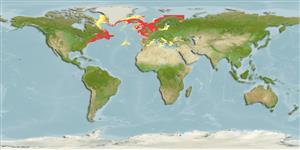
Native range | All suitable habitat | Point map | Year 2050
This map was computer-generated and has not yet been reviewed.
Myxine glutinosa   AquaMaps   Data sources: GBIF OBIS
ارفع صور و مقاطع فيديو
صور | مقاطع فيديو | صور قوقل
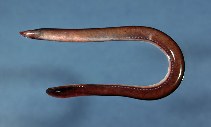
Image of Myxine glutinosa (Atlantic hagfish)
Myxine glutinosa
صورة بواسطة Flescher, D.

التصنيف / Names الأسماء الشائعة | مرادفات | Catalog of Fishes(جنس, الانواع) | ITIS | CoL | WoRMS | Cloffa

مكسيني (hagfishes) > Myxiniformes (Hagfishes) > Myxinidae (Hagfishes) > Myxininae
Etymology: Myxine: Ancient Greek word for a slimy fish: myxa, slime; -inus, one who, referring to copious amounts of slime produced by M. glutinosa (See ETYFish)glutinosa: Latin for viscous or sticky, referring to its seeming ability to turn water into slime (See ETYFish).
More on author: Linnaeus.

Environment: milieu / climate zone / نطاق العمق / distribution range البيئة

بحري قاعية المعيشة; غير مهاجرة; نطاق العمق 20 - 1200 m (Ref. 117245), usually 27 - 460 m (Ref. 119696). Boreal; 2°C - 13°C (Ref. 119696); 72°N - 24°N, 89°W - 41°E

التوزيع دول | مناطق الفاو | النظام البيئي | الظهور | نقطة علي الخريطة | مقدمة | Faunafri

North Atlantic: Murmansk to the Mediterranean Sea; Greenland to USA. Absent in eastern Mediterranean and Black Sea. Only hagfish in the Northeast Atlantic.

Length at first maturity / الحجم / وزن / العمر

النضج: Lm ?, range 25 - ? cm
Max length : 95.0 cm TL ذكر/ مختلط الجنس; (Ref. 119696); common length : 30.0 cm TL ذكر/ مختلط الجنس; (Ref. 35388); common length :40 cm TL (female)

وصف مختصر مفاتيح التعريف | الوصف الخارجي | قياسات المظهر الخارجي

Jawless mouth, single nasal aperture, only a single pair of external gill openings, no operculum or covering fold of skin. Grayish or reddish brown above, either plain. Variations in color correspond to the color of the sea bottom.
Body shape (shape guide): eel-like.

أحياء     المصطلحات (على سبيل المثال epibenthic)

Benthic with reported depths to 782 off Greenland; 960 m in Northwestern Atlantic; and 1,100 m off Norway (Ref. 119696). Found on muddy bottoms where they hide in the mud. Slime is used for defense. Feeds chiefly on dead and dying fish of varying species by boring into the body and consuming viscera and musculature. Chiefly nocturnal. Its eggs are few in number about 19-30 and large (20-25 mm), the horny shell has a cluster of anchor-tipped filaments at each end.

Life cycle and mating behavior النضج | التكاثر | وضع البيض | بيض | الخصوبة | Larvae

Copulatory organ absent. The gonads of hagfishes are situated in the peritoneal cavity. The ovary is found in the anterior portion of the gonad, and the testis is found in the posterior part. The animal becomes female if the cranial part of the gonad develops or male if the caudal part undergoes differentiation. If none develops, then the animal becomes sterile. If both anterior and posterior parts develop, then the animal becomes a functional hermaphrodite. However, hermaphroditism being characterised as functional needs to be validated by more reproduction studies (Ref. 51361 ). Probably breed throughout the year in deep water (Ref. 35388).

المرجع الرئيسي Upload your references | مراجع | المنظم | المتعاونين

Fernholm, B., 1998. Hagfish systematics. p. 33-44. In J.M. Jørgensen, J.P. Lomholt, R.E. Weber and H. Malte (eds.) The biology of hagfishes. Chapman & Hall, London. 578 p. (Ref. 31276)

IUCN Red List Status (Ref. 130435: Version 2025-1)

  Least Concern (LC) ; Date assessed: 12 November 2009

CITES

Not Evaluated

CMS (Ref. 116361)

Not Evaluated

خطر للأنسان

  Harmless


استخدامات بشرية

مصائد: غير ذات اهمية
FAO - Publication: search | FishSource | البحر حولنا

مزيد من المعلومات

علم البيئة الغذائية
Food items (preys)
التركيبة الغذائية
استهلاك الأغذية
Food rations
مفتريسات
البيئة
البيئة
Home ranges
Population dynamics
معاملات النمو
Max. ages / sizes
Length-weight rel.
Length-length rel.
الطول- الترددات
Mass conversion
توظيف
الوفرة
Life cycle
التكاثر
النضج
Maturity/Gills rel.
الخصوبة
وضع البيض
Spawning aggregations
بيض
تطور البيضة
Larvae
حركة انتقال اليرقات
التوزيع
دول
مناطق الفاو
النظام البيئي
الظهور
مقدمة
BRUVS - Videos
Anatomy
منطقة الخياشيم
Brain
Otolith
Physiology
Body composition
Nutrients
استهلاك الأوكسجين
نوع السباحة
سرعة السباحة
Visual pigments
Fish sound
Diseases & Parasites
Toxicity (LC50s)
جيني
الوراثة
جيني
Heterozygosity
التوريث
Human related
Aquaculture systems
ملامح تربية الأحياء المائية
سلالات
Ciguatera cases
Stamps, coins, misc.
مراجع
مراجع

أدوات

تقارير خاصة

Download XML

مصادر علي الأنترنت

Estimates based on models

Preferred temperature (مرجع 123201): 1 - 10.2, mean 5.3 °C (based on 550 cells).
Phylogenetic diversity index (مرجع 82804):  PD50 = 0.5000   [Uniqueness, from 0.5 = low to 2.0 = high].
Bayesian length-weight: a=0.00115 (0.00044 - 0.00298), b=3.03 (2.80 - 3.26), in cm total length, based on LWR estimates for this (Sub)family-body shape (Ref. 93245).
مستوى غذائي (مرجع 69278):  4.5   ±0.0 se; based on diet studies.
المرونه (مرجع 120179):  منخفض, الحد الزمني الأدني لتضاعف عدد أفراد المجتمع 4.5-14 سنة (Fec= 20-30).
Prior r = 0.10, 95% CL = 0.07 - 0.15, Based on 1 full stock assessment.
Fishing Vulnerability (Ref. 59153):  High vulnerability (58 of 100). 🛈
Climate Vulnerability (Ref. 125649):  Moderate vulnerability (38 of 100). 🛈
Nutrients (Ref. 124155):  Calcium = 7.79 [2.08, 25.45] mg/100g; Iron = 0.278 [0.095, 0.782] mg/100g; Protein = 2.26 [0.00, 6.14] %; Omega3 = 0.301 [0.116, 0.790] g/100g; Selenium = 18.8 [5.5, 64.6] μg/100g; VitaminA = 11 [2, 52] μg/100g; Zinc = 0.281 [0.133, 0.569] mg/100g (wet weight);