



Melanocetus johnsonii Günther, 1864
Humpback anglerfish
Waarneming toevoegen in Fish Watcher
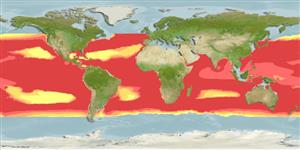
| Native range | All suitable habitat | Point map | Year 2050 |
|
| This map was computer-generated and has not yet been reviewed. |
| Melanocetus johnsonii AquaMaps Data sources: GBIF OBIS |
Uploaden van uw Foto's en video's
Afbeeldingen | Google afbeelding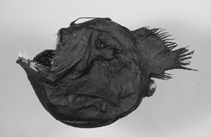 Melanocetus johnsonii
Afbeelding van Ho, H.-C.
Afbeeldingen | Google afbeelding
Afbeelding van Ho, H.-C.
Classificatie / Namen Lokale namen | Synoniemen | Catalog of Fishes(Genus, Soort(en)) | ITIS | CoL | WoRMS | Cloffa
> Lophiiformes (Anglerfishes) > Melanocetidae (Black Seadevils)
Etymology: Melanocetus: Greek, 'melas' or 'melanos' = black + Greek, 'ketos' = any large sea creature, more often referring to a whale (Ref. 86949).
Eponymy: James Yate Johnson (1820–1900) was a British naturalist who moved to Madeira (1851) and spent the rest of his life there. [...] (Ref. 128868), visit book page.
More on author: Günther.
Etymology: Melanocetus: Greek, 'melas' or 'melanos' = black + Greek, 'ketos' = any large sea creature, more often referring to a whale (Ref. 86949).
Eponymy: James Yate Johnson (1820–1900) was a British naturalist who moved to Madeira (1851) and spent the rest of his life there. [...] (Ref. 128868), visit book page.
More on author: Günther.
Milieu: milieu / Klimaatzone / Diepte / verspreidingsgebied Ecologie
marien bathypelagisch; diepte 100 - 4500 m (Ref. 74511), usually 100 - 1500 m (Ref. 4118). Deep-water; 50°N - 50°S, 180°W - 180°E
Verspreiding Gebieden | FAO regio's | Ecosystemen | Voorkomen | Verspreidingskaart | Introducties | Faunafri
Tropical to temperate parts of all oceans. South China Sea and East China Sea (Ref.74511).
Grootte / Gewicht / Leeftijd
Maturiteit: Lm ? range ? - ? cm
Max length : 2.9 cm TL mannelijk / geslacht onbekend; (Ref. 4491); 18.0 cm TL (female)
Max length : 2.9 cm TL mannelijk / geslacht onbekend; (Ref. 4491); 18.0 cm TL (female)
Korte beschrijving Determinatiesleutels | Morfologie | Morfometrie
Dorsale stekels (totaal) : 1; Dorsale zachte stralen (totaal) : 13 - 17; Anale stekels: 0; Anale zachte stralen: 3 - 5. Esca with compressed posterior and anterior crests; anterior margin of vomer nearly straight; minute skin spines present over most of body (Ref. 13608). Branchiostegal rays 6 (Ref. 36493). Caudal-fin rays 8. Scales are cone-shaped, hollow and translucent; with circular base and a free edge pointing towards the caudal region. Left otolith, oblong shape with regular edges, inner face does not present rostrum, antirostrum or cisure (Ref. 41244).
Distinguishing characteristics of metamorphosed female: least outside width between frontals 13.5-28.6% SL; upper jaw with 48-134 teeth, lower jaw 32-78 teeth; length of longest tooth in lower jaw 8.4-25% SL; width of pectoral fin lobe 10.7-17.8% SL; width of escal bulb 4.3-8.6% SL; length of illicium 32.4-60.8% SL; skin with minute spinules over most of body; relatively thick integument 1.55 mm (Ref. 86949). Distinguishing characteristics of metamorphosed male: upper denticular with 9-13 ventrally directed anterior teeth and posteromedial series of 8-11 teeth; lower denticular 12-24 teeth; posterior nostril contiguous with eye; at most 24 olfactory lamellae; skin naked or spinulose (Ref. 86949).
Body shape (shape guide): short and / or deep.
Body shape (shape guide): short and / or deep.
Meso- and bathypelagic (Ref. 58302). Males dwarfed and non-parasitic (Ref. 4491). Caught with plankton nets (Ref. 559). Capable of catching and swallowing prey larger than itself, as witness the approximately 24.0 cm SL specimen of Chauliodus sp. in the stomach of a 6.6 cm SL individual (NMNZ P 14537) (Ref. 58502). Larvae are found primarily in upper 100 m (Ref. 36493). Oviparous, with planktonic larvae (Ref. 36493). Eggs are presumably contained in floating gelatinous rafts (Ref. 36493).
Levenscyclus en paargedrag Maturiteit | Voortplanting | Paaien | Eieren | Fecunditeit | Larven
Oviparous (Ref. 36493).
Hoofdreferentie
Upload uw referenties | Referenties | Coördinator | Medewerkers
Anderson, M.E. and R.W. Leslie, 2001. Review of the deep-sea anglerfishes (Lophiiformes: Ceratioidei) of southern Africa. Ichthyological Bulletin of the J.L.B. Smith Institute of Ichthyology 70:30 p. (Ref. 40877)
Status op de Rode Lijst van het IUCN (Ref. 130435: Version 2025-2 (Global))
Niet bedreigd (LC) ; Date assessed: 09 May 2013
CITES
Not Evaluated
Gevaar voor de mens
Harmless
Gebruik door de mens
Visserij: van geen belang
FAO - Publication: search | FishSource |
Meer informatie
Trofische ecologie
Voedsel (prooien)
Dieetsamenstelling
Voedselconsumptie
Voedselrantsoenen
Predatoren
Voedsel (prooien)
Dieetsamenstelling
Voedselconsumptie
Voedselrantsoenen
Predatoren
Populatiedynamica
Groeiparameters
Max. leeftijden / maten
Lengte-gewicht rel.
Lengte-lengte rel.
Lengtefrequenties
Massaconversie
Rekrutering
Abundantie
Groeiparameters
Max. leeftijden / maten
Lengte-gewicht rel.
Lengte-lengte rel.
Lengtefrequenties
Massaconversie
Rekrutering
Abundantie
Levenscyclus
Voortplanting
Maturiteit
Rijpheid/kieuwen rel.
Fecunditeit
Paaien
Paaibestanden
Eieren
Ontwikkeling van de eieren
Larven
Larvale populatiedynamiek
Voortplanting
Maturiteit
Rijpheid/kieuwen rel.
Fecunditeit
Paaien
Paaibestanden
Eieren
Ontwikkeling van de eieren
Larven
Larvale populatiedynamiek
Anatomie
Kieuwoppervlak
Hersenen
Otoliet
Kieuwoppervlak
Hersenen
Otoliet
Fysiologie
Lichaamssamenstelling
Voedingsstoffen
Zuurstofverbruik
Type zwemmen
Zwemsnelheid
Visuele pigmenten
Vis geluid
Ziekten en parasieten
Toxiciteit (LC50)
Lichaamssamenstelling
Voedingsstoffen
Zuurstofverbruik
Type zwemmen
Zwemsnelheid
Visuele pigmenten
Vis geluid
Ziekten en parasieten
Toxiciteit (LC50)
Genetica
genoom
Genetica
Heterozygositeit
Erfelijkheid
Genetische diversiteit
genoom
Genetica
Heterozygositeit
Erfelijkheid
Genetische diversiteit
Menselijk gerelateerd
Aquacultuursystemen
Aquacultuurprofielen
Kweeklijnen
Ciguatera gevallen
Postzegels, munten, diversen.
Aquacultuursystemen
Aquacultuurprofielen
Kweeklijnen
Ciguatera gevallen
Postzegels, munten, diversen.
Tools
Speciale rapporten
Bekijk gegevens voor het houden in een aquarium | Bekijk Fact Sheets voor de soort | Bekijk Aquacultuur Fact Sheets
Download XML
Internetbronnen
AFORO (otoliths) | Aquatic Commons | BHL | Cloffa | Websites from users | Bekijk FishWatcher | CISTI | Catalog of Fishes: Genus, Soort(en) | DiscoverLife | ECOTOX | FAO - Publication: search | Faunafri | Fishipedia | Fishtrace | GloBI | Google Books | Google Scholar | Google | IGFA World Record | Nationale databanken | OneZoom | Open Tree of Life | Otolith Atlas of Taiwan Fishes | PubMed | Reef Life Survey | Socotra Atlas | TreeBase | Tree of Life | Wikipedia: ga naar, zoek | World Records Freshwater Fishing | Zoobank | Zoological Record
Schattingen op basis van modellen
Gewenste temperatuur (Ref. 123201): 3.1 - 19.7, mean 7.4 °C (based on 4346 cells).
Fylogenetische diversiteitsindex (Ref. 82804): PD50 = 0.5312 [Uniqueness, from 0.5 = low to 2.0 = high].
Bayesian length-weight: a=0.01995 (0.00906 - 0.04395), b=3.01 (2.83 - 3.19), in cm total length, based on all LWR estimates for this body shape (Ref. 93245).
Trofisch niveau (Ref. 69278): 4.1 ±0.69 se; based on food items.