



Προσθέστε την παρατήρησή σας στο Fish Watcher
| Native range | All suitable habitat | Point map | Year 2050 |

|
| This map was computer-generated and has not yet been reviewed. |
| Engraulis japonicus AquaMaps Data sources: GBIF OBIS |
Ανεβάστε το φωτογραφίες και Βίντεο
Φωτογραφίες | Google image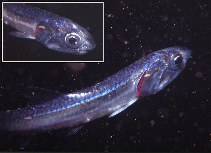 Engraulis japonicus
Εικόνα από Zsilavecz, G.
Φωτογραφίες | Google image
Εικόνα από Zsilavecz, G.
Ταξινόμηση / Ονόματα Κοινά ονόματα | Συνώνυμα | Catalog of Fishes(Γένος, Είδη) | ITIS | CoL | WoRMS | Cloffa
> Clupeiformes (Herrings) > Engraulidae (Anchovies) > Engraulinae
Etymology: Engraulis: Greek, eggraulis, -eos = anchovy (Ref. 45335).
More on authors: Temminck & Schlegel.
Etymology: Engraulis: Greek, eggraulis, -eos = anchovy (Ref. 45335).
More on authors: Temminck & Schlegel.
Περιβάλλον: περιβάλλον / κλιματική ζώνη / εύρος βάθους / εύρος διανομής Οικολογία
Θαλασσινό(ά) pelagic-neritic; ωκεανόδρομο(ς) (Ref. 51243); εύρος βάθους 0 - 400 m (Ref. 50550). Temperate; 8°C - 30°C (Ref. 56557); 62°N - 18°N, 105°E - 175°E
Κατανομή Εδάφη | Περιοχές FAO | Οικοσυστήματα | Παρουσίες | Σημειακός χάρτης | Εισαγωγές | Faunafri
Northwest Pacific: Kamchatka to Sakhalin Islands, Sea of Japan and Pacific coasts of Japan, and south to almost Canton/Taiwan and Gulf of Tonkin, Vietnam; rare records (seems to represent stray fishes) off the coasts of Luzon and Western Mindanao, Philippines and from Manado and Ujung Pandang, Sulawesi, Indonesia. Temperate to subtropical.
Μήκος κατά την πρώτη ωρίμανση / Μέγεθος / Βάρος / Ηλικία
Γεννητική Ωρίμανση: Lm 10.5, range 10 - 11 cm
Max length : 18.0 cm TL αρσενικό/απροσδιόριστο; (Ref. 56527); common length : 14.0 cm TL αρσενικό/απροσδιόριστο; (Ref. 56527); μεγ. δημοσιευμένο βάρος: 45.00 g (Ref. 56527); μεγ. αναφερόμενη ηλικία: 4 έτη (Ref. 56527)
Max length : 18.0 cm TL αρσενικό/απροσδιόριστο; (Ref. 56527); common length : 14.0 cm TL αρσενικό/απροσδιόριστο; (Ref. 56527); μεγ. δημοσιευμένο βάρος: 45.00 g (Ref. 56527); μεγ. αναφερόμενη ηλικία: 4 έτη (Ref. 56527)
Σύντομη περιγραφή Κλείδες προσδιορισμού | Μορφολογία | Μορφομετρία
Ραχιαίες άκανθες (συνολικά) : 0; Μαλακές ραχιαίες ακτίνες (συνολικά) : 12 - 14; Εδρικές άκανθες: 0; Μαλακές εδρικές ακτίνες: 13 - 18. Differs very little from the European anchovy (see E. encrasicolus) and can be identified from that description. Of other anchovies found in the southern part of its distribution, only species of Encrasicholina and Stolephorus are of similar appearance, but all have small spine-like pre-pelvic scutes (usually 2 to 7 scutes). Thryssa have compressed bodies and a keel of scutes along belly.
Body shape (shape guide): elongated; Cross section: oval.
Body shape (shape guide): elongated; Cross section: oval.
Occurs in large schools near the surface, mainly in coastal waters but as far out as over 1,000 km from the shore. Tends to move more northward and inshore in spring and summer. Juveniles associate with drifting seaweed (Ref. 12114, 12115). Feeds on copepods, but also on other small crustaceans, molluscan larvae, fish eggs and larvae and diatoms. Marketed fresh and salted, processed into fishmeal and oil (Ref. 12484).
Κύκλος ζωής και συμπεριφορά ζευγαρώματος Γεννητική Ωρίμανση | Αναπαραγωγή | Γεννοβολία | Αβγά | Γονιμότητα | Προνύμφες
Κύρια αναφορά
Ανεβάστε τις αναφορές σας | Αναφορές | Συντονιστής | Συνεργάτες
Whitehead, P.J.P., G.J. Nelson and T. Wongratana, 1988. FAO Species Catalogue. Vol. 7. Clupeoid fishes of the world (Suborder Clupeoidei). An annotated and illustrated catalogue of the herrings, sardines, pilchards, sprats, shads, anchovies and wolf-herrings. FAO Fish. Synop. 125(7/2):305-579. Rome: FAO. (Ref. 189)
Κατάσταση Κόκκινου Καταλόγου IUCN (Ref. 130435: Version 2025-2 (Global))
Least Concern (LC) ; Date assessed: 16 May 2018
CITES
Not Evaluated
Απειλή για τον άνθρωπο
Reports of ciguatera poisoning (Ref. 4690)
Ανθρώπινες χρήσεις
αλιεία: πολύ εμπορικό; Υδατοκαλλιέργειες: Εμπορικό(ά); δόλωμα: usually
FAO - αλιεία: προφίλ του είδους, landings search; Publication: search | FishSource | Η θάλασσα γύρω μας
Περισσότερες πληροφορίες
Πληθυσμιακή δυναμική
Παράμετροι Αύξησης
Μέγιστες ηλικίες / μεγέθη
Μήκος-βάρος σχετ.
Μήκος-μήκος rel.
Μήκος-συχνότητες
Μετατροπή μάζας
Στρατολόγηση
Αφθονία
Παράμετροι Αύξησης
Μέγιστες ηλικίες / μεγέθη
Μήκος-βάρος σχετ.
Μήκος-μήκος rel.
Μήκος-συχνότητες
Μετατροπή μάζας
Στρατολόγηση
Αφθονία
Κύκλος ζωής
Αναπαραγωγή
Γεννητική Ωρίμανση
Ωριμότητα / Gills rel.
Γονιμότητα
Γεννοβολία
Συγκεντρώσεις αναπαραγωγής
Αβγά
Ανάπτυξη αυγών
Προνύμφες
Δυναμική προνυμφών
Αναπαραγωγή
Γεννητική Ωρίμανση
Ωριμότητα / Gills rel.
Γονιμότητα
Γεννοβολία
Συγκεντρώσεις αναπαραγωγής
Αβγά
Ανάπτυξη αυγών
Προνύμφες
Δυναμική προνυμφών
Ανατομία
Επιφάνεια βραγχίων
Εγκέφαλος
Ωτόλιθος
Επιφάνεια βραγχίων
Εγκέφαλος
Ωτόλιθος
Φυσιολογία
Σύνθεση σώματος
Θρεπτικά συστατικά
Κατανάλωση οξυγόνου
Τύπος κολύμβησης
Ταχύτητα κολύμβησης
Οπτικές χρωστικές ουσίες
Ήχος ψαριών
Ασθένειες & παράσιτα
Τοξικότητα (LC50)
Σύνθεση σώματος
Θρεπτικά συστατικά
Κατανάλωση οξυγόνου
Τύπος κολύμβησης
Ταχύτητα κολύμβησης
Οπτικές χρωστικές ουσίες
Ήχος ψαριών
Ασθένειες & παράσιτα
Τοξικότητα (LC50)
Ανθρώπινη σχέση
Συστήματα υδατοκαλλιέργειας
Προφίλ υδατοκαλλιεργειών
Στελέχοι
Περιπτώσεις Ciguatera
Γραμματόσημα, νομίσματα, διάφορα.
Συστήματα υδατοκαλλιέργειας
Προφίλ υδατοκαλλιεργειών
Στελέχοι
Περιπτώσεις Ciguatera
Γραμματόσημα, νομίσματα, διάφορα.
Εργαλεία
Βιολογικό κουίζ | Ηλεκτρονικό βιβλίο | Οδηγός πεδίου | Κλείδες προσδιορισμού | Ανάλυση κατά μήκος συνθέσεων | Εργαλείο ιστορίας ζωής | Σημειακός χάρτης |
Catch-MSY |
Ειδικές εκθέσεις
Έλεγχος για συντήρηση ενυδρείου | Ελέγξτε για ενημερωτικά δελτία ειδών | Ελέγξτε για ενημερωτικά δελτία υδατοκαλλιέργειας
Λήψη XML
Διαδικτυακές πηγές
AFORO (otoliths) | Aquatic Commons | BHL | Cloffa | Websites from users | Check FishWatcher | CISTI | Catalog of Fishes: Γένος, Είδη | DiscoverLife | ECOTOX | FAO - αλιεία: προφίλ του είδους, landings search; Publication: search | Faunafri | Fishipedia | Fishtrace | GloBI | Google Books | Google Scholar | Google | IGFA World Record | Εθνικές βάσεις δεδομένων | OneZoom | Open Tree of Life | Otolith Atlas of Taiwan Fishes | PubMed | Reef Life Survey | Socotra Atlas | TreeBase | Δέντρο Ζωής | Wikipedia: Go, αναζήτηση | World Records Freshwater Fishing | Zoobank | Zoological Record
Εκτιμήσεις βάσει μοντέλων
|
Δείκτης φυλογενετικής ποικιλότητας (Αναφ. 82804) |
PD50 = 0.5020 [Uniqueness, from 0.5 = low to 2.0 = high]. |
| Bayesian length-weight | a=0.00389 (0.00263 - 0.00576), b=3.10 (2.98 - 3.22), in cm total length, based on LWR estimates for this species & Genus-body shape (Ref. 93245). |
|
Τροφικό Επίπεδο (Αναφ. 69278) |
3.1 ±0.1 se; based on diet studies. |
| Generation time | 1.1 (1.0 - 1.8) years. Estimated as median ln(3)/K based on 16 growth studies. |
|
Ελαστικότητα (Αναφ. 120179) |
Υψηλό, ελάχιστος χρόνος για διπλασιασμό πληθυσμού < 15 μήνες (K=1.05; tm=1-2; tmax=3). |
| Rate of population increase | Prior r = 0.90, 95% CL = 0.60 - 1.36, Based on 3 full stock assessments. |
|
Ευπάθεια στην αλιεία (Ref. 59153) |
Low vulnerability (23 of 100). 🛈 |
|
Κατηγορία τιμής (Ref. 80766) |
Low. |
|
Θρεπτικά συστατικά (Ref. 124155) |
Calcium = 148 [56, 380] mg/100g; Iron = 0.698 [0.304, 1.783] mg/100g; Protein = 18.3 [16.8, 19.7] %; Omega3 = 1.57 [0.74, 3.39] g/100g; Selenium = 14.9 [5.6, 40.7] μg/100g; VitaminA = 7.51 [1.30, 42.67] μg/100g; Zinc = 0.939 [0.527, 1.630] mg/100g (wet weight); |