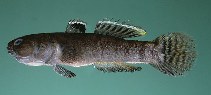
>
Gobiiformes (Gobies) >
Gobiidae (Gobies) > Gobionellinae
Etymology: Mugilogobius: Latin, mugil, -ilis = grey mullet + Latin, gobius = gidgeon (Ref. 45335).
More on author: Weber.
Environment: milieu / climate zone / rango de profundidad / distribution range
Ecología
marino; agua dulce; salobre demersal; anfidromo (Ref. 59012). Tropical
Western Pacific.
Tamaño / Peso / Age
Madurez: Lm ? range ? - ? cm
Max length : 4.0 cm TL macho / no sexado; (Ref. 11344)
Facultative air-breathing in the genus (Ref. 126274); Benthic on mud and sand in brackish to freshwaters, often in mangroves (Ref. 58302). Adults feed primarily on worms and other small benthic invertebrates; breeding habits are unknown (Ref. 44091).
Life cycle and mating behavior
Madurez | Reproducción | Puesta | Huevos | Fecundidad | Larva
Masuda, H., K. Amaoka, C. Araga, T. Uyeno and T. Yoshino, 1984. The fishes of the Japanese Archipelago. Vol. 1. Tokai University Press, Tokyo, Japan. 437 p. (text). (Ref. 559)
IUCN Red List Status (Ref. 130435: Version 2025-1)
Threat to humans
Harmless
Human uses
Herramientas
Special reports
Download XML
Fuentes de Internet
Estimates based on models
Phylogenetic diversity index (Referencia
82804): PD
50 = 0.5000 [Uniqueness, from 0.5 = low to 2.0 = high].
Bayesian length-weight: a=0.00724 (0.00338 - 0.01553), b=3.05 (2.87 - 3.23), in cm total length, based on LWR estimates for this (Sub)family-body shape (Ref.
93245).
Nivel trófico (Referencia
69278): 3.3 ±0.32 se; based on food items.
Resiliencia (Referencia
120179): Alto, población duplicada en un tiempo mínimo inferior a 15 meses (Preliminary K or Fecundity.).
Fishing Vulnerability (Ref.
59153): Low vulnerability (10 of 100).
🛈