>
Gobiiformes (Gobies) >
Gobiidae (Gobies) > Gobionellinae
Etymology: Mugilogobius: Latin, mugil, -ilis = grey mullet + Latin, gobius = gidgeon (Ref. 45335).
More on author: Weber.
Environment: milieu / climate zone / distribuzione batimetrica / distribution range
Ecologia
marino; acqua dolce; salmastro demersale; amfidromo (Ref. 59012). Tropical
Western Pacific.
Size / Peso / Age
Maturità: Lm ? range ? - ? cm
Max length : 4.0 cm TL maschio/sesso non determinato; (Ref. 11344)
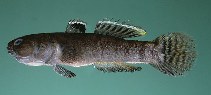
Facultative air-breathing in the genus (Ref. 126274); Benthic on mud and sand in brackish to freshwaters, often in mangroves (Ref. 58302). Adults feed primarily on worms and other small benthic invertebrates; breeding habits are unknown (Ref. 44091).
Life cycle and mating behavior
Maturità | Riproduzione | Deposizione | Uova | Fecundity | Larve
Masuda, H., K. Amaoka, C. Araga, T. Uyeno and T. Yoshino, 1984. The fishes of the Japanese Archipelago. Vol. 1. Tokai University Press, Tokyo, Japan. 437 p. (text). (Ref. 559)
IUCN Red List Status (Ref. 130435: Version 2025-1)
Threat to humans
Harmless
Human uses
Strumenti
Special reports
Download XML
Fonti Internet
Estimates based on models
Phylogenetic diversity index (Fonte Biblio.
82804): PD
50 = 0.5000 [Uniqueness, from 0.5 = low to 2.0 = high].
Bayesian length-weight: a=0.00724 (0.00338 - 0.01553), b=3.05 (2.87 - 3.23), in cm total length, based on LWR estimates for this (Sub)family-body shape (Ref.
93245).
Trophic level (Fonte Biblio.
69278): 3.3 ±0.32 se; based on food items.
Resilienza (Fonte Biblio.
120179): Alto, tempo minimo di raddoppiamento della popolazione meno di 15 mesi (Preliminary K or Fecundity.).
Fishing Vulnerability (Ref.
59153): Low vulnerability (10 of 100).
🛈