



अपना अपलोड करें तस्वीरें और वीडियो
तस्वीरे | Google image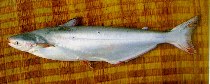 Pangasius krempfi
चित्र स्रोत: AP Roberts, T.R.
तस्वीरे | Google image
चित्र स्रोत: AP Roberts, T.R.
वर्गीकरण / नाम आम नाम | उपशब्द | Catalog of Fishes(वर्ग, प्रजाति) | ITIS | CoL | WoRMS | Cloffa
> Siluriformes (Catfishes) > Pangasiidae (Shark catfishes)
Etymology: Pangasius: The Vietnamese name of a fish (Ref. 45335).
Eponymy: Dr Armand-Alfred-Antoine Krempf (d: 1879) was a French marine biologist, who first went to Vietnam (1903) as part of a scientific expedition to Hanoi. [...] (Ref. 128868), visit book page.
Etymology: Pangasius: The Vietnamese name of a fish (Ref. 45335).
Eponymy: Dr Armand-Alfred-Antoine Krempf (d: 1879) was a French marine biologist, who first went to Vietnam (1903) as part of a scientific expedition to Hanoi. [...] (Ref. 128868), visit book page.
पर्यावरण: पर्यावरण / जलवायु क्षेत्र / गहराई सीमा / वितरण सीमा पारिस्थितिकी
समुद्री; स्वच्छ जल, अलवण जल; खारा बेनथोपिलाजिक; पोटामोड़िरोमस (Ref. 138296). Tropical
वितरण प्रदेशों | ऐफ ऐ ओ क्षेत्र | पारिस्थितिकी प्रणालियों | संयोग | बिन्दु नक्शा | भूमिका | Faunafri
Asia.
आकार / वज़न / आयु
परिपक्व अवधि: Lm ? range ? - ? cm
Max length : 120 cm SL पुल्लिंग / अलिंग; (Ref. 30857); अधिकतम प्रकाशित वज़न: 14.0 kg (Ref. 9497)
Max length : 120 cm SL पुल्लिंग / अलिंग; (Ref. 30857); अधिकतम प्रकाशित वज़न: 14.0 kg (Ref. 9497)
संक्षिप्त वर्णन पहचान कुंजी | आकृति विज्ञान | मौरफोमैटरिक्स
पृष्ठीय रीढ़ (सम्पूर्ण) : 1; पृष्ठीय सौफट रेज़ (सम्पूर्ण) : 6 - 7; गुदा कांटा: 4; ऐनल सौफट रेज़: 31 - 34. Body depth 4.5-5.0 times in SL (Ref. 43281). Dorsum sky blue; submarginal caudal-fin stripes absent; no humeral spot; vomerine teeth separate at midline, joined to palatine teeth on each side forming long crescentic patches; 18-22 gill rakers in first arch (Ref. 12693). Body dark blackish gray on top and sides, silver gray on abdomen and fins lightly yellow (Ref. 45563).
Body shape (shape guide): elongated.
Body shape (shape guide): elongated.
Facultative air-breathing (Ref. 126274); Dietary habits have not been studied. Taxonomy of this species may be problematic (Ref. 12693). Unique among pangasiid species in the Mekong in spending a major part of its life in marine coastal waters. Migrates into the Mekong River (but not into any other rivers) in order to breed (Ref. 12369). Regarded to be anadromous (Ref. 12369). It was hypothesized that at least two populations in the Mekong undertake migration (Ref. 37770). One population migrates during May-September from just south of Khone Falls upstream to spawning grounds along the mainstream Mekong all the way to Chiang Khong near the Lao-Thai-Myanmar border. The other population migrates downstream from around Stung Treng to unknown spawning grounds somewhere between Stung Treng and Kompong Cham in Cambodia during the spawning season between May and August. When water level starts to fall in October, the fish moves back to the main river to initiate an upstream dispersal migration, reaching the stretch just below the Khone Falls. Stays in deep pools within the mainstream during the dry season (Ref. 37770). Only two specimens of the fish were collected on April 5, 1956 and September 10, 1957 in Beihai City, Guangxi (Ref. 45563). Another on November 22, 1963 at Shanwei City of Guangdong Province (Ref. 45563).
जीवन चक्र और संभोग व्यवहार परिपक्व अवधि | पुनरुत्पत्ति | मछलीऔ का अंडे देना | अंडे | उपजाऊपन | लार्वा
मुख्य संदर्भ
अपने संदर्भ अपलोड करें | संदर्भ | संयोजक | सहयोगीयो
Roberts, T.R. and C. Vidthayanon, 1991. Systematic revision of the Asian catfish family Pangasiidae, with biological observations and descriptions of three new species. Proc. Acad. Nat. Sci. Philad. 143:97-144. (Ref. 7432)
आईयूसीएन रेड लिस्ट स्थिति (Ref. 130435: Version 2025-2 (Global))
असुरक्षित (VU) (A2d); Date assessed: 24 February 2011
CITES
Not Evaluated
मनुष्यों के लिए ख़तरा
Harmless
मानव उपयोग
मात्स्यिकी: व्यापारिक
FAO - Publication: search | FishSource |
अधिक जानकारी
जनसंख्या गतिशीलता
विकास मापदंड
अधिकतम आयु/आकार
लंबाई-वजन संबंध
लंबाई-लंबाई संबंध
लंबाई-आवृत्तियाँ
सामूहिक रूपांतरण
भर्ती
बहुतायत
विकास मापदंड
अधिकतम आयु/आकार
लंबाई-वजन संबंध
लंबाई-लंबाई संबंध
लंबाई-आवृत्तियाँ
सामूहिक रूपांतरण
भर्ती
बहुतायत
जीवन चक्र
पुनरुत्पत्ति
परिपक्व अवधि
परिपक्वता/गिल्स संबंध
उपजाऊपन
मछलीऔ का अंडे देना
स्पॉनिंग एकत्रीकरण
अंडे
अंडे का विकास
लार्वा
लारवल गतिकी
पुनरुत्पत्ति
परिपक्व अवधि
परिपक्वता/गिल्स संबंध
उपजाऊपन
मछलीऔ का अंडे देना
स्पॉनिंग एकत्रीकरण
अंडे
अंडे का विकास
लार्वा
लारवल गतिकी
शरीर रचना
गिल क्षेत्र
दिमाग
ओटोलिथ
गिल क्षेत्र
दिमाग
ओटोलिथ
फिजियोलॉजी
शारीरिक संरचना
पोषक तत्व
प्राणवायु की खपत
तैराकी का प्रकार
तैराकी की गति
दृश्य वर्णक
मछली की आवाज
रोग एवं परजीवी
विषाक्तता (LC50s)
शारीरिक संरचना
पोषक तत्व
प्राणवायु की खपत
तैराकी का प्रकार
तैराकी की गति
दृश्य वर्णक
मछली की आवाज
रोग एवं परजीवी
विषाक्तता (LC50s)
आनुवंशिकी
जीनोम
आनुवंशिकी
विषमयुग्मजी
हैरेटिबिलटी
आनुवंशिक विविधता
जीनोम
आनुवंशिकी
विषमयुग्मजी
हैरेटिबिलटी
आनुवंशिक विविधता
मानव संबंधी
जलकृषि प्रणालियाँ
जलीयकृषि रूपरेखाऐ
खींच
सिगुएटेरा के मामले
टिकट, सिक्के, विविध.
जलकृषि प्रणालियाँ
जलीयकृषि रूपरेखाऐ
खींच
सिगुएटेरा के मामले
टिकट, सिक्के, विविध.
साधन
ई-पुस्तक | कार्यक्षेत्र पथप्रदर्शक | लंबाई आवृति इंद्रजालिक | जीवन-इतिहास उपकरण | बिन्दु नक्शा |
कैच-एमएसवाई |
विशेष रिपोर्ट
एक्वेरियम के रखरखाव की जांच करें | प्रजातियों के तथ्य पत्रक की जाँच करें | जलीय कृषि तथ्य पत्रक की जाँच करें
XML डाउनलोड करें
सारांश पृष्ठ | बिंदु डेटा | आम नाम | तस्वीरें
इंटरनेट स्रोत
AFORO (otoliths) | Aquatic Commons | BHL | Cloffa | Websites from users | Check FishWatcher | CISTI | Catalog of Fishes: वर्ग, प्रजाति | DiscoverLife | ECOTOX | FAO - Publication: search | Faunafri | Fishipedia | Fishtrace | GloBI | Google Books | Google Scholar | Google | IGFA World Record | OneZoom | Open Tree of Life | Otolith Atlas of Taiwan Fishes | PubMed | Reef Life Survey | Socotra Atlas | TreeBase | Tree of Life | Wikipedia: Go, खोज | World Records Freshwater Fishing | Zoobank | प्राणीशास्त्रीय अभिलेख
मॉडल पर आधारित अनुमान
जातिवृति विविधता सूचकांक (संदर्भ 82804): PD50 = 0.5000 [Uniqueness, from 0.5 = low to 2.0 = high].
Bayesian length-weight: a=0.00457 (0.00217 - 0.00962), b=3.09 (2.91 - 3.27), in cm total length, based on LWR estimates for this (Sub)family-body shape (Ref. 93245).
ट्रॉफिक स्तर (संदर्भ 69278): 2.0 ±0.00 se; based on food items.
पोषक तत्व (Ref. 124155): Calcium = 21.4 [8.8, 59.4] mg/100g; Iron = 0.416 [0.152, 1.286] mg/100g; Protein = 14.6 [13.0, 16.4] %; Omega3 = 0.119 [0.059, 0.245] g/100g; Selenium = 93.9 [40.2, 228.6] μg/100g; VitaminA = 13.1 [2.6, 67.8] μg/100g; Zinc = 2.72 [0.96, 5.04] mg/100g (wet weight);