Narke dipterygia, Numbray : fisheries

You can sponsor this page

Narke dipterygia (Bloch & Schneider, 1801)

Numbray
إضافة ملاحظاتك Fish Watcher
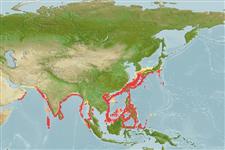
Native range | All suitable habitat | Point map | Year 2050
This map was computer-generated and has not yet been reviewed.
Narke dipterygia   AquaMaps   Data sources: GBIF OBIS
ارفع صور و مقاطع فيديو
صور | صور قوقل
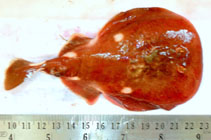
Image of Narke dipterygia (Numbray)
Narke dipterygia
صورة بواسطة Devarapalli, P.

التصنيف / Names الأسماء الشائعة | مرادفات | Catalog of Fishes(جنس, الانواع) | ITIS | CoL | WoRMS | Cloffa

أشلاق (القروش و الشفانين) (sharks and rays) > Torpediniformes (Electric rays) > Narkidae (Sleeper rays)
Etymology: Narke: Greek, narke = numbness (Ref. 45335).
More on authors: Bloch & Schneider.

Environment: milieu / climate zone / نطاق العمق / distribution range البيئة

بحري القاع; نطاق العمق 100 - ? m (Ref. 114953). Tropical; 42°N - 0°N, 55°E - 143°E (Ref. 114953)

التوزيع دول | مناطق الفاو | النظام البيئي | الظهور | نقطة علي الخريطة | مقدمة | Faunafri

Indo-West Pacific; Oman (Arabian Sea) to north-east Asia (China and Japan).

الحجم / وزن / العمر

النضج: Lm ?  range ? - ? cm
Max length : 18.0 cm TL ذكر/ مختلط الجنس; (Ref. 9913); common length : 20.0 cm TL ذكر/ مختلط الجنس; (Ref. 114953)

أحياء     المصطلحات (على سبيل المثال epibenthic)

Found in continental waters, both inshore and offshore (Ref. 9913). Mainly feeds on crustaceans and polychaetes (Ref. 114953). Biology little known (Ref. 9913) but reported to produce 4-6 young each gestation (Ref. 114953). Adult males and females known at 15 cm TL; common size reported to reach 35 cm TL (Ref. 114953). The electric organs present on disc are used to stun the prey.

Life cycle and mating behavior النضج | التكاثر | وضع البيض | بيض | الخصوبة | Larvae

المرجع الرئيسي Upload your references | مراجع | المنظم : Carvalho, Marcelo | المتعاونين

Compagno, L.J.V. and P.R. Last, 1999. Narkidae. Sleeper rays. p. 1443-1446. In K.E. Carpenter and V.H. Niem (eds.) FAO identification guide for fishery purposes. The living marine resources of the Western Central Pacific. FAO, Rome. (Ref. 9913)

IUCN Red List Status (Ref. 130435: Version 2025-1)

  Vulnerable (VU) (A2d); Date assessed: 02 November 2020

CITES

Not Evaluated

CMS (Ref. 116361)

Not Evaluated

خطر للأنسان

Other (Ref. 10011)


استخدامات بشرية

مصائد: غير مهمة تجارياً
FAO - Publication: search | FishSource |

مزيد من المعلومات

علم البيئة الغذائية
Food items (preys)
التركيبة الغذائية
استهلاك الأغذية
Food rations
مفتريسات
البيئة
البيئة
Home ranges
Population dynamics
معاملات النمو
Max. ages / sizes
Length-weight rel.
Length-length rel.
الطول- الترددات
Mass conversion
توظيف
الوفرة
Life cycle
التكاثر
النضج
Maturity/Gills rel.
الخصوبة
وضع البيض
Spawning aggregations
بيض
تطور البيضة
Larvae
حركة انتقال اليرقات
التوزيع
دول
مناطق الفاو
النظام البيئي
الظهور
مقدمة
BRUVS - Videos
Anatomy
منطقة الخياشيم
Brain
Otolith
Physiology
Body composition
Nutrients
استهلاك الأوكسجين
نوع السباحة
سرعة السباحة
Visual pigments
Fish sound
Diseases & Parasites
Toxicity (LC50s)
جيني
الوراثة
جيني
Heterozygosity
التوريث
Human related
Aquaculture systems
ملامح تربية الأحياء المائية
سلالات
Ciguatera cases
Stamps, coins, misc.
Taxonomy
الأسماء الشائعة
مرادفات
الوصف الخارجي
قياسات المظهر الخارجي
صور
مراجع
مراجع

أدوات

تقارير خاصة

Download XML

مصادر علي الأنترنت

Estimates based on models

Preferred temperature (مرجع 123201): 19 - 28.2, mean 26.4 °C (based on 992 cells).
Phylogenetic diversity index (مرجع 82804):  PD50 = 0.6252   [Uniqueness, from 0.5 = low to 2.0 = high].
Bayesian length-weight: a=0.01000 (0.00244 - 0.04107), b=3.04 (2.81 - 3.27), in cm total length, based on all LWR estimates for this body shape (Ref. 93245).
مستوى غذائي (مرجع 69278):  3.2   ±0.3 se; based on size and trophs of closest relatives
المرونه (مرجع 120179):  منخفض, الحد الزمني الأدني لتضاعف عدد أفراد المجتمع 4.5-14 سنة (Assuming fecundity<100).
Fishing Vulnerability (Ref. 59153):  Low vulnerability (10 of 100). 🛈
فئة السعر (Ref. 80766):   Unknown.