



Добавить Ваши наблюдения в Fish Watcher
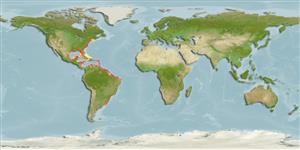
| Native range | All suitable habitat | Point map | Year 2050 |
|
| This map was computer-generated and has not yet been reviewed. |
| Anchoa hepsetus AquaMaps Data sources: GBIF OBIS |
Загрузить свой Фото и Видео
изображения | Изображение на Google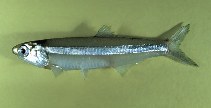 Anchoa hepsetus
Изображение сделано Flescher, D.
изображения | Изображение на Google
Изображение сделано Flescher, D.
Классификация / Имена народные названия | синонимы | Catalog of Fishes(род, виды) | ITIS | CoL | WoRMS | Cloffa
> Clupeiformes (Herrings) > Engraulidae (Anchovies) > Engraulinae
Etymology: Anchoa: Italian ancioa = anchovy (Ref. 45335).
More on author: Linnaeus.
Etymology: Anchoa: Italian ancioa = anchovy (Ref. 45335).
More on author: Linnaeus.
Окружающая среда: среда / климатическая зона / пределы глубины / диапазон распространения экология
морской; пресноводный; солоноватоводный pelagic-neritic; анадромный (Ref. 126106); пределы глубины 1 - 70 m (Ref. 189). Subtropical; 44°N - 36°S, 98°W - 32°W (Ref. 189)
распространение Территории | регионы FAO | Экосистемы | места находок | карта точек | интродукции | Faunafri
Western Atlantic: Massachusetts, USA perhaps occasionally straying north to Maine or even Nova Scotia (Canada), south to Fort Pierce, Florida (but not Florida Keys) and at least northern Gulf of Mexico; also from Gulf of Venezuela south to Uruguay. Replaced by Anchoa colonensis in the West Indies.
Размер / Вес / Возраст
половая зрелость: Lm ? range ? - ? cm
Max length : 15.3 cm TL самец/пол неопределен; (Ref. 37032); common length : 11.0 cm TL самец/пол неопределен; (Ref. 5217)
Max length : 15.3 cm TL самец/пол неопределен; (Ref. 37032); common length : 11.0 cm TL самец/пол неопределен; (Ref. 5217)
Краткое описание определительные ключи | морфология | морфометрия
колючие лучи спинного плавника (общее число) : 0; членистые (мягкие) лучи спинного плавника (общее число) : 14 - 17; колючие лучи анального плавника: 0; членистые (мягкие) лучи анального плавника: 20 - 24. Snout pointed, about 3/4 eye diameter; maxilla long, tips pointed, reaching beyond hind border of pre-operculum, almost to gill opening; gill cover canals of panamensis-type. Anal fin origin below about midpoint of dorsal fin base. Anus nearer to anal fin origin than to pelvic fin tips. Silver stripe along flank (a dark line above) of uniform width, narrowed immediately behind band (Ref. 189). Back greenish, some yellowish on head. Melanophores outline all dorsal scales (Ref. 7251).
Body shape (shape guide): elongated; Cross section: oval.
Body shape (shape guide): elongated; Cross section: oval.
Adults form dense schools, often in shallow waters close to shore. They are able to tolerate a wide range of salinities, from hypersaline to almost fresh. Adults feed on copepods when young, then on gastropods, foraminifers and an occasional ostracods and annelid. Breeding was recorded in April through to July at Beaufort, North Carolina. Breeding takes place in harbors, estuaries and sounds. Eggs are elliptical, transparent, without oil globule, the yolk appearing `cellular' (Ref. 189). Great variation. Principal parasites are nematodes and cestodes (Scolex polymorphus and Rhynchobothrium sp.) and trematodes (Distomum appendiculatum and Distomum sp). Marketed as food (Ref. 37032).
Жизненный цикл и брачное поведение половая зрелость | размножение | нерест | икра | Плодовитость | личинки
Spawn in school (Ref. 205).
Основная ссылка
Загрузите свои рекомендации | ссылки | координатор | соавторы
Whitehead, P.J.P., G.J. Nelson and T. Wongratana, 1988. FAO Species Catalogue. Vol. 7. Clupeoid fishes of the world (Suborder Clupeoidei). An annotated and illustrated catalogue of the herrings, sardines, pilchards, sprats, shads, anchovies and wolf-herrings. FAO Fish. Synop. 125(7/2):305-579. Rome: FAO. (Ref. 189)
Статус Красного Списка МСОП (Ref. 130435: Version 2025-2 (Global))
Не вызывающий беспокойства (LC) ; Date assessed: 24 August 2012
CITES
Not Evaluated
Угроза для людей
Harmless
Использование человеком
рыболовство: не имеет хозяйственного значения; наживка: usually
FAO - рыболовство: посадки; Publication: search | FishSource | Море вокруг нас
дополнительная информация
Трофическая экология
Пищевые предметы (добыча)
состав пищи
потребление пищи
Продовольственные пайки
хищники
Пищевые предметы (добыча)
состав пищи
потребление пищи
Продовольственные пайки
хищники
Динамика численности населения
Параметры роста
Макс. возраст / размер
Отношение длины к весу.
Отношение длины к длине.
Размерный состав
Преобразование массы
пополнение
численность
Параметры роста
Макс. возраст / размер
Отношение длины к весу.
Отношение длины к длине.
Размерный состав
Преобразование массы
пополнение
численность
Жизненный цикл
размножение
половая зрелость
Зрелость/Жиры относительно.
Плодовитость
нерест
Нерестовые скопления
икра
Развитие икры
личинки
динамика численности личинок
размножение
половая зрелость
Зрелость/Жиры относительно.
Плодовитость
нерест
Нерестовые скопления
икра
Развитие икры
личинки
динамика численности личинок
Анатомия
жаберная область
Мозг
Отолит
жаберная область
Мозг
Отолит
Физиология
Состав тела
Питательные вещества
Потребление кислорода
Тип плавания
Скорость плавания
Зрительные пигменты
Звук рыбы
Болезни и паразиты
Токсичность (LC50s)
Состав тела
Питательные вещества
Потребление кислорода
Тип плавания
Скорость плавания
Зрительные пигменты
Звук рыбы
Болезни и паразиты
Токсичность (LC50s)
генетика
Геном
генетика
Гетерозиготность
наследуемость
Генетическое разнообразие
Геном
генетика
Гетерозиготность
наследуемость
Генетическое разнообразие
Связанные с человеком
Системы аквакультуры
особенности рыбоводства
степень растяжения
Случаи заболевания сигуатерой
Марки, монеты и прочее.
Системы аквакультуры
особенности рыбоводства
степень растяжения
Случаи заболевания сигуатерой
Марки, монеты и прочее.
инструменты
Электронная книга | полевой определитель | определительные ключи | Длина-Частота | онтогенез | карта точек |
Catch-MSY |
Специальные отчеты
Проверить содержание в аквариумах | Проверить опубликованные видовые данные | Проверить опубликованные данные по аквакультуре
Скачать в формате XML
ресурсы в Интернет
AFORO (otoliths) | Aquatic Commons | BHL | Cloffa | Websites from users | Проверить FishWatcher | CISTI | Catalog of Fishes: род, виды | DiscoverLife | ECOTOX | FAO - рыболовство: посадки; Publication: search | Faunafri | Fishipedia | Fishtrace | GloBI | Google Books | Google Scholar | Google | IGFA World Record | национальные базы данных | OceanAdapt | OneZoom | Open Tree of Life | Otolith Atlas of Taiwan Fishes | PubMed | Reef Life Survey | Socotra Atlas | TreeBase | Tree of Life | Wikipedia: Вперёд, поиск | World Records Freshwater Fishing | Зоологическая летопись
Оценки, основанные на моделях
Предпочтительная температура (ссылка 123201): 15 - 28, mean 24.4 °C (based on 480 cells).
Индекс филогенетического разнообразия (ссылка 82804): PD50 = 0.5000 [Uniqueness, from 0.5 = low to 2.0 = high].
Bayesian length-weight: a=0.00513 (0.00409 - 0.00644), b=3.16 (3.12 - 3.20), in cm total length, based on LWR estimates for this species (Ref. 93245).
Трофический уровень (ссылка 69278): 3.3 ±0.0 se; based on diet studies.
устойчивость к внешним воздействиям (ссылка 120179): высокий, минимальное время удвоения популяции до 15 месяцев (tm=1; Fec=5700).
Питательные вещества (Ref. 124155): Calcium = 187 [107, 388] mg/100g; Iron = 1.73 [0.91, 3.05] mg/100g; Protein = 18.1 [15.8, 20.8] %; Omega3 = 0.514 [0.268, 0.972] g/100g; Selenium = 20.3 [9.1, 47.5] μg/100g; VitaminA = 11.2 [3.4, 32.7] μg/100g; Zinc = 1.4 [1.0, 2.1] mg/100g (wet weight); based on nutrient studies.