Élasmobranches (requins et raies) (sharks and rays) >
Carcharhiniformes (Ground sharks) >
Scyliorhinidae (Cat sharks) > Scyliorhininae
Etymology: Scyliorhinus: skylion, Greek for dogfish or small shark; rhinus, from rhine (Gr.), rasp, alluding to a shark’s jagged, rasp-like skin (See ETYFish); torrei: In honor of Cuban zoologist Carlos de la Torre (1858-1950), who recognized this species as new and granted Howell Rivero permission to study and describe it (See ETYFish).
Eponymy: Professor Carlos de la Torre y la Huerta (1858–1950) of Havana University was a malacologist regarded as the foremost Cuban naturalist of his generation. [...] (Ref. 128868), visit book page.
Environment: milieu / climate zone / profondeur / distribution range
Écologie
marin bathydémersal; profondeur 200 - 600 m (Ref. 55584), usually 366 - 550 m (Ref. 244). Deep-water; 30°N - 20°N
Western Central Atlantic: southern Florida (USA), Bahamas, and Cuba.
Taille / Poids / Âge
Maturité: Lm ? range ? - ? cm
Max length : 32.0 cm TL mâle / non sexé; (Ref. 244)
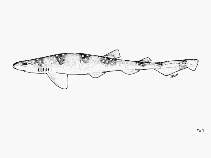
Broad rounded snout. Pale brown back and upper sides transversely marked by series of indistinct darker blotches. Finer markings consist of small oval whitish spots, evenly distributed over the whole back and upper sides (Ref. 6032).
Body shape (shape guide): elongated.
Found on the upper continental slope. Little is known of its biology. Oviparous (Ref. 50449).
Life cycle and mating behavior
Maturité | Reproduction | Frai | Œufs | Fécondité | Larves
Oviparous, paired eggs are laid. Embryos feed solely on yolk (Ref. 50449).
Compagno, L.J.V., 1984. FAO Species Catalogue. Vol. 4. Sharks of the world. An annotated and illustrated catalogue of shark species known to date. Part 2 - Carcharhiniformes. FAO Fish. Synop. 125(4/2):251-655. Rome: FAO. (Ref. 244)
Statut dans la liste rouge de l'IUCN (Ref. 130435: Version 2025-1)
Menace pour l'homme
Harmless
Utilisations par l'homme
Pêcheries: sans intérêt
Outils
Articles particuliers
Télécharger en XML
Sources Internet
Estimates based on models
Preferred temperature (Réf.
123201): 9.3 - 16.2, mean 13 °C (based on 33 cells).
Phylogenetic diversity index (Réf.
82804): PD
50 = 0.5000 [Uniqueness, from 0.5 = low to 2.0 = high].
Bayesian length-weight: a=0.00263 (0.00138 - 0.00502), b=3.21 (3.04 - 3.38), in cm total length, based on LWR estimates for this (Sub)family-body shape (Ref.
93245).
Niveau trophique (Réf.
69278): 3.7 ±0.5 se; based on size and trophs of closest relatives
Résilience (Réf.
120179): Très faible, temps minimum de doublement de population supérieur à 14 ans (Fec assumed to be <10).
Fishing Vulnerability (Ref.
59153): Low vulnerability (22 of 100).
🛈