Issue
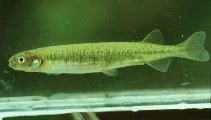
zzzAT STOCKS Galaxias maculatus has the most disjunct distribution of any freshwater species. This distribution is best explained by dispersal of whitebait larval stage throughout the sea (Berra et al. 1996). See McDowall (1971b) for a detailed description.
Environment: milieu / climate zone / نطاق العمق / distribution range
البيئة
بحري; المياه العذبة; مياه مخلوطة قاعية التغذية و المعيشة; أسماك نازلة (Ref. 51243). Temperate; 10°C - 22°C (Ref. 2060); 27°S - 56°S, 112°W - 56°W
Oceania: Australia (including Tasmania), Lord Howe Island, New Zealand and the Chatham Islands. South America: Ranges from along the Chilean side of the Andes near Valparaiso to the southern extremity of the island chain southeast of Tierra del Fuego. Also on the eastern side of the Andes in Argentina in isolated lakes (Meliquina, Traful, Nahuel Huapi, Gutierrez, and Pellegrini) which drain into the Atlantic Ocean via the Negro River. It occurs on Falkland Islands.
الحجم / وزن / العمر
النضج: Lm ? range ? - ? cm
Max length : 19.0 cm SL ذكر/ مختلط الجنس; (Ref. 44894); common length : 10.0 cm TL ذكر/ مختلط الجنس; (Ref. 5259)
الأشواك الظهرية (المجموع) : 0; الأشعة الظهرية الناعمة (المجموع) : 10 - 12; شوكة شرجية: 0; أشعه شرجية لينه: 15 - 17.
Body shape (shape guide): elongated.
Facultative air-breathing (Ref. 126274); Occur in a wide variety of habitat, but mostly in still or slow-flowing waters, mainly in streams, rivers and lakes within a short distance of the sea. Can survive in salinities up to 50 ppt. Feed on aquatic and terrestrial insects, and crustaceans. Adults typically migrate downstream into estuaries during high spring tides in autumn to spawn on fringing vegetation. Spawning does not occur beyond the river estuaries, making this species 'only marginally catadromous' (Ref. 46888). Many perish after spawning but some survive another year. Eggs develop out of water for two weeks and hatch upon the arrival of the next spring tide. Newly hatched larvae spend their first 5-6 months at sea before returning to fresh shoals of whitebait during spring. An important component of whitebait fisheries throughout the Southern Hemisphere (Ref. 44894). Utilized fresh and eaten fried (Ref. 9988, 44894).
For diadromous populations: deposit eggs on dense terrestrial vegetation that is flooded by the high tide. The eggs develop out of water in humid condition during the next 2 weeks. Hatching takes place when a second series of high tides again wash over the eggs. For landlocked population: fish migrate up to the tributary streams during floods. Deposit eggs on the flooded grassy banks and complete their development after the water level subsides. Hatching occurs during subsequent floods.
Allen, G.R., 1989. Freshwater fishes of Australia. T.F.H. Publications, Inc., Neptune City, New Jersey. (Ref. 5259)
IUCN Red List Status (Ref. 130435: Version 2025-1)
استخدامات بشرية
مصائد: تجاري; لعبة سمكه: نعم; طعم: usually
أدوات
تقارير خاصة
Download XML
مصادر علي الأنترنت
Estimates based on models
Phylogenetic diversity index (مرجع
82804): PD
50 = 0.5000 [Uniqueness, from 0.5 = low to 2.0 = high].
Bayesian length-weight: a=0.00501 (0.00243 - 0.01032), b=3.17 (2.98 - 3.36), in cm total length, based on LWR estimates for this species & (Sub)family-body (Ref.
93245).
مستوى غذائي (مرجع
69278): 3.2 ±0.2 se; based on diet studies.
المرونه (مرجع
120179): وسيط, الحد الزمني الأدني لتضاعف عدد أفراد المجتمع 1.4-4.4 سنة (Fec=175).
Fishing Vulnerability (Ref.
59153): Low to moderate vulnerability (32 of 100).
🛈
Nutrients (Ref.
124155): Calcium = 54 [29, 145] mg/100g; Iron = 0.34 [0.18, 0.78] mg/100g; Protein = 14.9 [12.6, 17.1] %; Omega3 = 0.495 [0.193, 1.245] g/100g; Selenium = 7.4 [2.8, 17.1] μg/100g; VitaminA = 35.1 [10.5, 122.9] μg/100g; Zinc = 1.21 [0.76, 1.87] mg/100g (wet weight);