



Maculabatis bineeshi Manjaji-Matsumoto & Last, 2016
Short-tail whipray
إضافة ملاحظاتك Fish Watcher
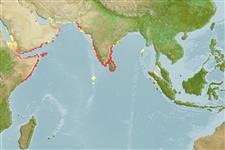
| Native range | All suitable habitat | Point map | Year 2050 |
|
| This map was computer-generated and has not yet been reviewed. |
| Maculabatis bineeshi AquaMaps Data sources: GBIF OBIS |
ارفع صور و مقاطع فيديو
صور | صور قوقل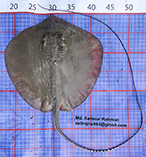 Maculabatis bineeshi
صورة بواسطة Rahman, Md. S.
صور | صور قوقل
صورة بواسطة Rahman, Md. S.
التصنيف / الأسماء الأسماء الشائعة | مرادفات | Catalog of Fishes(جنس, الانواع) | ITIS | CoL | WoRMS | Cloffa
أشلاق (القروش و الشفانين) (sharks and rays) > Myliobatiformes (Stingrays) > Dasyatidae (Stingrays) > Urogymninae
Etymology: bineeshi: Named for Indian biologist K.K. Bineesh.
Eponymy: Dr K K Bineesh (d: 1981) is an Indian biologist who holds a master’s degree and a doctorate awarded by Cochin University of Science and Technology, Kerala (2015). [...] (Ref. 128868), visit book page.
Etymology: bineeshi: Named for Indian biologist K.K. Bineesh.
Eponymy: Dr K K Bineesh (d: 1981) is an Indian biologist who holds a master’s degree and a doctorate awarded by Cochin University of Science and Technology, Kerala (2015). [...] (Ref. 128868), visit book page.
البيئة: الوسط / المنطقة المناخية / نطاق العمق / نطاق التوزيع البيئة
بحري القاع; نطاق العمق 13 - 22 m (Ref. 110187). Tropical
التوزيع الأقاليم | مناطق الفاو | النظام البيئي | الظهور | نقطة علي الخريطة | مقدمة | Faunafri
Indian Ocean: Pakistan and India, Bay of Bengal; probably most widely distributed but its occurrence may be strongly habitat dependent.
الحجم / وزن / العمر
النضج: Lm ? range ? - ? cm
Max length : 66.0 cm WD ذكر/ مختلط الجنس; (Ref. 110187); 25.0 cm WD (female)
Max length : 66.0 cm WD ذكر/ مختلط الجنس; (Ref. 110187); 25.0 cm WD (female)
وصف مختصر مفاتيح التعريف | الوصف الخارجي | قياسات المظهر الخارجي
فقرات: 108 - 114. This species (size at least 66 cm DW) is distinguished by the following set of characters: disc is weakly rhomboidal to suboval, its length 93-98% DW; snout is moderately elongate with weak apical lobe, snout angle 116-121°; pectoral-fin apices are broadly rounded; orbits small to medium-sized, barely protruding; relatively narrow mouth, its width 1.2-1.3 in internasal width; distance between first gill slits is 2.2-2.5 times internasal distance; distance between fifth gill slits is 1.4-1.6 times internasal distance, 28-30% of ventral head length; pelvic-fin base is broad, 14-15% DW; main suprascapular denticle is large, yellowish, broadly ovate, usually followed by smaller subtriangular denticle; secondary denticles developing rapidly, forming a broad band extending from interorbit to tail base by 24 cm DW; dorsal disc uniformly light brown, without white spots; pale ventrally with broad, faint and slightly darker lateral margins; tail dark brown to blackish dorsally and white ventrally forward of caudal sting; plain blackish posteriorly or with weak, irregular pale dorsal banding (in young); pectoral-fin radials 127-131; total vertebral count, 108-114, including synarcual centra, monospondylous centra 44-46, pre-sting diplospondylous centra 64-69 (Ref. 110187).
Body shape (shape guide): other (see remarks); Cross section: flattened.
Body shape (shape guide): other (see remarks); Cross section: flattened.
Smallest specimen, immature male at 20 cm WD is postnatal; birth size unknown, but probably ca. 15.0-17.0 cm WD (Ref. 110187).
دورة الحياة وسلوك التزاوج النضج | التكاثر | وضع البيض | بيض | الخصوبة | اليرقات
المرجع الرئيسي
قم بتحميل مراجعك | مراجع | المنظم : McEachran, John | المتعاونين
Manjaji-Matsumoto, B.M. and P.R. Last, 2016. Two new whiprays, Maculabatis arabica sp. nov. and M. bineeshi sp. nov. (Myliobatiformes: Dasyatidae), from the northern Indian Ocean. Zootaxa 4144(3):335-353. (Ref. 110187)
حالة القائمة الحمراء للاتحاد الدولي لحفظ الطبيعة والموارد الطبيعية (Ref. 130435: Version 2025-2 (Global))
معرضه للخطر بشكل حرج (CR) (A2cd); Date assessed: 21 May 2020
CITES
Not Evaluated
خطر للأنسان
Harmless
استخدامات بشرية
FAO - Publication: search | FishSource |
مزيد من المعلومات
علم البيئة الغذائية
المواد الغذائية (الفرائس)
التركيبة الغذائية
استهلاك الأغذية
الحصص الغذائية
مفتريسات
المواد الغذائية (الفرائس)
التركيبة الغذائية
استهلاك الأغذية
الحصص الغذائية
مفتريسات
البيئة
البيئة
البيئة
الديناميكيات السكانية
معاملات النمو
الحد الأقصى للأعمار/الأحجام
علاقة الطول بالوزن.
علاقة الطول بالطول.
الطول- الترددات
التحويل الجماعي
توظيف
الوفرة
معاملات النمو
الحد الأقصى للأعمار/الأحجام
علاقة الطول بالوزن.
علاقة الطول بالطول.
الطول- الترددات
التحويل الجماعي
توظيف
الوفرة
دورة الحياة
التكاثر
النضج
النضج/الخياشيم المتعلقة.
الخصوبة
وضع البيض
تجمعات التفريخ
بيض
تطور البيضة
اليرقات
حركة انتقال اليرقات
التكاثر
النضج
النضج/الخياشيم المتعلقة.
الخصوبة
وضع البيض
تجمعات التفريخ
بيض
تطور البيضة
اليرقات
حركة انتقال اليرقات
التشريح
منطقة الخياشيم
الدماغ
الأوتوليث
منطقة الخياشيم
الدماغ
الأوتوليث
علم وظائف الأعضاء
تكوين الجسم
المغذيات
استهلاك الأوكسجين
نوع السباحة
سرعة السباحة
الأصباغ البصرية
صوت السمك
الأمراض والطفيليات
السمية (LC50s)
تكوين الجسم
المغذيات
استهلاك الأوكسجين
نوع السباحة
سرعة السباحة
الأصباغ البصرية
صوت السمك
الأمراض والطفيليات
السمية (LC50s)
جيني
الوراثة
جيني
التغاير
التوريث
التنوع الوراثي
الوراثة
جيني
التغاير
التوريث
التنوع الوراثي
ذات الصلة بالبشر
أنظمة الاستزراع المائي
ملامح تربية الأحياء المائية
سلالات
حالات سيغواتيرا
طوابع بريدية وعملات معدنية ومتنوعة
أنظمة الاستزراع المائي
ملامح تربية الأحياء المائية
سلالات
حالات سيغواتيرا
طوابع بريدية وعملات معدنية ومتنوعة
أدوات
كتاب إلكتروني | دليل الميدان | معالج تردد الطول-التردد | أداة تاريخ الحياة | نقطة علي الخريطة |
Catch-MSY |
تقارير خاصة
البحث عن صيانت الأحواض المائيه | التحقق من وجود صفحات حقائق الأنواع | البحث عنا حقائق حول الأحواض المائيه
تنزيل XML
مصادر علي الأنترنت
AFORO (otoliths) | Aquatic Commons | BHL | Cloffa | Websites from users | البحث في مراقبي الأسماك | CISTI | Catalog of Fishes: جنس, الانواع | DiscoverLife | ECOTOX | FAO - Publication: search | Faunafri | Fishipedia | Fishtrace | GloBI | Google Books | Google Scholar | Google | IGFA World Record | OneZoom | Open Tree of Life | Otolith Atlas of Taiwan Fishes | PubMed | Reef Life Survey | Socotra Atlas | TreeBase | شجرة الحياة | Wikipedia: ذهب, بحث | World Records Freshwater Fishing | Zoobank | سجلات علم الحيوانات
تقديرات تستند إلى النماذج
مؤشر التنوع الشُعبي الوراثي (مرجع 82804): PD50 = 0.5020 [Uniqueness, from 0.5 = low to 2.0 = high].
Bayesian length-weight: a=0.01023 (0.00482 - 0.02174), b=3.06 (2.86 - 3.26), in cm total length, based on LWR estimates for this (Sub)family-body shape (Ref. 93245).
مستوى غذائي (مرجع 69278): 3.7 ±0.4 se; based on size and trophs of closest relatives