



Microsternarchus brevis Cox Fernandes, Nogueira, Williston & Alves-Gomes, 2015
Carica il tuo foto e Video
Immagini | Google image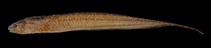 Microsternarchus brevis
Male Immagine di Cox Fernandes, C.
Immagini | Google image
Male Immagine di Cox Fernandes, C.
Classificazione / Nomi Nomi Comuni | Sinonimi | Catalog of Fishes(Genere, Specie) | ITIS | CoL | WoRMS | Cloffa
> Gymnotiformes (Knifefishes) > Hypopomidae (Bluntnose knifefishes)
Etymology: Microsternarchus: Greek, mikros = small + Greek, sternon = breast + Greek, archos = anus (Ref. 45335); brevis: Named for its overall size and caudal filament (Latin 'brevis' for short).
Etymology: Microsternarchus: Greek, mikros = small + Greek, sternon = breast + Greek, archos = anus (Ref. 45335); brevis: Named for its overall size and caudal filament (Latin 'brevis' for short).
Ambiente: milieu / zona climatica / distribuzione batimetrica / gamma di distribuzione Ecologia
; acqua dolce pelagico; pH range: 4.0 - 5.0; distribuzione batimetrica 0 - 2 m (Ref. 104297). Tropical; 25°C - 26°C (Ref. 104297)
Distribuzione Territories | Aree FAO | Ecosistemi | Presenze | Mappa dei ritrovamenti | Introduzioni | Faunafri
South America: Brazil.
Dimensione / Peso / Età
Maturità: Lm ? range ? - ? cm
Max length : 5.3 cm TL maschio/sesso non determinato; (Ref. 104297); 5.3 cm TL (female)
Max length : 5.3 cm TL maschio/sesso non determinato; (Ref. 104297); 5.3 cm TL (female)
Breve descrizione Chiavi di identificazione | Morfologia | Morfometria
This species is distinguished by the following characters: short caudal filament 12.8-20.9% of TL; size of body small 3.75-5.32 cm SL; slightly inferior mouth 1.34-2.42 cm HL; pigmentation on body uniformly distributed along the entire area, including head; it also lacks a well delineated dark area on the pseudotympanum, where the anterior end of the posterior lateral line nerve branches with the dorsal ramus of the posterior lateral line nerve (Ref. 104297).
Body shape (shape guide): eel-like; Cross section: compressed.
Body shape (shape guide): eel-like; Cross section: compressed.
This species is collected in shallow areas from 0.5-1.5 m in the dry season or at the beginning of the rainy season. It also occurs in black-water streams along the middle part of the rio Negro Basin (Amazon). Along stream margins, it occurs in well oxygnated waler and prefers weak current with abundant submerged vegetation, roots and leaf litter. In areas with stronger current, this species tends to inhabit submerged trees and tangled roots of epiphytic plants. Variation of physico-chemical water parameters taken in 2002-2007: conductivity 9.0-22.2 µS/cm, temperature 25-26°C, ph 4.01-5.0 and dissolved oxygen 4.12-7.10 mg/L. Stomach contents of one specimen contains parts of zooplankton. Associated genera of gymnotiforms species collected in the area were Brachypopomus and Hypopgus (Ref. 104297).
Ciclo vitale e comportamento di accoppiamento Maturità | Riproduzione | Deposizione | Uova | Fecondità | Larve
Riferimento principale
Caricare le referenze | Bibliografia | Coordinatore : Albert, James S. | Collaboratori
Cox Fernandes, C., A. Nogueira, A. Williston and J.A. Alves-Gomes, 2015. A new species of electric knifefish from the rio Negro, Amazon basin (Gymnotiformes: Hypopomidae, Microsternarchini). Proc. Acad. Nat. Sci. Phil. 164(1):213-227. (Ref. 104297)
Stato della Lista Rossa IUCN (Ref. 130435: Version 2025-2 (Global))
Least Concern (LC) ; Date assessed: 11 November 2020
CITES
Not Evaluated
Minaccia per l'uomo
Harmless
Usi umani
FAO - Publication: search | FishSource |
Informazioni ulteriori
Ecologia trofica
Articoli alimentari (prede)
Alimentazione
Consumo di cibo
Razioni alimentari
Predatori
Articoli alimentari (prede)
Alimentazione
Consumo di cibo
Razioni alimentari
Predatori
Ecologia
Ecologia
Ecologia
Dinamica della popolazione
Parametri di crescita
Età massima / dimensioni massime
Rapporto lunghezza-peso.
Lunghezza-lunghezza rel.
Lunghezza-frequenze
Conversione di massa
Reclutamento
Abbondanza
Parametri di crescita
Età massima / dimensioni massime
Rapporto lunghezza-peso.
Lunghezza-lunghezza rel.
Lunghezza-frequenze
Conversione di massa
Reclutamento
Abbondanza
Ciclo di vita
Riproduzione
Maturità
Maturità/Gli occhielli sono relativi.
Fecondità
Deposizione
Aggregazioni riproduttive
Uova
Sviluppo delle uova
Larve
Dinamica popolazioni larvali
Riproduzione
Maturità
Maturità/Gli occhielli sono relativi.
Fecondità
Deposizione
Aggregazioni riproduttive
Uova
Sviluppo delle uova
Larve
Dinamica popolazioni larvali
Anatomia
Area branchiale
Cervello
Otolite
Area branchiale
Cervello
Otolite
Fisiologia
Composizione corporea
Nutrienti
Consumo di ossigeno
Tipo di nuoto
Velocità di nuoto
Pigmenti visivi
Suono del pesce
Malattie e parassiti
Tossicità (LC50)
Composizione corporea
Nutrienti
Consumo di ossigeno
Tipo di nuoto
Velocità di nuoto
Pigmenti visivi
Suono del pesce
Malattie e parassiti
Tossicità (LC50)
Genetica
Genome
Genetica
Eterozigosi
Ereditarietà
Diversità genetica
Genome
Genetica
Eterozigosi
Ereditarietà
Diversità genetica
Legato all'uomo
Sistemi di acquacoltura
Profili di acquacoltura
Varietà
Casi di Ciguatera
Francobolli, monete, materiale vario.
Sistemi di acquacoltura
Profili di acquacoltura
Varietà
Casi di Ciguatera
Francobolli, monete, materiale vario.
Strumenti
Libro elettronico | Giuda pratica | Generatore frequenze di lunghezza | Strumento Parametri Biologici | Mappa dei ritrovamenti |
Cattura-MSY |
Rapporti speciali
Controllo della manutenzione dell'acquario | Verificare la presenza di schede informative sulle specie | Verifica delle schede informative sull'acquacoltura
Scarica XML
Fonti Internet
AFORO (otoliths) | Aquatic Commons | BHL | Cloffa | Websites from users | Check FishWatcher | CISTI | Catalog of Fishes: Genere, Specie | DiscoverLife | ECOTOX | FAO - Publication: search | Faunafri | Fishipedia | Fishtrace | GloBI | Google Books | Google Scholar | Google | IGFA World Record | OneZoom | Open Tree of Life | Otolith Atlas of Taiwan Fishes | PubMed | Reef Life Survey | Socotra Atlas | TreeBase | Tree of Life | Wikipedia: Go, ricerca | World Records Freshwater Fishing | Zoobank | Record zoologico
Stime basate su modelli
Indice di diversità filogenetica (Fonte Biblio. 82804): PD50 = 0.5312 [Uniqueness, from 0.5 = low to 2.0 = high].
Bayesian length-weight: a=0.00102 (0.00046 - 0.00225), b=3.06 (2.88 - 3.24), in cm total length, based on all LWR estimates for this body shape (Ref. 93245).
Livello trofico (Fonte Biblio. 69278): 3.1 ±0.4 se; based on size and trophs of closest relatives