



Heteropneustes nani Hossain, Sarker, Sharifuzzaman & Chowdhury, 2013
Envoyez vos Photos et vidéos
Images | Images Google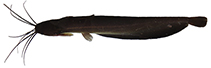 Heteropneustes nani
Male Photo de Hossain, M.S.
Images | Images Google
Male Photo de Hossain, M.S.
Classification / Noms Noms communs | Synonymes | Catalog of Fishes(Genre, Espèce) | ITIS | CoL | WoRMS | Cloffa
> Siluriformes (Catfishes) > Heteropneustidae (Airsac catfishes)
Etymology: Heteropneustes: Greek, heteros = other + Greek, pneo = to breath (Ref. 45335); nani: Named for Professor Dr Nani Gopal Das.
Eponymy: Dr Nani Gopal Das (d: 1944) is a fisheries and aquaculture scientist. [...] (Ref. 128868), visit book page.
Etymology: Heteropneustes: Greek, heteros = other + Greek, pneo = to breath (Ref. 45335); nani: Named for Professor Dr Nani Gopal Das.
Eponymy: Dr Nani Gopal Das (d: 1944) is a fisheries and aquaculture scientist. [...] (Ref. 128868), visit book page.
Environnement : milieu / zone climatique / profondeur / gamme de distribution Écologie
; eau douce benthopélagique; profondeur 1 - 2 m (Ref. 94657). Tropical
Distribution Territoires | Zones FAO | Écosystèmes | Occurrences | Carte par point | Introductions | Faunafri
Asia: Bangladesh.
Taille / Poids / Âge
Description synthétique Clés d'identification | Morphologie | Morphométrie
This species is distinguished from its congeners by the following: smallest in size; head length greater than the depth of body; small terminal mouth bearing nearly equal jaws and fleshy lips; united anal-caudal fin; pectoral spines completely separated from rays with 9-10 antrorse serrae along inner edge and 13-15 in outer edge; body colour blackish with two indistinct lateral bands on flank, with the ventral surface lighter (Ref. 94657).
Body shape (shape guide): elongated; Cross section: compressed.
Body shape (shape guide): elongated; Cross section: compressed.
Facultative air-breathing (Ref. 126274); This species is found in ponds, ditches, canals, flooded rice fields, swamps, marshes, waterlogged areas and rivers. Its air-breathing apparatus enables it to survive in low water depth, even in turbid and oxygen deficit conditions. During the winter season the fish can live in semi-liquid mud and when the mud dries up they burrow to the bottom of fissures and crevices formed by the cracking mud. Recorded physicochemical parameters during the study period are the following: water temperature 18-28°C; pH 6.5-7.5; dissolved oxygen 4.5-5.0 mg/l; water transparency 45-60 cm at 1.0-1.8 m depth. This fish is able to deliver a stinging protein (known as poison) emanated from the venom glands around the pectoral spine, and is reported to be neurotoxic and hemolytic (i.e. destruction of red blood cells) in humans, causing local numbness, inflammation and severe painful physical conditions on the affected limb (warm water bath, application of lukewarm turmeric paste, ejection of blood, and traditional herbal medicine are commonly used for healing). Still, its flesh is of good table quality and nutritional value. rich in iron and low fat, and a valuable source of protein (Ref. 94657).
Cycle de vie et comportement reproducteur Maturité | Reproduction | Frai | Œufs | Fécondité | Larves
Référence principale
Téléchargez vos références | Références | Coordinateur | Collaborateurs
Hossain, M.S., S. Sarker, S.M. Sharifuzzaman and S.R. Chowdhury, 2013. New species of stinging catfish Heteropneustes nani (Siluriformes: Heteropneustidae) from Noakhali, Bangladesh. Vert. Zool. 63(3):259-267. (Ref. 94657)
CITES
Not Evaluated
Menace pour l'homme
Traumatogenic
Utilisations par l'homme
Pêcheries: commercial
FAO - Publication: search | FishSource |
Plus d'informations
Écologie trophique
Aliments (proies)
Composition du régime alimentaire
Consommation alimentaire
Rations alimentaires
Prédateurs
Aliments (proies)
Composition du régime alimentaire
Consommation alimentaire
Rations alimentaires
Prédateurs
Dynamique des populations
Paramètres de croissance
Âges / tailles maximales
Longueur-poids rel.
Rel. longueur-longueur.
Fréquences de longueurs
Conversion de masse
Recrutement
Abondance
Paramètres de croissance
Âges / tailles maximales
Longueur-poids rel.
Rel. longueur-longueur.
Fréquences de longueurs
Conversion de masse
Recrutement
Abondance
Cycle de vie
Reproduction
Maturité
Maturité/épines rel.
Fécondité
Frai
Agrégats de frai
Œufs
Développement de l'œuf
Larves
Dynamique des populations larvaires
Reproduction
Maturité
Maturité/épines rel.
Fécondité
Frai
Agrégats de frai
Œufs
Développement de l'œuf
Larves
Dynamique des populations larvaires
Anatomie
Surface branchiale
Cerveau
Otolithe
Surface branchiale
Cerveau
Otolithe
Physiologie
Composition corporelle
Nutriments
Consommation d'oxygène
Type de natation
Vitesse de nage
Pigments visuels
Son de poisson
Maladies et parasites
Toxicité (CL50)
Composition corporelle
Nutriments
Consommation d'oxygène
Type de natation
Vitesse de nage
Pigments visuels
Son de poisson
Maladies et parasites
Toxicité (CL50)
Génétique
génôme
Génétique
Hétérozygotie
Héritabilité
Diversité génétique
génôme
Génétique
Hétérozygotie
Héritabilité
Diversité génétique
Liées à l'homme
Systèmes d'aquaculture
Profils d'aquaculture
Souches
Cas de ciguatera
Timbres, pièces de monnaie, divers
Systèmes d'aquaculture
Profils d'aquaculture
Souches
Cas de ciguatera
Timbres, pièces de monnaie, divers
Outils
E-book | Guide de terrain | Générateur de fréquences de longueur | Outil de dynamique de population | Carte par point |
Capture-MSY |
Articles particuliers
Télécharger en XML
Sources Internet
AFORO (otoliths) | Aquatic Commons | BHL | Cloffa | Websites from users | FishWatcher | CISTI | Catalog of Fishes: Genre, Espèce | DiscoverLife | ECOTOX | FAO - Publication: search | Faunafri | Fishipedia | Fishtrace | GloBI | Google Books | Google Scholar | Google | IGFA World Record | OneZoom | Open Tree of Life | Otolith Atlas of Taiwan Fishes | PubMed | Reef Life Survey | Socotra Atlas | TreeBase | Arbre de Vie | Wikipedia: aller à, chercher | World Records Freshwater Fishing | Zoobank | Zoological Record
Estimations basées sur des modèles
Indice de diversité phylogénétique (Réf. 82804): PD50 = 0.5312 [Uniqueness, from 0.5 = low to 2.0 = high].
Bayesian length-weight: a=0.00437 (0.00193 - 0.00988), b=3.09 (2.88 - 3.30), in cm total length, based on LWR estimates for this (Sub)family-body shape (Ref. 93245).
Niveau trophique (Réf. 69278): 3.3 ±0.5 se; based on size and trophs of closest relatives
Résilience (Réf. 120179): Haut, temps minimum de doublement de population inférieur à 15 mois (Preliminary K or Fecundity.).