>
Cypriniformes (Carps) >
Cyprinidae (Minnows or carps) > Smiliogastrinae
Etymology: Pseudobarbus: Greek, pseudes = false + Latin, barbus = barbel (Ref. 45335); skeltoni: The specific name, skeltoni, is given in honour of Professor Paul H. Skelton in recognition of his lifelong service to taxonomic and systematic research on freshwater fishes in southern Africa, his contribution to the taxonomic revision and systematics of Pseudobarbus and specifically for his mentoring of students on this group of fishes (Ref. 93872).
Eponymy: Professor Dr Paul Harvey Skelton (d: 1948) is a South African ichthyologist. [...] (Ref. 128868), visit book page.
Environment: milieu / climate zone / نطاق العمق / distribution range
البيئة
; المياه العذبة قاعية التغذية و المعيشة. Subtropical
Africa: Breede River system, South Africa (Ref. 93872).
الحجم / وزن / العمر
النضج: Lm ? range ? - ? cm
Max length : 16.3 cm SL ذكر/ مختلط الجنس; (Ref. 93872)
وصف مختصر
مفاتيح التعريف | الوصف الخارجي | قياسات المظهر الخارجي
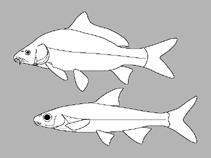
الأشواك الظهرية (المجموع) : 0; الأشعة الظهرية الناعمة (المجموع) : 10 - 12; شوكة شرجية: 0; أشعه شرجية لينه: 8; فقرات: 36 - 38. Diagnosis: Pseudobarbus skeltoni reaches the largest size of any Pseudobarbus species and is distinguished from its congeners, except P. burchelli and P. burgi, by possessing two pairs of prominent oral barbels (Ref. 93872). It is distinguished from P. burchelli and P. burgi by the combination of the following features: distinctive terminal mouth in adults vs. subterminal in all size classes of P. burchelli and P. burgi; juveniles, sub-adults and young adults of P. skeltoni have subterminal mouths, but their lower lips are unretracted and they lack the cartilaginous plate found in both P. burchelli and P. burgi; a typically longer head relative to standard length, being 30.5% vs. 26.8% in P. burchelli and 25.8% in P. burgi; shaloow head depth, being 64.2% of head length compared to 70.1% of head length in P. burchelli and 74.1% of head length in P. burgi; mature sexually active males develop two clusters of large conical tubercles on the snout, with 22-30 tubercles in each cluster, vs. 5-10 tubercles per cluster in P. burchelli and 10-15 tubercles per cluster in P. burgi; multiple rows of large conspicious tubercles above each nare and antero-dorsal edge of each orbit, vs. single row in congenres (Ref. 93872).
Body shape (shape guide): fusiform / normal.
Reproduction is unknown, but spawning possibly occurs around November-December, based on the observation that males had large tubercles; juveniles and sub-adults probably feed by picking prey or algae from rock; adults have more predatory lifestyle and are possibly water column feeders (Ref. 93872).
Life cycle and mating behavior
النضج | التكاثر | وضع البيض | بيض | الخصوبة | Larvae
Chakona, A. and E.R. Swartz, 2013. A new redfin species, Pseudobarbus skeltoni (Cyprinidae, Teleostei), from the Cape Floristic Region, South Africa. Zootaxa 3686(5):565-577. (Ref. 93872)
IUCN Red List Status (Ref. 130435: Version 2025-1)
في خطر (EN) (B1ab(i,ii,iii,iv,v)+2ab(i,ii,iii,iv,v)); Date assessed: 06 December 2016
استخدامات بشرية
أدوات
تقارير خاصة
Download XML
مصادر علي الأنترنت
Estimates based on models
Phylogenetic diversity index (مرجع
82804): PD
50 = 0.5002 [Uniqueness, from 0.5 = low to 2.0 = high].
Bayesian length-weight: a=0.01175 (0.00447 - 0.03086), b=3.01 (2.78 - 3.24), in cm total length, based on LWR estimates for this (Sub)family-body shape (Ref.
93245).
مستوى غذائي (مرجع
69278): 2.6 ±0.2 se; based on size and trophs of closest relatives
المرونه (مرجع
120179): عالي, الحد الزمني الأدني لتضاعف عدد أفراد المجتمع أقل من 15 شهر (Preliminary K or Fecundity.).
Fishing Vulnerability (Ref.
59153): Low vulnerability (10 of 100).
🛈