



Etheostoma jimmycarter Layman & Mayden, 2012
Bluegrass darter
Uploaden van uw Foto's en video's
Google afbeelding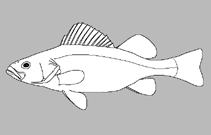 No image available for this species;
drawing shows typical species in Percidae.
Google afbeelding
drawing shows typical species in Percidae.
Classificatie / Namen Lokale namen | Synoniemen | Catalog of Fishes(Genus, Soort(en)) | ITIS | CoL | WoRMS | Cloffa
> Perciformes/Percoidei (Perchs) > Percidae (Perches) > Etheostomatinae
Etymology: Etheostoma: Greek, etheo = to strain + Greek, stoma = mouth; Rafinesque said "various mouths", but Jordan and Evermann suggest the name might have been intended as "Heterostoma (Ref. 45335); jimmycarter: Named for President Jimmy Carter, the 39th President of the United States of America, and his environmental leadership and accomplishments in the areas of national energy policy and wilderness protection, and his life-long commitment to social justice and basic human rights; noun in apposition.
Eponymy: James Earl ‘Jimmy’ Carter Jr (b: 1924), the 39th President of the USA and well-known birdwatcher, was honoured for his environmental leadership and accomplishments in the areas of national energy policy and wilderness protection, and his life-long [...] (Ref. 128868), visit book page.
Etymology: Etheostoma: Greek, etheo = to strain + Greek, stoma = mouth; Rafinesque said "various mouths", but Jordan and Evermann suggest the name might have been intended as "Heterostoma (Ref. 45335); jimmycarter: Named for President Jimmy Carter, the 39th President of the United States of America, and his environmental leadership and accomplishments in the areas of national energy policy and wilderness protection, and his life-long commitment to social justice and basic human rights; noun in apposition.
Eponymy: James Earl ‘Jimmy’ Carter Jr (b: 1924), the 39th President of the USA and well-known birdwatcher, was honoured for his environmental leadership and accomplishments in the areas of national energy policy and wilderness protection, and his life-long [...] (Ref. 128868), visit book page.
Milieu: milieu / Klimaatzone / Diepte / verspreidingsgebied Ecologie
; zoet water benthopelagisch. Temperate
Verspreiding Gebieden | FAO regio's | Ecosystemen | Voorkomen | Verspreidingskaart | Introducties | Faunafri
North America: USA (Green River drainange of Kentucky and Tennessee).
Grootte / Gewicht / Leeftijd
Maturiteit: Lm ? range ? - ? cm
Max length : 4.9 cm SL mannelijk / geslacht onbekend; (Ref. 92294); 4.7 cm SL (female)
Max length : 4.9 cm SL mannelijk / geslacht onbekend; (Ref. 92294); 4.7 cm SL (female)
Korte beschrijving Determinatiesleutels | Morfologie | Morfometrie
Dorsale stekels (totaal) : 11 - 14; Dorsale zachte stralen (totaal) : 10 - 13; Anale stekels: 2; Anale zachte stralen: 7 - 9. This breeding male of this species, a member of the subgenus Doration, is distinguished by the following characters: spinous dorsal fin with black marginal band, orange medial band, black submedial band interrupted by vertical orange streaks extending from medial band above to basal band, the basal band with bright orange pigment; soft dorsal, caudal, and pectoral fins with distinct bright orange spots on rays; soft dorsal and anal fins without blue pigment; anal fin with many distinct orange spots on rays; the face and lower head tangerine orange with blue on operculum, preoperculum, cheek, and suborbital bar (not on lips and mid-gular region); quadrate lateral blue blotches extend ventrad from lateral line scale row; blue wedge on ventral half of caudal fin base but not developed dorsally. In addition, there is no frenum; incomplete lateral line, unpored scales modally greater than 10 (14); the cheek is usually naked; no palatine teeth; dorsal fin spines modally 12-13; dorsal soft rays modally 11; anal fin soft rays modally 8; pectoral fin rays modally 15; the principal caudal fin rays modally 15; caudal peduncle scales modally 16; preoperculomandibular canal pores modally 10 (Ref. 92294).
Cross section: oval.
Cross section: oval.
Levenscyclus en paargedrag Maturiteit | Voortplanting | Paaien | Eieren | Fecunditeit | Larven
Hoofdreferentie
Upload uw referenties | Referenties | Coördinator | Medewerkers
Layman, S.R. and R.L. Mayden, 2012. Morphological diversity and phylogenetics of the darter subgenus Doration (Percidae: Etheostoma), with descriptions of five new species. Bulletin of the Alabama Museum of Natural History 30:1-83. (Ref. 92294)
CITES
Not Evaluated
Gevaar voor de mens
Harmless
Gebruik door de mens
FAO - Publication: search | FishSource |
Meer informatie
Trofische ecologie
Voedsel (prooien)
Dieetsamenstelling
Voedselconsumptie
Voedselrantsoenen
Predatoren
Voedsel (prooien)
Dieetsamenstelling
Voedselconsumptie
Voedselrantsoenen
Predatoren
Ecologie
Ecologie
Ecologie
Populatiedynamica
Groeiparameters
Max. leeftijden / maten
Lengte-gewicht rel.
Lengte-lengte rel.
Lengtefrequenties
Massaconversie
Rekrutering
Abundantie
Groeiparameters
Max. leeftijden / maten
Lengte-gewicht rel.
Lengte-lengte rel.
Lengtefrequenties
Massaconversie
Rekrutering
Abundantie
Levenscyclus
Voortplanting
Maturiteit
Rijpheid/kieuwen rel.
Fecunditeit
Paaien
Paaibestanden
Eieren
Ontwikkeling van de eieren
Larven
Larvale populatiedynamiek
Voortplanting
Maturiteit
Rijpheid/kieuwen rel.
Fecunditeit
Paaien
Paaibestanden
Eieren
Ontwikkeling van de eieren
Larven
Larvale populatiedynamiek
Anatomie
Kieuwoppervlak
Hersenen
Otoliet
Kieuwoppervlak
Hersenen
Otoliet
Fysiologie
Lichaamssamenstelling
Voedingsstoffen
Zuurstofverbruik
Type zwemmen
Zwemsnelheid
Visuele pigmenten
Vis geluid
Ziekten en parasieten
Toxiciteit (LC50)
Lichaamssamenstelling
Voedingsstoffen
Zuurstofverbruik
Type zwemmen
Zwemsnelheid
Visuele pigmenten
Vis geluid
Ziekten en parasieten
Toxiciteit (LC50)
Genetica
genoom
Genetica
Heterozygositeit
Erfelijkheid
Genetische diversiteit
genoom
Genetica
Heterozygositeit
Erfelijkheid
Genetische diversiteit
Menselijk gerelateerd
Aquacultuursystemen
Aquacultuurprofielen
Kweeklijnen
Ciguatera gevallen
Postzegels, munten, diversen.
Aquacultuursystemen
Aquacultuurprofielen
Kweeklijnen
Ciguatera gevallen
Postzegels, munten, diversen.
Tools
Speciale rapporten
Bekijk gegevens voor het houden in een aquarium | Bekijk Fact Sheets voor de soort | Bekijk Aquacultuur Fact Sheets
Download XML
Internetbronnen
AFORO (otoliths) | Aquatic Commons | BHL | Cloffa | Websites from users | Bekijk FishWatcher | CISTI | Catalog of Fishes: Genus, Soort(en) | DiscoverLife | ECOTOX | FAO - Publication: search | Faunafri | Fishipedia | Fishtrace | GloBI | Google Books | Google Scholar | Google | IGFA World Record | OneZoom | Open Tree of Life | Otolith Atlas of Taiwan Fishes | PubMed | Reef Life Survey | Socotra Atlas | TreeBase | Tree of Life | Wikipedia: ga naar, zoek | World Records Freshwater Fishing | Zoobank | Zoological Record
Schattingen op basis van modellen
Fylogenetische diversiteitsindex (Ref. 82804): PD50 = 0.5000 [Uniqueness, from 0.5 = low to 2.0 = high].
Bayesian length-weight: a=0.00676 (0.00303 - 0.01510), b=3.12 (2.94 - 3.30), in cm total length, based on LWR estimates for this Genus-body shape (Ref. 93245).
Trofisch niveau (Ref. 69278): 3.2 ±0.5 se; based on size and trophs of closest relatives
Weerstandsvermogen (Ref. 120179): Hoog, minimale populatieverdubbelingstijd minder dan 15 maanden (Preliminary K or Fecundity.).