



Kryptoglanis shajii Vincent & Thomas, 2011
Carregue seu(sua) Fotos e vídeos
Fotos | Imagem do Google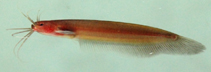 Kryptoglanis shajii
Foto de Binoy, V.V.
Fotos | Imagem do Google
Foto de Binoy, V.V.
Classificação / Nomes Nomes comuns | Sinônimos | Catalog of Fishes(Gênero, Espécies) | ITIS | CoL | WoRMS | Cloffa
> Siluriformes (Catfishes) > Kryptoglanidae (Indian cave catfishes)
Etymology: Kryptoglanis: Named for its cryptic habitat; Latin, ‘crypta’, a vault or tunnel; ‘glanis’, a catfish; shajii: Named for C.P. Shaji, a fish taxonomist who significantly contributed to the documentation of freshwater fish diversity of the Kerala region of Western Ghats by the Kerala Forest Research Institute (KFRI Peechi).
Eponymy: Dr C P Shaji is an Indian ichthyologist and taxonomist from the state of Kerala who is Principal Scientific Officer at the Kerala State Biodiversity Board. [...] (Ref. 128868), visit book page.
Etymology: Kryptoglanis: Named for its cryptic habitat; Latin, ‘crypta’, a vault or tunnel; ‘glanis’, a catfish; shajii: Named for C.P. Shaji, a fish taxonomist who significantly contributed to the documentation of freshwater fish diversity of the Kerala region of Western Ghats by the Kerala Forest Research Institute (KFRI Peechi).
Eponymy: Dr C P Shaji is an Indian ichthyologist and taxonomist from the state of Kerala who is Principal Scientific Officer at the Kerala State Biodiversity Board. [...] (Ref. 128868), visit book page.
Taxonomic Remarks
Family Incertae sedis.
Meio ambiente: milieu / Zona climática / intervalo de profundidade / faixa de distribuição Ecologia
; Água doce bentopelágico. Tropical
Distribuição Territórios | Áreas da FAO | Ecossistemas | Ocorrências | Mapa de pontos | Introduções | Faunafri
Asia: Western Ghats in Kerala, India.
Tamanho / Peso / Idade
Maturidade: Lm ? range ? - ? cm
Max length : 5.9 cm SL macho/indeterminado; (Ref. 86813); 5.4 cm SL (female)
Max length : 5.9 cm SL macho/indeterminado; (Ref. 86813); 5.4 cm SL (female)
Descrição suscinta Chaves de identificação | Morfologia | Morfometria
This species is distinguished from other siluriform species by the following set of characters: viz. no dorsal fin; anal fin with long base and completely confluent with caudal fin; 70-74 total number of fin rays in the anal and caudal fins; subcutaneous eyes; upwardly directed mouth with distinctly projecting lower jaw; fan-like pectoral fin, no spines; 4 pairs of barbels (Ref. 86813).
Body shape (shape guide): elongated.
Body shape (shape guide): elongated.
Occurs in subterranean streams. Observed to inhabit an open water body, over the paddy fields and water sources feeding paddy fields. Found mainly hiding between submerged vegetation present on the sides of the water body (Ref. 92081). Specimens collected from 5.5-m-deep well containing water where it is situated on the slope of a hilly terrain and receives water from groundwater springs, subterranean. Female individuals (4.95-5.44 cm SL) collected had distended bellies containing mature eggs. In the laboratory, the fishes thrive on Artemia nauplii and minced earthworms (Ref. 86813).
Ciclo de vida ou comportamento de acasalamento Maturidade | Reprodução | Desova | Ovos | Fecundidade | Larvas
Referência principal
Carregar suas referências | Referências | Coordenador | Colaboradores
Vincent, M. and J. Thomas, 2011. Kryptoglanis shajii, an enigmatic subterranean-spring catfish (Siluriformes, Incertae sedis) from Kerala, India. Ichthyol. Res. 58(2):161-165. (Ref. 86813)
Status na Lista Vermelha da UICN (Ref. 130435: Version 2025-2 (Global))
Em perigo (EN) (B1ab(iii)+2ab(iii)); Date assessed: 30 January 2021
CITES
Not Evaluated
Ameaça para os humanos
Harmless
Uso pelos humanos
FAO - Publication: search | FishSource |
Mais informação
Ecologia Trófica
Itens alimentares (presas)
Composição da dieta
Consumo alimentar
Rações alimentares
Predadores
Itens alimentares (presas)
Composição da dieta
Consumo alimentar
Rações alimentares
Predadores
Ecologia
Ecologia
Ecologia
Dinâmica populacional
Parâmetros de crescimento
Idade máxima / tamanhos
Relação comprimento-peso.
Relação comprimento-comprimento.
Frequências de comprimento
Conversão de massa
Recrutamento
Abundância
Parâmetros de crescimento
Idade máxima / tamanhos
Relação comprimento-peso.
Relação comprimento-comprimento.
Frequências de comprimento
Conversão de massa
Recrutamento
Abundância
Ciclo de vida
Reprodução
Maturidade
Maturidade/Rel. das guelras
Fecundidade
Desova
Agregações de desova
Ovos
Desenvolvimento dos ovos
Larvas
Dinâmica larval
Reprodução
Maturidade
Maturidade/Rel. das guelras
Fecundidade
Desova
Agregações de desova
Ovos
Desenvolvimento dos ovos
Larvas
Dinâmica larval
Anatomia
Área branquial
Cérebro
Otólito
Área branquial
Cérebro
Otólito
Fisiologia
Composição corporal
Nutrientes
Consumo de oxigênio
Tipo de natação
Velocidade de natação
Pigmentos visuais
Som de peixe
Doenças e Parasitas
Toxicidade (LC50s)
Composição corporal
Nutrientes
Consumo de oxigênio
Tipo de natação
Velocidade de natação
Pigmentos visuais
Som de peixe
Doenças e Parasitas
Toxicidade (LC50s)
Genética
genoma
Genética
Heterozigosidade
Hereditariedade
Diversidade genética
genoma
Genética
Heterozigosidade
Hereditariedade
Diversidade genética
Relacionado a humanos
Sistemas de aquicultura
Perfis para aquacultura
Estirpes
Casos de Ciguatera
Selos, moedas, diversos.
Sistemas de aquicultura
Perfis para aquacultura
Estirpes
Casos de Ciguatera
Selos, moedas, diversos.
Ferramentas
Livro eletrônico | Guia de campo | Ferramenta auxiliar de frequências de comprimento | Ferramenta sobre a história de vida | Mapa de pontos |
Catch-MSY |
Relatórios especiais
Checar Manutenção em Aquário | Checar Planilhas de Fatos sobre as Espécies | Checar Planilhas de Fatos sobre Aquicultura
Baixar XML
Fontes da internet
AFORO (otoliths) | Aquatic Commons | BHL | Cloffa | Websites from users | Checar Observador de Peixes (FishWatcher) | CISTI | Catalog of Fishes: Gênero, Espécies | DiscoverLife | ECOTOX | FAO - Publication: search | Faunafri | Fishipedia | Fishtrace | GloBI | Google Books | Google Scholar | Google | IGFA World Record | OneZoom | Open Tree of Life | Otolith Atlas of Taiwan Fishes | PubMed | Reef Life Survey | Socotra Atlas | TreeBase | Árvore da vida | Wikipedia: Ir para, procura | World Records Freshwater Fishing | Zoobank | Registro zoológico
Estimativas baseadas em modelos
Índice de diversidade filogenética (Ref. 82804): PD50 = 1.5000 [Uniqueness, from 0.5 = low to 2.0 = high].
Bayesian length-weight: a=0.00389 (0.00180 - 0.00842), b=3.12 (2.94 - 3.30), in cm total length, based on all LWR estimates for this body shape (Ref. 93245).
Nível Trófico (Ref. 69278): 3.2 ±0.5 se; based on size and trophs of closest relatives