



Chiloglanis igamba Friel & Vigliotta, 2011
را بارگذاری کني تصاوير و فيلم ها
تصوير گوگل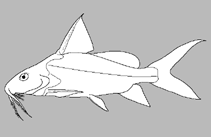 No image available for this species;
drawing shows typical species in Mochokidae.
تصوير گوگل
drawing shows typical species in Mochokidae.
رده بندی / نامها اسامي عام | مترادف | Catalog of Fishes(جنس, گونه ها) | ITIS | CoL | WoRMS | Cloffa
> Siluriformes (Catfishes) > Mochokidae (Squeakers or upside-down catfishes) > Chiloglanidinae
Etymology: Chiloglanis: Greek, cheilos = lip + Greek, glanis = a fish that can eat the bait without touching the hook; a cat fish (Ref. 45335); igamba: The specific name refers to the type locality of this species, Igamba Falls on the Malagarasi River; this is the first major series of waterfalls encountered while navigating upriver from Lake Tanganyika, and is a potential site for a hydroelectric dam; used as a noun in apposition (Ref. 87986).
Etymology: Chiloglanis: Greek, cheilos = lip + Greek, glanis = a fish that can eat the bait without touching the hook; a cat fish (Ref. 45335); igamba: The specific name refers to the type locality of this species, Igamba Falls on the Malagarasi River; this is the first major series of waterfalls encountered while navigating upriver from Lake Tanganyika, and is a potential site for a hydroelectric dam; used as a noun in apposition (Ref. 87986).
محیط زیست: محیط زیست / منطقه آب و هوایی / تغييرات عمق / محدوده توزیع بوم شناسي
; آب شيرين موجوداتی که در محدوده وسیعی از آبهای آزاد از نزدیک بستر و یا روی کف بستر، در قسمت های میان آبی تا سطح آب و در برخی گونه ها با قابلیت پرواز، زندگی و تغذیه می کنند.. Tropical; 5°S - 6°S, 29°E - 31°E
پراكنش سرزمینها | مناطق سازمان خوار و بار جهاني (FAO) | اکوسیستمها | ظهور | نقشه نقطه ای | معرفي | Faunafri
Africa: lower Malagarasi River, Tanzania (Ref. 87986).
اندازه / وزن / سن
توصيف مختصر كليدهاي شناسايي | ريخت شناسي | ريخت ستجي بوسيله انداره گيري
خارهاي باله پشتي (کل) : 2; شعاع نرم باله پشتي (کل) : 5 - 6; خارهاي باله مخرجي: 0; شعاع نرم باله مخرجي: 9 - 11; مهره ها: 33. Diagnosis: Chiloglanis igamba is a sexually dimorphic species in which the caudal fin of adult males is relatively truncate, but with the middlemost rays moderately elongated; females and juvenile males of this species in contrast exhibit a gently forked caudal fin; sexual dimorphism of the caudal fin is also apparent in several other species of Chiloglanis, including the following from various tributaries flowing into Lake Tanganyika: C. trilobatus, C. kalambo, C. productus and C. asymetricaudalis, but the particular shape of the caudal fin in C. igamba is unique among all congeners (Ref. 87986). The most similar sexually dimorphic caudal fins are found in males of C. trilobatus and C. kalambo, where the middle most rays form a third lobe; the trilobate caudal-fin shape in these species can be distinguished from the shape in C. igamba by the areas between upper, middle and lower lobes, which are notably recessed; in C. igamba these recessed areas are absent and clearly trilobate shape is not evident; Chiloglanis igamba is further distinguished from C. trilobatus and C. kalambo by a shorter adipose-fin length, 10.3-16.3% of standard length vs. 16.4-22.3% in C. trilobatus and 16.5-23.4% in C. kalambo; a shorter depth at dorsal fin insertion, 14.5-18.4% of standard length vs. 20.0-24.0% in C. trilobatus and 18.2-23.5% in C. kalambo; a shorter caudal peduncle depth, 8.7-12.6% of standard length vs. 11.9-14.5% in C. trilobatus and 11.3-15.4% in C. kalambo; a longer snout length, 20.3-26.2% of standard length vs. mean of 19.9% in C. trilobatus and mean of 18.4% in C. kalambo; a shorter maxillary barbel, 5.0-7.5% of standard length vs. a mean of 10.6% in C. trilobatus and mean of 9.3% in C. kalambo; a wider oral disc, 20.4-26.8% of standard length vs. mean of 19.0% in C. trilobatus and mean of 19.7% in C. kalambo; a wider set of premaxillary tooth plates, 15.6-19.8% of standard length vs. mean of 14.0% in C. trilobatus and mean of 13.7% in C. kalambo; 27-45 primary teeth on each premaxilla, vs. 18-31 in C. trilobatus and 7-21 in C. kalambo; 6 soft rays in the dorsal fin, rarely 5, vs. 5 rays in C. trilobatus and C. kalambo (Ref. 87986). Caudal-fin shape in males of C. igamba is also fairly similar to the shape found in males of C. productus; but in C. productus all caudal-fin rays, especially the middle rays, are elongated and the fin is diamond shaped; Chiloglanis igamba is also easily distinguished from C. productus by its pigmentation, which consists of cream-coloured splotches on a light brown background; in contrast, the pigmentation of C. productus is medium to dark brown with a pale midlateral stripe along the lateral line; Chiloglanis igamba is further distinguished from C. productus by a shorter pectoral spine, 9.9-15.1% of standard length vs. 15.2-18.5%; a shorter pectoral-fin longest ray, 15.2-18.8% of standard length vs. 19.1-23.9%; and a shorter adipose-fin base, 10.3-16.3% of standard length vs. 22.5-26.2% (Ref. 87986). Finally, in Chiloglanis asymetricaudalis the caudal fin of adult males is forked, but with an elongate upper lobe; in addition to caudal fin shape, C. igamba is easily distinguished from C. asymetricaudalis by a shorter pectoral spine, 9.9-15.1% of standard length vs. 16.4-19.7%; a shorter dorsal spine, 8.2-12.7% of standard length vs. 13.0-15.7%; a shorter anal fin, 11.7-15.9% of standard length vs. 22.6-28.0%; a shorter caudal peduncle, 15.0-17.7% of standard length vs. 18.4-20.9%; and a markedly different pigment pattern (Ref. 87986).
Body shape (shape guide): elongated.
Body shape (shape guide): elongated.
This species is most abundant within the Igamba Falls area and associated large rapids, and is much less common in smaller rapids both above and below these falls (Ref. 87986).
چرخه زندگی و رفتار جفتگیری بلوغ | تولید مثل | تخم ریزی | تخم ها | باروری | توزاد ( لارو)
مآخذ اصلی
مراجع خود را بارگذاری کنید | مراجع | هماهنگ كننده | همكاران
Friel, J.P. and T.R. Vigliotta, 2011. Three new species of African suckermouth catfishes, genus Chiloglanis (Siluriformes: Mochokidae), from the lower Malagarasi and Luiche rivers of western Tanzania. Zootaxa 3063:1-21. (Ref. 87986)
CITES
Not Evaluated
خطر برای انسان ها
Harmless
استفاده انسانی
ماهي گيري – شيلات: از بی علاقه گی
FAO - Publication: search | FishSource |
اطلاعات بيشتر
بومشناسی گرمسیری
اقلام غذایی (طعمهها)
تركيب غذايي
مصرف غذايي
جیره غذایی
شکارچیان
اقلام غذایی (طعمهها)
تركيب غذايي
مصرف غذايي
جیره غذایی
شکارچیان
پویایی جمعیت
پارامترهای رشد
حداکثر سن/اندازه
نسبت طول-وزن.
طول-طول نسبی.
نوسانات طولی
تبدیل انبوه
بازسازی
فراواني
پارامترهای رشد
حداکثر سن/اندازه
نسبت طول-وزن.
طول-طول نسبی.
نوسانات طولی
تبدیل انبوه
بازسازی
فراواني
چرخه زندگی
تولید مثل
بلوغ
بلوغ/آبششها
باروری
تخم ریزی
تجمعات تخمریزی
تخم ها
نمو تخم
توزاد ( لارو)
پويايي لاروي
تولید مثل
بلوغ
بلوغ/آبششها
باروری
تخم ریزی
تجمعات تخمریزی
تخم ها
نمو تخم
توزاد ( لارو)
پويايي لاروي
آناتومی
منطقه آبششي
مغز
اتولیت
منطقه آبششي
مغز
اتولیت
فیزیولوژی
ترکیب بدن
مواد مغذی
مصرف اکسیژن
نوع شنا
سرعت شنا
رنگدانههای بصری
صدای ماهی
بیماریها و انگلها
سمیت (LC50s)
ترکیب بدن
مواد مغذی
مصرف اکسیژن
نوع شنا
سرعت شنا
رنگدانههای بصری
صدای ماهی
بیماریها و انگلها
سمیت (LC50s)
ژنتيك
ژنوم
ژنتيك
هتروزیگوسیتی
وارث
تنوع ژنتیکی
ژنوم
ژنتيك
هتروزیگوسیتی
وارث
تنوع ژنتیکی
مرتبط با انسان
سیستمهای آبزیپروری
نمايه هاي آبزي پروري
نژادها
موارد سیگواترا
تمبر، سکه، متفرقه.
سیستمهای آبزیپروری
نمايه هاي آبزي پروري
نژادها
موارد سیگواترا
تمبر، سکه، متفرقه.
ابزارها
کتاب الکترونیکی | راهنماي صحرايي | امكان نرم افزاري بسامد طولي | ابزار تاريخ زيستي | نقشه نقطه ای |
گرفتن-MSY |
گزارش های ويژه
راجع به نگهداری آکواريم ملاحظه کنيد | برگه اطلاعات و مشخصات گونه ها را ملاحظه کنيد | برگه اطلاعات و مشخصات آبزی پروری را ببينيد
بارگيری XML
منابع اينترنتي
AFORO (otoliths) | Aquatic Commons | BHL | Cloffa | Websites from users | فيش واچر را ببينيد | CISTI | Catalog of Fishes: جنس, گونه ها | DiscoverLife | ECOTOX | FAO - Publication: search | Faunafri | Fishipedia | Fishtrace | GloBI | Google Books | Google Scholar | Google | IGFA World Record | OneZoom | Open Tree of Life | Otolith Atlas of Taiwan Fishes | PubMed | Reef Life Survey | Socotra Atlas | TreeBase | Tree of Life | Wikipedia: برو, جستجو | World Records Freshwater Fishing | Zoobank | سوابق جانورشناسی
تخمینها بر اساس مدلها
شاخص تنوع فیلوژنتیکی (مرجع 82804): PD50 = 0.5000 [Uniqueness, from 0.5 = low to 2.0 = high].
Bayesian length-weight: a=0.00389 (0.00180 - 0.00842), b=3.12 (2.94 - 3.30), in cm total length, based on all LWR estimates for this body shape (Ref. 93245).
سطح تروفیک (مرجع 69278): 3.2 ±0.4 se; based on size and trophs of closest relatives