



Pseudolithoxus stearleyi (Lujan & Armbruster, 2011)
Carregue seu(sua) Fotos e vídeos
Fotos | Imagem do Google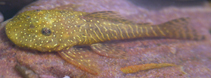 Pseudolithoxus stearleyi
Foto de Lujan, N.K.
Fotos | Imagem do Google
Foto de Lujan, N.K.
Classificação / Nomes Nomes comuns | Sinônimos | Catalog of Fishes(Gênero, Espécies) | ITIS | CoL | WoRMS | Cloffa
> Siluriformes (Catfishes) > Loricariidae (Armored catfishes) > Hypostominae
Etymology: Pseudolithoxus: Greek, pseudes = false + Greek, lithos = stone + Greek, oxys = sharp; stearleyi: Named after Ralph Stearley, Professor of Geology at Calvin College since 1992, whose patient introductory tutelage in fish osteology set the first author on his career (Ref. 87303).
Eponymy: Dr Ralph F Stearley is (since 1992) on the faculty of Calvin College, Grand Rapids, Michigan, where he is now Professor of Geology and Palaeontology. [...] (Ref. 128868), visit book page.
Etymology: Pseudolithoxus: Greek, pseudes = false + Greek, lithos = stone + Greek, oxys = sharp; stearleyi: Named after Ralph Stearley, Professor of Geology at Calvin College since 1992, whose patient introductory tutelage in fish osteology set the first author on his career (Ref. 87303).
Eponymy: Dr Ralph F Stearley is (since 1992) on the faculty of Calvin College, Grand Rapids, Michigan, where he is now Professor of Geology and Palaeontology. [...] (Ref. 128868), visit book page.
Meio ambiente: milieu / Zona climática / intervalo de profundidade / faixa de distribuição Ecologia
; Água doce demersal. Tropical; 4°N - 3°N, 65°W - 66°W
Distribuição Territórios | Áreas da FAO | Ecossistemas | Ocorrências | Mapa de pontos | Introduções | Faunafri
South America: Venezuela, Amazonas State, Soromoni Creek (Ref. 87303)
Tamanho / Peso / Idade
Descrição suscinta Chaves de identificação | Morfologia | Morfometria
Soromonichthys may be diagnosed from all other Hypostominae by having a unique pattern of plate loss on the snout: Soromonichthys has naked skin covering its anteriormost snout margin, extending posteromedially over the mesethmoid to level approximately coequal with anterior bony rim of nostrils, and posterolaterally to about midlength of snout; plated region restricted to column along either side of mesethmoid that becomes broadly expanded posterolaterally to snout margin. Only three other Hypostominae genera have a loss of snout plates: Ancistrus, Chaetostoma, and Paulasquama. Ancistrus differs from Soromonichthys in having the naked region extending more posteriorly along the lateral margins of the snout and more evenly expanded posteriorly to near midlength of the snout (females) or beyond (males); all Ancistrus have plates along the posterolateralmost margins of the snout as well as medial plates over the posterior mesethmoid. Chaetostoma is similar to Ancistrus but with less developed or absent sexual dimorphism. Paulasquama differs in having naked region confined to bilaterally symmetrical patches on either side of the mesethmoid, each extending posteriorly to the anterior rim of the nostril; plates covering anterior and lateral margins of the snout and extending posteromedially over the mesethmoid continuous with posterior head plates. Soromonichthys is further distinguished from Ancistrus, Chaetostoma, and Paulasquama by having body coloration consisting of thin irregular light yellow to gold bars on a base color of irregularly mixed moderate to dark green (vs. coloration lacking thin light colored bars); from Ancistrus by lacking tentacles emergent from unplated regions of the snout, by having nasal no wider than canal (vs. nasal wide and almost square); and from Chaetostoma by having seven dorsal-fin rays (vs. eight to ten) (Ref. 87303).
Body shape (shape guide): elongated; Cross section: flattened.
Body shape (shape guide): elongated; Cross section: flattened.
All specimens were collected from shallow riffles and runs over clean cobble substrate interspersed with sand and patches of a rooted, moss-like aquatic macrophytes. Other loricariids collected in Soromoni Creek with this species were Ancistrus sp., Dekeyseria niveata, Exastilithoxus sp., and Rineloricaria formosa (Ref. 87303).
Ciclo de vida ou comportamento de acasalamento Maturidade | Reprodução | Desova | Ovos | Fecundidade | Larvas
Referência principal
Carregar suas referências | Referências | Coordenador : Fisch-Muller, Sonia | Colaboradores
Lujan, N.K. and J.W. Armbruster, 2011. Two new genera and species of Ancistrini (Siluriformes: Loricariidae) from the Western Guiana Shield. Copeia 2011(2):216-225. (Ref. 87303)
Status na Lista Vermelha da UICN (Ref. 130435: Version 2025-2 (Global))
Dados insuficientes (DD) ; Date assessed: 05 June 2017
CITES
Not Evaluated
Ameaça para os humanos
Harmless
Uso pelos humanos
FAO - Publication: search | FishSource |
Mais informação
Ecologia Trófica
Itens alimentares (presas)
Composição da dieta
Consumo alimentar
Rações alimentares
Predadores
Itens alimentares (presas)
Composição da dieta
Consumo alimentar
Rações alimentares
Predadores
Dinâmica populacional
Parâmetros de crescimento
Idade máxima / tamanhos
Relação comprimento-peso.
Relação comprimento-comprimento.
Frequências de comprimento
Conversão de massa
Recrutamento
Abundância
Parâmetros de crescimento
Idade máxima / tamanhos
Relação comprimento-peso.
Relação comprimento-comprimento.
Frequências de comprimento
Conversão de massa
Recrutamento
Abundância
Ciclo de vida
Reprodução
Maturidade
Maturidade/Rel. das guelras
Fecundidade
Desova
Agregações de desova
Ovos
Desenvolvimento dos ovos
Larvas
Dinâmica larval
Reprodução
Maturidade
Maturidade/Rel. das guelras
Fecundidade
Desova
Agregações de desova
Ovos
Desenvolvimento dos ovos
Larvas
Dinâmica larval
Anatomia
Área branquial
Cérebro
Otólito
Área branquial
Cérebro
Otólito
Fisiologia
Composição corporal
Nutrientes
Consumo de oxigênio
Tipo de natação
Velocidade de natação
Pigmentos visuais
Som de peixe
Doenças e Parasitas
Toxicidade (LC50s)
Composição corporal
Nutrientes
Consumo de oxigênio
Tipo de natação
Velocidade de natação
Pigmentos visuais
Som de peixe
Doenças e Parasitas
Toxicidade (LC50s)
Genética
genoma
Genética
Heterozigosidade
Hereditariedade
Diversidade genética
genoma
Genética
Heterozigosidade
Hereditariedade
Diversidade genética
Relacionado a humanos
Sistemas de aquicultura
Perfis para aquacultura
Estirpes
Casos de Ciguatera
Selos, moedas, diversos.
Sistemas de aquicultura
Perfis para aquacultura
Estirpes
Casos de Ciguatera
Selos, moedas, diversos.
Ferramentas
Livro eletrônico | Guia de campo | Ferramenta auxiliar de frequências de comprimento | Ferramenta sobre a história de vida | Mapa de pontos |
Catch-MSY |
Relatórios especiais
Checar Manutenção em Aquário | Checar Planilhas de Fatos sobre as Espécies | Checar Planilhas de Fatos sobre Aquicultura
Baixar XML
Fontes da internet
AFORO (otoliths) | Aquatic Commons | BHL | Cloffa | Websites from users | Checar Observador de Peixes (FishWatcher) | CISTI | Catalog of Fishes: Gênero, Espécies | DiscoverLife | ECOTOX | FAO - Publication: search | Faunafri | Fishipedia | Fishtrace | GloBI | Google Books | Google Scholar | Google | IGFA World Record | OneZoom | Open Tree of Life | Otolith Atlas of Taiwan Fishes | PubMed | Reef Life Survey | Socotra Atlas | TreeBase | Árvore da vida | Wikipedia: Ir para, procura | World Records Freshwater Fishing | Registro zoológico