



Barbus oligolepis Battalgil, 1941
Marmara barbel
Hochladen Photos und videos
Bilder | Google Bild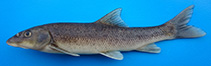 Barbus oligolepis
Photo von Kaya, C.
Bilder | Google Bild
Photo von Kaya, C.
Klassifizierung / Names Namen | Synonyme | Catalog of Fishes(Gattung, Arten) | ITIS | CoL | WoRMS | Cloffa
> Cypriniformes (Carps) > Cyprinidae (Minnows or carps) > Barbinae
Etymology: Barbus: Latin, barbus = barbel (Ref. 45335).
Eponymy: Sir Charles Alfred Payton (1843–1926) was a British adventurer, writer, fisherman and diplomat who was British Consul to Morocco, where this barb is found. [...] (Ref. 128868), visit book page.
Etymology: Barbus: Latin, barbus = barbel (Ref. 45335).
Eponymy: Sir Charles Alfred Payton (1843–1926) was a British adventurer, writer, fisherman and diplomat who was British Consul to Morocco, where this barb is found. [...] (Ref. 128868), visit book page.
Umwelt: Milieu / Klimazone / Tiefenbereich / Verbreitungsgebiet Ökologie
; süßwasser benthopelagisch. Subtropical
Verbreitung Territorien | FAO Gebiete | Ökosysteme | Vorkommen | Punkt Karte | Einführungen | Faunafri
Asia: rivers draining to the southern shore of the Marmara Sea, Turkey: Nilüfer, Koca (= Kocasu; entering Lake Ulubat), Kocachay (entering Lake Manyas, a tributary of Koca or Susurluk River), Hanchay (a tributary of Gönen) and Narlıca Stream in İznik county (flowing to Lake Iznik).
Größe / Gewicht / Alter
Kurzbeschreibung Bestimmungsschlüssel | Morphologie | Morphometrie
Wirbelzahl: 46 - 47. This species is distinguished from its congeners in Turkey and the Aegean basin by possessing a lower lip without median lobe (vs. present) and a longer and pointed snout. It is further distinct by having the following characters (none unique to the species): medium body size (up to 35.0 cm SL); specimens over 10.0 cm SL have large and many irregular dark brown spots on the back, as well as on the flanks, but none on the head; some smaller specimens lack the dark brown spots; fleshy lips; lower lip with no median lobe but with two small notches and a squarish fleshy median pad; lateral line scales 53-62; scale rows between the lateral line and the dorsal-fin origin 11-13 and between the lateral line and the anal-fin origin 7-9; gill rakers on the first gill arch 11-14 (modally 12); the last simple ray of the dorsal fin is moderately ossified, and with 30-34 serrae on the proximal ¾ of the posterior margin; body depth 18.8-24.1 % SL at dorsal-fin origin; head length 27.0-29.8 % SL (Ref. 80049).
Occurs in swift flowing water, with stone and pebble bottom and collected together with the following species: Alburnoides bipunctatus, Alburnus cf. carinatus, Barbus niluferensis, Rhodeus amarus, Squalius cii, Vimba vimba, Cobitis puncticulata, Cobitis fahirae, and Proterorhinus semilunaris (ref. 80049).
Lebenszyklus und Paarungsverhalten Geschlechtsreife | Fortpflanzung | Ablaichen | Eier | Fruchtbarkeit | Larven
Hauptreferenz
Laden Sie Ihre Referenzen hoch | Referenzen | Koordinator | Partner
Turan, D., M. Kottelat and F. Güler Ekmekçi, 2009. Barbus niluferensis, a new species of barbel (Teleostei: Cyprinidae) from Nilüfer River, Turkey, with re-description of B. oligolepis. Zootaxa 1981:15-28. (Ref. 80049)
IUCN Rote Liste Status (Ref. 130435: Version 2025-2 (Global))
nicht bedroht (LC) ; Date assessed: 30 January 2013
CITES
Not Evaluated
Bedrohung für Menschen
Harmless
Nutzung durch Menschen
FAO - Publication: search | FishSource |
Mehr Information
Trophische Ökologie
Lebensmittel (Beutetiere)
Nahrungszusammensetzung
Nahrungsaufnahme
Lebensmittelrationen
Räuber
Lebensmittel (Beutetiere)
Nahrungszusammensetzung
Nahrungsaufnahme
Lebensmittelrationen
Räuber
Ökologie
Ökologie
Ökologie
Populationsdynamik
Wachstumsparameter
Max. Alter/Größen
Länge-Gewicht-Rel.
Länge-Länge-Verhältnis.
Längenhäufigkeiten
Massenkonvertierung
Rekrutierung
Dichte
Wachstumsparameter
Max. Alter/Größen
Länge-Gewicht-Rel.
Länge-Länge-Verhältnis.
Längenhäufigkeiten
Massenkonvertierung
Rekrutierung
Dichte
Lebenszyklus
Fortpflanzung
Geschlechtsreife
Reifung/Kiemen rel.
Fruchtbarkeit
Ablaichen
Laichaggregationen
Eier
Eientwicklung
Larven
Larven Pop.Dyn.
Fortpflanzung
Geschlechtsreife
Reifung/Kiemen rel.
Fruchtbarkeit
Ablaichen
Laichaggregationen
Eier
Eientwicklung
Larven
Larven Pop.Dyn.
Anatomie
Kiemenoberfläche
Gehirn
Otolith
Kiemenoberfläche
Gehirn
Otolith
Physiologie
Körperliche Zusammensetzung
Nährstoffe
Sauerstoffverbrauch
Schwimmart
Schwimmgeschwindigkeit
Visuelle Pigmente
Fischgeräusche
Krankheiten und Parasiten
Toxizität (LC50s)
Körperliche Zusammensetzung
Nährstoffe
Sauerstoffverbrauch
Schwimmart
Schwimmgeschwindigkeit
Visuelle Pigmente
Fischgeräusche
Krankheiten und Parasiten
Toxizität (LC50s)
Genetik
Genom
Genetik
Heterozygotie
Vererbbarkeit
Genetische Vielfalt
Genom
Genetik
Heterozygotie
Vererbbarkeit
Genetische Vielfalt
Menschenbezogen
Aquakultur-Systeme
Aquakultur Profile
Zuchtlinien
Ciguatera-Fälle
Briefmarken, Münzen, Verschiedenes.
Aquakultur-Systeme
Aquakultur Profile
Zuchtlinien
Ciguatera-Fälle
Briefmarken, Münzen, Verschiedenes.
Tools
Zusatzinformationen
Download XML
Zusammenfassung | Punktdaten | Namen | Photos
Internet Quellen
AFORO (otoliths) | Aquatic Commons | BHL | Cloffa | Websites from users | FishWatcher Einträge suchen | CISTI | Catalog of Fishes: Gattung, Arten | DiscoverLife | ECOTOX | FAO - Publication: search | Faunafri | Fishipedia | Fishtrace | GloBI | Google Books | Google Scholar | Google | IGFA World Record | Nationale Datenbanken | OneZoom | Open Tree of Life | Otolith Atlas of Taiwan Fishes | PubMed | Reef Life Survey | Socotra Atlas | TreeBase | Tree of Life | Wikipedia: Gehe zu, Suchen | World Records Freshwater Fishing | Zoologischer Rekord
Schätzungen auf der Grundlage von Modellen
Phylogenetischer Diversitätsindex (Ref. 82804): PD50 = 0.5000 [Uniqueness, from 0.5 = low to 2.0 = high].
Bayesian length-weight: a=0.00912 (0.00533 - 0.01560), b=3.09 (2.94 - 3.24), in cm total length, based on LWR estimates for this species & Genus-body shape (Ref. 93245).
Trophische Ebene (Ref. 69278): 3.1 ±0.4 se; based on size and trophs of closest relatives
Widerstandsfähigkeit (Ref. 120179): mittel, Verdopplung der Population dauert 1,4 - 4,4 Jahre. (Preliminary K or Fecundity.).