This website uses cookies to enhance your browsing experience and ensure the functionality of our site. For more detailed information about the types of cookies we use and how we protect your privacy, please visit our Privacy Information page.
×
Cookie Settings
This website uses different types of cookies to enhance your experience. Please select your preferences below:
> Anabantiformes (Gouramies, snakeheads) > Osphronemidae (Gouramies) > Macropodusinae
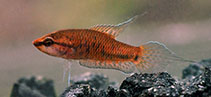
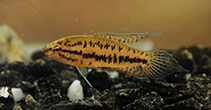
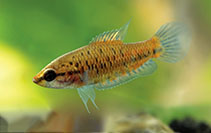
Etymology: Malpulutta:A word from Sri Lanka; the fish was described by P.E.P. Deriniyagala in Kuriwita; it only lives in a shallow streams in Sri Lanka. Eponymy: Oswald Leslie De Kretser (d: 1910) was a Sri Lankan lawyer who discovered this species. He became (1940) a Crown Counsel and was active in the Sri Lankan legal system until his retirement (1972). (Ref. 128868), visit book page.
Environnement : milieu / zone climatique / profondeur / gamme de distribution Écologie
Asia: restricted to south western Sri Lanka in Colombo-Galle-Ratnapura triangle. Was first recorded from Hettipola (near Kurunegala).
Taille / Poids / Âge
Maturité: Lm? range ? - ? cm Max length : 4.0 cm TL mâle / non sexé; (Ref. 6028); common length : 2.0 cm TL mâle / non sexé; (Ref. 6028)
Facultative air-breathing (Ref. 126274); Restricted to forested areas and small, shallow, slow flowing silted streams with leaf debris and thick marginal vegetation. Stays close to the substrate and is very seldom found in unshaded waters. Feeds on fish fry, plankton and insect larvae. Bubble nest builder.
Cycle de vie et comportement reproducteur Maturité | Reproduction | Frai | Œufs | Fécondité | Larves
Male builds the bubble nest. Spawns 100 to 200 whitish eggs in batches in the course of a period between 1 to 12 hours. Eggs sink to the bottom and both parents pick them up and place them in the nest, usually built under a submerged leaf, after fertilization. Eggs hatch in 2 days. Male solely guards the eggs and young until they reach free-swimming stage and are independent one week after spawning.
Dynamique des populations Paramètres de croissance Âges / tailles maximales Longueur-poids rel. Rel. longueur-longueur. Fréquences de longueurs Conversion de masse Recrutement Abondance
Cycle de vie Reproduction Maturité Maturité/épines rel. Fécondité Frai Agrégats de frai Œufs Développement de l'œuf Larves Dynamique des populations larvaires
Physiologie Composition corporelle Nutriments Consommation d'oxygène Type de natation Vitesse de nage Pigments visuels Son de poisson Maladies et parasites Toxicité (CL50)
Indice de diversité phylogénétique (Réf. 82804): PD50 = 1.0000 [Uniqueness, from 0.5 = low to 2.0 = high].
Bayesian length-weight: a=0.01000 (0.00374 - 0.02675), b=2.97 (2.74 - 3.20), in cm total length, based on LWR estimates for this (Sub)family-body shape (Ref. 93245).
Niveau trophique (Réf. 69278): 3.5 ±0.45 se; based on food items.
Résilience (Réf. 120179): Haut, temps minimum de doublement de population inférieur à 15 mois (Preliminary K or Fecundity.).
Vulnérabilité de la pêche (Ref. 59153): Low vulnerability (10 of 100). 🛈