



Rhinobatos sainsburyi Last, 2004
Goldeneye shovelnose
अपना अवलोकन जोड़ें Fish Watcher
| Native range | All suitable habitat | Point map | Year 2050 |

|
| This map was computer-generated and has not yet been reviewed. |
| Rhinobatos sainsburyi AquaMaps Data sources: GBIF OBIS |
अपना अपलोड करें तस्वीरें और वीडियो
Google image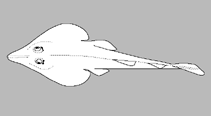 No image available for this species;
drawing shows typical species in Rhinobatidae.
Google image
drawing shows typical species in Rhinobatidae.
वर्गीकरण / नाम आम नाम | उपशब्द | Catalog of Fishes(वर्ग, प्रजाति) | ITIS | CoL | WoRMS | Cloffa
इलाज़मौबरांकी (शारक और रेज़) (sharks and rays) > Rhinopristiformes (Shovelnose rays) > Rhinobatidae (Guitarfishes)
Etymology: Rhinobatos: Greek, rhinos = nose + Greek, batis, -idos = a ray (Raja sp.) (Ref. 45335); sainsburyi: Named for Dr. Keith Sainsbury.
Eponymy: Dr Keith John Sainsbury (d: 1952) is a marine ecologist and mathematical modeler with a research focus on the assessment, ecology, economics, exploitation and conservation of marine resources and ecosystems. [...] (Ref. 128868), visit book page.
More on author: Last.
Etymology: Rhinobatos: Greek, rhinos = nose + Greek, batis, -idos = a ray (Raja sp.) (Ref. 45335); sainsburyi: Named for Dr. Keith Sainsbury.
Eponymy: Dr Keith John Sainsbury (d: 1952) is a marine ecologist and mathematical modeler with a research focus on the assessment, ecology, economics, exploitation and conservation of marine resources and ecosystems. [...] (Ref. 128868), visit book page.
More on author: Last.
पर्यावरण: पर्यावरण / जलवायु क्षेत्र / गहराई सीमा / वितरण सीमा पारिस्थितिकी
समुद्री बेनथोपिलाजिक; गहराई सीमा 66 - 200 m (Ref. 58070), usually ? - 150 m (Ref. 58070). Tropical; 5°S - 21°S, 114°E - 135°E (Ref. 114953)
वितरण प्रदेशों | ऐफ ऐ ओ क्षेत्र | पारिस्थितिकी प्रणालियों | संयोग | बिन्दु नक्शा | भूमिका | Faunafri
Eastern Indian Ocean and Western Central Pacific: Western Australia to Papua New Guinea
आकार / वज़न / आयु
संक्षिप्त वर्णन पहचान कुंजी | आकृति विज्ञान | मौरफोमैटरिक्स
This species is distinguished by the following characters: wedge-shaped disc, its dorsal surface scaled but no thorns; snout length 2.5-2.6 times interspiracular distance; orbit moderately large, diameter 1.6-1.9 times spiracle length; nostrils oblique, length 1.4-1.6 times internarial distance; anterior nasal-flaps inserted well into internarial space, but never almost united near ventral midline; posterior nasal flaps broad; ridges of rostral cartilage well-separated dorsally and almost parallel; prebranchial sensory-pore patch narrow, extending to first gill slit; distance between first gill slits 1.3-1.4 times distance between fifth gill slits; distance between fifth gill slits 2.5-2.9 times in ventral head length; postscapular sensory canal long, not grooved, extending more than three-quarters distance to pectoral-fin insertions; moderately tall dorsal-fins; pelvic-fin inner margin distinctly longer than its base in mature males, shorter than base in females; interdorsal distance more than 2.5 times first dorsal-fin base; outer spiracular fold distinctly larger than inner fold; dorsal margin of caudal fin about 2.0-2.2 times preventral margin; 162-171 post-synarcual vertebral centra; about 50 nasal lamellae; dorsal disc plain brownish or with faint dusky blotches or fine dark spots (Ref. 58070).
Body shape (shape guide): elongated.
Body shape (shape guide): elongated.
This species is mostly collected at depths shallower than 150 m. Male individuals mature at 46 cm TL, immature at 37.6 cm TL (Ref. 58070).
जीवन चक्र और संभोग व्यवहार परिपक्व अवधि | पुनरुत्पत्ति | मछलीऔ का अंडे देना | अंडे | उपजाऊपन | लार्वा
मुख्य संदर्भ
अपने संदर्भ अपलोड करें | संदर्भ | संयोजक : McEachran, John | सहयोगीयो
Last, P.R., 2004. Rhinobatos sainsburyi n. sp. and Aptychotrema timorensis n. sp. -- two new shovelnose rays (Batoidea: Rhinobatidae) from the eastern Indian Ocean. Rec. Aust. Mus. 56(2):201-208. (Ref. 58070)
आईयूसीएन रेड लिस्ट स्थिति (Ref. 130435: Version 2025-2 (Global))
Least Concern (LC) ; Date assessed: 15 May 2024
मनुष्यों के लिए ख़तरा
Harmless
मानव उपयोग
FAO - Publication: search | FishSource |
अधिक जानकारी
ट्रॉफिक पारिस्थितिकी
खाद्य पदार्थ (शिकार)
संघटक आहार
आहार खपत
खाद्यान्न राशन
परभक्षी
खाद्य पदार्थ (शिकार)
संघटक आहार
आहार खपत
खाद्यान्न राशन
परभक्षी
जनसंख्या गतिशीलता
विकास मापदंड
अधिकतम आयु/आकार
लंबाई-वजन संबंध
लंबाई-लंबाई संबंध
लंबाई-आवृत्तियाँ
सामूहिक रूपांतरण
भर्ती
बहुतायत
विकास मापदंड
अधिकतम आयु/आकार
लंबाई-वजन संबंध
लंबाई-लंबाई संबंध
लंबाई-आवृत्तियाँ
सामूहिक रूपांतरण
भर्ती
बहुतायत
जीवन चक्र
पुनरुत्पत्ति
परिपक्व अवधि
परिपक्वता/गिल्स संबंध
उपजाऊपन
मछलीऔ का अंडे देना
स्पॉनिंग एकत्रीकरण
अंडे
अंडे का विकास
लार्वा
लारवल गतिकी
पुनरुत्पत्ति
परिपक्व अवधि
परिपक्वता/गिल्स संबंध
उपजाऊपन
मछलीऔ का अंडे देना
स्पॉनिंग एकत्रीकरण
अंडे
अंडे का विकास
लार्वा
लारवल गतिकी
शरीर रचना
गिल क्षेत्र
दिमाग
ओटोलिथ
गिल क्षेत्र
दिमाग
ओटोलिथ
फिजियोलॉजी
शारीरिक संरचना
पोषक तत्व
प्राणवायु की खपत
तैराकी का प्रकार
तैराकी की गति
दृश्य वर्णक
मछली की आवाज
रोग एवं परजीवी
विषाक्तता (LC50s)
शारीरिक संरचना
पोषक तत्व
प्राणवायु की खपत
तैराकी का प्रकार
तैराकी की गति
दृश्य वर्णक
मछली की आवाज
रोग एवं परजीवी
विषाक्तता (LC50s)
आनुवंशिकी
जीनोम
आनुवंशिकी
विषमयुग्मजी
हैरेटिबिलटी
आनुवंशिक विविधता
जीनोम
आनुवंशिकी
विषमयुग्मजी
हैरेटिबिलटी
आनुवंशिक विविधता
साधन
ई-पुस्तक | कार्यक्षेत्र पथप्रदर्शक | लंबाई आवृति इंद्रजालिक | जीवन-इतिहास उपकरण | बिन्दु नक्शा |
कैच-एमएसवाई |
विशेष रिपोर्ट
एक्वेरियम के रखरखाव की जांच करें | प्रजातियों के तथ्य पत्रक की जाँच करें | जलीय कृषि तथ्य पत्रक की जाँच करें
XML डाउनलोड करें
सारांश पृष्ठ | बिंदु डेटा | आम नाम | तस्वीरें
इंटरनेट स्रोत
AFORO (otoliths) | Aquatic Commons | BHL | Cloffa | Websites from users | Check FishWatcher | CISTI | Catalog of Fishes: वर्ग, प्रजाति | DiscoverLife | ECOTOX | FAO - Publication: search | Faunafri | Fishipedia | Fishtrace | GloBI | Google Books | Google Scholar | Google | IGFA World Record | OneZoom | Open Tree of Life | Otolith Atlas of Taiwan Fishes | PubMed | Reef Life Survey | Socotra Atlas | TreeBase | Tree of Life | Wikipedia: Go, खोज | World Records Freshwater Fishing | Zoobank | प्राणीशास्त्रीय अभिलेख
मॉडल पर आधारित अनुमान
पसंदीदा तापमान (संदर्भ 123201): 20.5 - 26.8, mean 23.9 °C (based on 45 cells).
जातिवृति विविधता सूचकांक (संदर्भ 82804): PD50 = 0.5000 [Uniqueness, from 0.5 = low to 2.0 = high].
Bayesian length-weight: a=0.00295 (0.00150 - 0.00581), b=3.13 (2.96 - 3.30), in cm total length, based on LWR estimates for this (Sub)family-body shape (Ref. 93245).
ट्रॉफिक स्तर (संदर्भ 69278): 3.7 ±0.4 se; based on size and trophs of closest relatives
लौटाव (संदर्भ 120179): निम्न, न्यूनतम जनसंख्या दुगनी होने का समय 4.5 - 14 वर्ष। (Preliminary low fecundity).