Holocephali (chimeren) (chimaeras) >
Chimaeriformes (Chimaeras) >
Chimaeridae (Shortnose chimaeras or ratfishes)
Etymology: Hydrolagus: hydro-, combining form of hydor (Gr.), water; lagos (Gr.), hare, i.e., “water rabbit,” probably referring to three pairs of tooth plates, which tend to protrude from the mouth like a rabbit’s incisors (See ETYFish); alphus: Greek for a white spot on the skin, referring to noticeable white spot on sides (See ETYFish).
Environment: milieu / Klimaatzone / Diepte / distribution range
Ecologie
marien bathydemersaal; diepte 600 - 900 m (Ref. 57721). Tropical
Eastern Central Pacific: Galapagos Islands.
Grootte / Gewicht / Leeftijd
Maturiteit: Lm ? range ? - ? cm
Max length : 41.9 cm TL mannelijk / geslacht onbekend; (Ref. 57721); 48.0 cm TL (female)
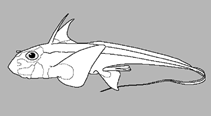
Assigned to the genus Hydrolagus based upon the absence of an anal fin. Hydrolagus alphus is distinguished by being medium in size (average PCL 321 mm) and uniform dark brown in color with a distinct white spot (4%-6% BDL) on the lateral side above the pectoral fins. Paired fins with bluish hue and white margins. The dorsal spine longer than triangular shaped first dorsal fin and extends beyond the origin of the second dorsal fin when depressed. Eyes large (40.8–44.5% HDL) and pectoral fins reaching to or beyond insertion of pelvic fins when depressed. Pelvic claspers small, not extending beyond distal edge of pelvic fin, and divided distally for one half their length with slender fleshy denticulate tips. The base of second dorsal fin is long, deeply depressed and light colored in the center, anterior and posterior regions dark, considerably greater in height than the white middle region (Ref. 57721).
Body shape (shape guide): elongated.
Levenscyclus en paargedrag
Maturiteit | Voortplanting | Paaien | Eieren | Fecunditeit | Larven
Quaranta, K.L., D.A. Didier, D.J. Long and D.A. Ebert, 2006. A new species of chimaeroid, Hydrolagus alphus sp. nov.(Chimaeriformes: Chimaeridae) from the Galapagos Islands. Zootaxa 1377:33-45. (Ref. 57721)
Status op de Rode Lijst van het IUCN (Ref. 130435: Version 2025-1)
Gevaar voor de mens
Harmless
Gebruik door de mens
Tools
Speciale rapporten
Download XML
Internetbronnen
Estimates based on models
Preferred temperature (Ref.
123201): 3.7 - 7, mean 5.7 °C (based on 7 cells).
Fylogenetische diversiteitsindex (Ref.
82804): PD
50 = 0.5000 [Uniqueness, from 0.5 = low to 2.0 = high].
Bayesian length-weight: a=0.00331 (0.00137 - 0.00798), b=3.07 (2.86 - 3.28), in cm total length, based on LWR estimates for this (Sub)family-body shape (Ref.
93245).
Trofisch niveau (Ref.
69278): 3.7 ±0.6 se; based on size and trophs of closest relatives
Weerstandsvermogen (Ref.
120179): laag, minimale populatieverdubbelingstijd 4,5-14 jaar (Deep-water species, few large eggs.).
Fishing Vulnerability (Ref.
59153): Moderate vulnerability (38 of 100).
🛈