>
Gobiiformes (Gobies) >
Gobiidae (Gobies) > Gobiinae
Etymology: Evermannichthys: From Evermann, 1902, researcher about fauna + greek, ichthys = fish (Ref. 45335).
Eponymy: Dr Barton Warren Evermann (1853–1932) was a schoolteacher (1876–1886) and a student at Indiana University, where he was awarded his bachelor’s degree (1886), master’s (1888) and doctorate (1891). [...] (Ref. 128868), visit book page.
Environment: milieu / climate zone / intervalo de profundidade / distribution range
Ecologia
marinhas demersal; intervalo de profundidade ? - 27 m (Ref. 58018). Subtropical
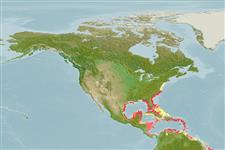
Western Central Atlantic: North Carolina and northeastern Gulf of Mexico to Campeche, Mexico and the Bahamas south to Curacao
Tamanho / Peso / Idade
Maturidade: Lm ? range ? - ? cm
Max length : 3.0 cm TL macho/indeterminado; (Ref. 7251)
Descrição breve
Chaves de identificação | Morfologia | Morfometria
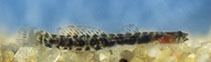
Distinguished by having the following characteristics: thin and elongate in form; reduced scale cover and head pores; depth of body about 2 mm (Ref. 92840).
Always lives in large loggerhead sponges and other similar sponges (Ref. 7251). Live deep within canals of the sponges, near the openings to the incurrent canals. Sponges provide species with protection from predators and an available food source in many invertebrates. Eggs found within sponge or small plankton brought through incurrent pores (Ref. 92840).
Life cycle and mating behavior
Maturidade | Reprodução | Desova | Ovos | Fecundidade | Larvas
Nelson, J.S., E.J. Crossman, H. Espinosa-Pérez, L.T. Findley, C.R. Gilbert, R.N. Lea and J.D. Williams, 2004. Common and scientific names of fishes from the United States, Canada, and Mexico. American Fisheries Society, Special Publication 29, Bethesda, Maryland. ix, 386 p. + 1 CD. (Ref. 52299)
Categoria na Lista Vermelha da IUCN (Ref. 130435: Version 2025-1)
Ameaça para o homem
Harmless
Utilização humana
Ferramentas
Relatórios especiais
Descarregue XML
Fontes da internet
Estimates based on models
Preferred temperature (Ref.
123201): 23.7 - 28.3, mean 27 °C (based on 429 cells).
Phylogenetic diversity index (Ref.
82804): PD
50 = 0.5312 [Uniqueness, from 0.5 = low to 2.0 = high].
Bayesian length-weight: a=0.00724 (0.00339 - 0.01546), b=3.10 (2.92 - 3.28), in cm total length, based on LWR estimates for this (Sub)family-body shape (Ref.
93245).
Nível Trófico (Ref.
69278): 3.1 ±0.3 se; based on size and trophs of closest relatives
Resiliência (Ref.
120179): Elevada, tempo mínimo de duplicação da população menor que 15 meses (Preliminary K or Fecundity.).
Fishing Vulnerability (Ref.
59153): Low vulnerability (10 of 100).
🛈