This website uses cookies to enhance your browsing experience and ensure the functionality of our site. For more detailed information about the types of cookies we use and how we protect your privacy, please visit our Privacy Information page.
×
Cookie Settings
This website uses different types of cookies to enhance your experience. Please select your preferences below:
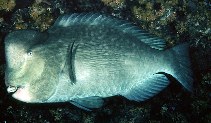
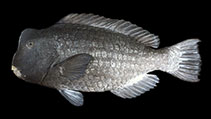
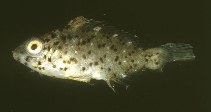
Bolbometopon muricatum, Green humphead parrotfish : fisheries, aquarium
Indo-Pacific: Red Sea and East Africa to Samoa and the Line Islands, north to the Yaeyama and Wake islands, south to the Great Barrier Reef and New Caledonia.
Dimensione / Peso / Età
Maturità: Lm? range ? - ? cm Max length : 130 cm TL maschio/sesso non determinato; (Ref. 9710); common length : 70.0 cm SL maschio/sesso non determinato; (Ref. 9793); peso massimo pubblicato: 46.0 kg (Ref. 2334)
Spine dorsali (totale) : 9; Raggi dorsali molli (totale) : 10; Spine anali: 3; Raggi anali molli: 9. This species is distinguished by the following characters: median predorsal scales 2-4 (may be obscured by hump); 3 scale rows on cheek, 1 (4-6), 2 (3-6), 3 (1-2); pectoral-fin rays 16 or 17; steep profile distinctive; nodules on teeth unique (Ref. 9793); prominent bump on forehead of adult (evident at least 25 cm TL); deep body 2.0-2.5 in SL, with depth increasing with growth; Colour of juveniles brownish to green with 5 vertical rows of whitish spots on side, the primary phase is a dull gray with scattered white spots, gradually becoming uniformly dark green (Ref. 90102, 1602). Body shape (shape guide): fusiform / normal; Cross section: compressed.
Juveniles are found in lagoons while adults inhabit clear outer lagoon and seaward reefs up to depths of at least 30 m (Ref. 9710). They ‘sleep’ in caves and often in shipwrecks at night (Ref. 48636). They are usually in small groups feeding on benthic algae, live corals (Ref. 9710) and shellfishes (Ref. 58784). They sometimes ram their head against corals to facilitate feeding (Ref. 9710). The largest and wariest of the parrotfishes. Assessments showed their vulnerability to overfishing (Ref. 9710). Minimum depth reported taken from Ref. 128797.
Ciclo vitale e comportamento di accoppiamento Maturità | Riproduzione | Deposizione | Uova | Fecondità | Larve
Oviparous, distinct pairing during breeding (Ref. 205). Also Ref. 103751.
Randall, J.E., G.R. Allen and R.C. Steene, 1990. Fishes of the Great Barrier Reef and Coral Sea. University of Hawaii Press, Honolulu, Hawaii. 506 p. (Ref. 2334)
Stato della Lista Rossa IUCN (Ref. 130435: Version 2025-2 (Global))
Ciclo di vita Riproduzione Maturità Maturità/Gli occhielli sono relativi. Fecondità Deposizione Aggregazioni riproduttive Uova Sviluppo delle uova Larve Dinamica popolazioni larvali
Fisiologia Composizione corporea Nutrienti Consumo di ossigeno Tipo di nuoto Velocità di nuoto Pigmenti visivi Suono del pesce Malattie e parassiti Tossicità (LC50)
Temperatura preferita (Fonte Biblio. 123201): 25.3 - 29.1, mean 28.2 °C (based on 2570 cells).
Indice di diversità filogenetica (Fonte Biblio. 82804): PD50 = 1.0000 [Uniqueness, from 0.5 = low to 2.0 = high].
Bayesian length-weight: a=0.01349 (0.00796 - 0.02287), b=3.02 (2.88 - 3.16), in cm total length, based on LWR estimates for this species & (Sub)family-body (Ref. 93245).
Livello trofico (Fonte Biblio. 69278): 2.7 ±0.41 se; based on food items.
Generation time: 11.0 ( na - na) years. Estimated as median ln(3)/K based on 2 growth studies.
Resilienza (Fonte Biblio. 120179): Basso, tempo minimo di raddoppiamento della popolazione 4.5 - 14 anni (K=0.10).
Vulnerabilità della pesca (Ref. 59153): High to very high vulnerability (67 of 100). 🛈
Vulnerabilità climatica (Ref. 125649): Very high vulnerability (92 of 100). 🛈