



Raja microocellata Montagu, 1818
Small-eyed ray
अपना अवलोकन जोड़ें Fish Watcher
| Native range | All suitable habitat | Point map | Year 2050 |

|
| This map was computer-generated and has not yet been reviewed. |
| Raja microocellata AquaMaps Data sources: GBIF OBIS |
अपना अपलोड करें तस्वीरें और वीडियो
तस्वीरे | Google image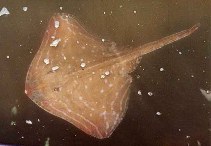 Raja microocellata
चित्र स्रोत: AP Meyer, T.
तस्वीरे | Google image
चित्र स्रोत: AP Meyer, T.
वर्गीकरण / नाम आम नाम | उपशब्द | Catalog of Fishes(वर्ग, प्रजाति) | ITIS | CoL | WoRMS | Cloffa
इलाज़मौबरांकी (शारक और रेज़) (sharks and rays) > Rajiformes (Skates and rays) > Rajidae (Skates)
Etymology: Raja: Latin, raja, -ae = a sting ray (Raja sp.) (Ref. 45335).
Etymology: Raja: Latin, raja, -ae = a sting ray (Raja sp.) (Ref. 45335).
पर्यावरण: पर्यावरण / जलवायु क्षेत्र / गहराई सीमा / वितरण सीमा पारिस्थितिकी
समुद्री ड़िमरसल; गहराई सीमा ? - 100 m (Ref. 4426). Temperate; 55°N - 24°N, 16°W - 1°W
वितरण प्रदेशों | ऐफ ऐ ओ क्षेत्र | पारिस्थितिकी प्रणालियों | संयोग | बिन्दु नक्शा | भूमिका | Faunafri
Northeast Atlantic, from the British Isles southwards to Gibraltar and north-western Africa (Western Sahara and Mauritania).
प्रथम परिपक्वता पर लंबाई / आकार / वज़न / आयु
परिपक्व अवधि: Lm 74.0, range 73 - ? cm
Max length : 87.0 cm TL पुल्लिंग / अलिंग; (Ref. 6014); अधिकतम प्रकाशित वज़न: 4.5 kg (Ref. 4699)
Max length : 87.0 cm TL पुल्लिंग / अलिंग; (Ref. 6014); अधिकतम प्रकाशित वज़न: 4.5 kg (Ref. 4699)
संक्षिप्त वर्णन पहचान कुंजी | आकृति विज्ञान | मौरफोमैटरिक्स
पृष्ठीय रीढ़ (सम्पूर्ण) : 0; गुदा कांटा: 0. Eyes conspicuously small; dorsal fins close-set, no thorns between; upper surface predominantly spinulose, underside almost smooth in young, but head and centre of disc prickly in larger specimens; orbital thorns separate, a regular row of about 50 thorns from nape to first dorsal fin; upper surface greyish, olive to light brown with light blotches and long bands, underside white (Ref. 3167).
Body shape (shape guide): other; Cross section: flattened.
Body shape (shape guide): other; Cross section: flattened.
Found on sandy bottoms, from inshore waters to about 100 m in tidal areas (Ref. 3167). Feed on fishes (Ref. 3167). Oviparous. Distinct pairing with embrace. Young may tend to follow large objects, such as their mother (Ref. 205). Eggs are oblong capsules with stiff pointed horns at the corners deposited in sandy or muddy flats (Ref. 205). Egg capsules are 6.6-10.0 cm long and 4.1-6.3 cm wide (Ref. 41250). About 54-61 eggs are laid by an individual in a year (Ref. 41250).
जीवन चक्र और संभोग व्यवहार परिपक्व अवधि | पुनरुत्पत्ति | मछलीऔ का अंडे देना | अंडे | उपजाऊपन | लार्वा
Oviparous (Ref. 3167). Paired eggs are laid. Embryos feed solely on yolk (Ref. 50449). Distinct pairing with embrace. Young may tend to follow large objects, such as their mother (Ref. 205).
मुख्य संदर्भ
अपने संदर्भ अपलोड करें | संदर्भ | संयोजक : McEachran, John | सहयोगीयो
McEachran, J.D. and K.A. Dunn, 1998. Phylogenetic analysis of skates, a morphologically conservative clade of elasmobranchs (Chondrichthyes: Rajidae). Copeia 1998(2):271-290. (Ref. 27314)
आईयूसीएन रेड लिस्ट स्थिति (Ref. 130435: Version 2025-2 (Global))
Near Threatened (NT) (A2bd); Date assessed: 15 November 2023
CITES
Not Evaluated
मनुष्यों के लिए ख़तरा
Harmless
मानव उपयोग
मात्स्यिकी: लघु वाणिज्य; आखेट मत्स्य: हां
FAO - मात्स्यिकी: उतरने; Publication: search | FishSource | हमारे चारों ओर समुद्र
अधिक जानकारी
जनसंख्या गतिशीलता
विकास मापदंड
अधिकतम आयु/आकार
लंबाई-वजन संबंध
लंबाई-लंबाई संबंध
लंबाई-आवृत्तियाँ
सामूहिक रूपांतरण
भर्ती
बहुतायत
विकास मापदंड
अधिकतम आयु/आकार
लंबाई-वजन संबंध
लंबाई-लंबाई संबंध
लंबाई-आवृत्तियाँ
सामूहिक रूपांतरण
भर्ती
बहुतायत
जीवन चक्र
पुनरुत्पत्ति
परिपक्व अवधि
परिपक्वता/गिल्स संबंध
उपजाऊपन
मछलीऔ का अंडे देना
स्पॉनिंग एकत्रीकरण
अंडे
अंडे का विकास
लार्वा
लारवल गतिकी
पुनरुत्पत्ति
परिपक्व अवधि
परिपक्वता/गिल्स संबंध
उपजाऊपन
मछलीऔ का अंडे देना
स्पॉनिंग एकत्रीकरण
अंडे
अंडे का विकास
लार्वा
लारवल गतिकी
फिजियोलॉजी
शारीरिक संरचना
पोषक तत्व
प्राणवायु की खपत
तैराकी का प्रकार
तैराकी की गति
दृश्य वर्णक
मछली की आवाज
रोग एवं परजीवी
विषाक्तता (LC50s)
शारीरिक संरचना
पोषक तत्व
प्राणवायु की खपत
तैराकी का प्रकार
तैराकी की गति
दृश्य वर्णक
मछली की आवाज
रोग एवं परजीवी
विषाक्तता (LC50s)
आनुवंशिकी
जीनोम
आनुवंशिकी
विषमयुग्मजी
हैरेटिबिलटी
आनुवंशिक विविधता
जीनोम
आनुवंशिकी
विषमयुग्मजी
हैरेटिबिलटी
आनुवंशिक विविधता
मानव संबंधी
जलकृषि प्रणालियाँ
जलीयकृषि रूपरेखाऐ
खींच
सिगुएटेरा के मामले
टिकट, सिक्के, विविध.
जलकृषि प्रणालियाँ
जलीयकृषि रूपरेखाऐ
खींच
सिगुएटेरा के मामले
टिकट, सिक्के, विविध.
साधन
ई-पुस्तक | कार्यक्षेत्र पथप्रदर्शक | लंबाई आवृति इंद्रजालिक | जीवन-इतिहास उपकरण | बिन्दु नक्शा |
कैच-एमएसवाई |
विशेष रिपोर्ट
एक्वेरियम के रखरखाव की जांच करें | प्रजातियों के तथ्य पत्रक की जाँच करें | जलीय कृषि तथ्य पत्रक की जाँच करें
XML डाउनलोड करें
सारांश पृष्ठ | बिंदु डेटा | आम नाम | तस्वीरें
इंटरनेट स्रोत
AFORO (otoliths) | Aquatic Commons | BHL | Cloffa | Websites from users | Check FishWatcher | CISTI | Catalog of Fishes: वर्ग, प्रजाति | DiscoverLife | ECOTOX | FAO - मात्स्यिकी: उतरने; Publication: search | Faunafri | Fishipedia | Fishtrace | GloBI | Google Books | Google Scholar | Google | IGFA World Record | राष्ट्रीय आंकड़ासंचय | OneZoom | Open Tree of Life | Otolith Atlas of Taiwan Fishes | PubMed | Reef Life Survey | Socotra Atlas | TreeBase | Tree of Life | Wikipedia: Go, खोज | World Records Freshwater Fishing | प्राणीशास्त्रीय अभिलेख
मॉडल पर आधारित अनुमान
पसंदीदा तापमान (संदर्भ 123201): 10.4 - 15.4, mean 12 °C (based on 138 cells).
जातिवृति विविधता सूचकांक (संदर्भ 82804): PD50 = 0.5000 [Uniqueness, from 0.5 = low to 2.0 = high].
Bayesian length-weight: a=0.00479 (0.00305 - 0.00752), b=3.30 (3.18 - 3.42), in cm total length, based on LWR estimates for this species & Genus-body shape (Ref. 93245).
ट्रॉफिक स्तर (संदर्भ 69278): 3.9 ±0.2 se; based on diet studies.
लौटाव (संदर्भ 120179): निम्न, न्यूनतम जनसंख्या दुगनी होने का समय 4.5 - 14 वर्ष। (Fec= 54-61).
पोषक तत्व (Ref. 124155): Calcium = 6.33 [0.91, 111.73] mg/100g; Iron = 0.25 [0.02, 2.91] mg/100g; Protein = 17 [14, 19] %; Omega3 = 0.847 [0.342, 2.086] g/100g; Selenium = 10.4 [2.2, 54.2] μg/100g; VitaminA = 6.1 [0.5, 70.5] μg/100g; Zinc = 0.354 [0.024, 3.858] mg/100g (wet weight); based on nutrient studies.