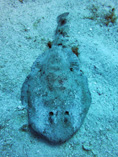
Elasmobranchi (squali e razze) (sharks and rays) >
Torpediniformes (Electric rays) >
Narcinidae (Numbfishes)
Etymology: Narcine: Greek, narke = numbness (Ref. 45335).
Eponymy: Dr Edward Nathaniel Bancroft (1772–1842) was a British surgeon at St Georges, London (1805–1811). [...] (Ref. 128868), visit book page.
Environment: milieu / climate zone / distribuzione batimetrica / distribution range
Ecologia
marino demersale; distribuzione batimetrica ? - 35 m (Ref. 114953). Tropical; 35°N - 10°N, 97°W - 60°W (Ref. 114953)
Western Atlantic: North Carolina to northeastern Brazil, including the Gulf of Mexico, Caribbean Sean and the islands of the West Indies. Not in Compagno's 1999 checklist (Ref. 35766). Reported in Brazil (Ref. 53431).
Size / Peso / Age
Maturità: Lm ? range ? - ? cm
Max length : 65.0 cm TL maschio/sesso non determinato; (Ref. 114953)
A benthic species on continental and insular shelves. Mainly feeds on invertebrates suction-fed off the bottom. Produces up to 16 embryos during each gestation. Maturity size of males at ca. 23 cm TL; birth size observed to be ca. 9 cm TL (Ref. 114953).
Life cycle and mating behavior
Maturità | Riproduzione | Deposizione | Uova | Fecundity | Larve
de Carvalho, M.R., 1999. Systematic revision of the electric ray genus Narcine Henle, 1834 (Chondrichthyes: Torpediniformes: Narcinidae), and the higher-level phylogenetic relationships of the orders of elasmobranch fishes (Chondrichthyes). Unpublished Ph.D. thesis, the City University of New York. (Ref. 31157)
IUCN Red List Status (Ref. 130435: Version 2025-1)
Threat to humans
Harmless
Human uses
Strumenti
Special reports
Download XML
Fonti Internet
Estimates based on models
Phylogenetic diversity index (Fonte Biblio.
82804): PD
50 = 0.5000 [Uniqueness, from 0.5 = low to 2.0 = high].
Bayesian length-weight: a=0.01175 (0.00470 - 0.02937), b=2.88 (2.66 - 3.10), in cm total length, based on LWR estimates for this (Sub)family-body shape (Ref.
93245).
Trophic level (Fonte Biblio.
69278): 3.1 ±0.3 se; based on size and trophs of closest relatives
Resilienza (Fonte Biblio.
120179): Basso, tempo minimo di raddoppiamento della popolazione 4.5 - 14 anni (Assuming fecundity<100).
Fishing Vulnerability (Ref.
59153): Moderate to high vulnerability (46 of 100).
🛈