



Perca fluviatilis Linnaeus, 1758
European perch
Ανεβάστε το φωτογραφίες και Βίντεο
Φωτογραφίες | Βίντεο | Ήχοι | Γραμματόσημα, νομίσματα, διάφορα. | Google image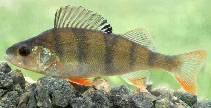 Perca fluviatilis
Εικόνα από Kohout, J.
Φωτογραφίες | Βίντεο | Ήχοι | Γραμματόσημα, νομίσματα, διάφορα. | Google image
Εικόνα από Kohout, J.
Ταξινόμηση / Ονόματα Κοινά ονόματα | Συνώνυμα | Catalog of Fishes(Γένος, Είδη) | ITIS | CoL | WoRMS | Cloffa
> Perciformes/Percoidei (Perchs) > Percidae (Perches) > Percinae
Etymology: Perca: Greek, perke = perch, a fish without identificaction (Ref. 45335).
More on author: Linnaeus.
Etymology: Perca: Greek, perke = perch, a fish without identificaction (Ref. 45335).
More on author: Linnaeus.
Περιβάλλον: περιβάλλον / κλιματική ζώνη / εύρος βάθους / εύρος διανομής Οικολογία
; Γλυκού νερού; Υφάλμυρο βενθικό(ς); pH range: 7.0 - 7.5; dH range: 8 - 12; ανάδρομο (Ref. 51243); εύρος βάθους 1 - 30 m (Ref. 9988), usually 3 - 4 m (Ref. 55947). Temperate; 10°C - 22°C (Ref. 1672); 74°N - 38°N, 91°W - 168°E
Κατανομή Εδάφη | Περιοχές FAO | Οικοσυστήματα | Παρουσίες | Σημειακός χάρτης | Εισαγωγές | Faunafri
Eurasia: throughout Europe to northernmost extremity of Scandinavia, except Iberian Peninsula, central Italy, and Adriatic basin; Aegean Sea basin in Matriza and from Struma to Aliakmon drainages; Aral Sea basin; Siberia in rivers draining the Arctic Ocean eastward to Kolyma. Widely introduced. Several countries report adverse ecological impact after introduction.
Μήκος κατά την πρώτη ωρίμανση / Μέγεθος / Βάρος / Ηλικία
Γεννητική Ωρίμανση: Lm 16.3, range 11 - 23.4 cm
Max length : 60.0 cm SL αρσενικό/απροσδιόριστο; (Ref. 59043); common length : 25.0 cm TL αρσενικό/απροσδιόριστο; (Ref. 556); μεγ. δημοσιευμένο βάρος: 4.8 kg (Ref. 2058); μεγ. αναφερόμενη ηλικία: 22 έτη (Ref. 796)
Max length : 60.0 cm SL αρσενικό/απροσδιόριστο; (Ref. 59043); common length : 25.0 cm TL αρσενικό/απροσδιόριστο; (Ref. 556); μεγ. δημοσιευμένο βάρος: 4.8 kg (Ref. 2058); μεγ. αναφερόμενη ηλικία: 22 έτη (Ref. 796)
Σύντομη περιγραφή Κλείδες προσδιορισμού | Μορφολογία | Μορφομετρία
Ραχιαίες άκανθες (συνολικά) : 14 - 20; Μαλακές ραχιαίες ακτίνες (συνολικά) : 13 - 16; Εδρικές άκανθες: 2; Μαλακές εδρικές ακτίνες: 7 - 10; Σπόνδυλοι: 39 - 42. Diagnosed from other species of Percidae in Europe by having the following unique characters: pelvic and anal fins yellow to red; posterior part of first dorsal fin with dark blotch; and flank with 5-8 bold dark bars, usually Y-shaped. Differs further by the combination of the following features: two dorsal fins, clearly separated from each other; and 56-77 scales along lateral line (Ref. 59043). Body greenish-yellow; 5-9 transverse black bands on the sides; first dorsal fin gray, black spot at the tip; second dorsal greenish-yellow; pectorals yellow; other fins red. First dorsal fin markedly higher than the second. Caudal fin emarginate (Ref. 2058).
Body shape (shape guide): fusiform / normal; Cross section: compressed.
Body shape (shape guide): fusiform / normal; Cross section: compressed.
Inhabits a very wide range of habitats from estuarine lagoons, lakes of all types to medium-sized streams. Feeding larvae occur in open water. This is an opportunistic diurnal feeder which preys mainly during sunrise and sunset, using all available prey. Larvae and small juveniles usually feed on planktonic invertebrates. During first summer, many juveniles move near shores to feed on benthic prey. Often feeds on fishes at about 12 cm SL. May undertake short spawning migrations. Males attain first sexual maturity at 1-2 years and females at 2-4 years of age. Spawns in February-July (Ref. 59043). Eggs grouped in long white ribbons (up to 1 m) are found over submerged objects (Ref. 41678). Its flesh is excellent and not so bony. Utilized fresh and frozen; eaten pan-fried and baked (Ref. 9988). May be captured with natural or artificial bait (Ref. 30578).
Κύκλος ζωής και συμπεριφορά ζευγαρώματος Γεννητική Ωρίμανση | Αναπαραγωγή | Γεννοβολία | Αβγά | Γονιμότητα | Προνύμφες
During breeding, males arrive at the spawning area ahead of the females. One or two of these males chases a ripe female as soon as it arrives in the area (polyandry) (Ref. 6258). The queue of males maybe longer composed of about 15 to 25 individuals, but only two prod their snouts against the female's belly (Ref. 205). After rounds of curved course through the interlacing branches near the surface (Ref. 205), males fertilize the egg ribbon as the female lays them over weeds or other submerged objects (Ref. 6258). Eggs grouped in long white ribbons (up to 1 m) are found over submerged objects (Ref. 41678). Eggs hatch in about 8 to 16 days at normal temperatures (Ref. 6258).
Males mature at 2-3 years and females at 4 years. Spawning, in the Northern hemisphere, happens in spring in waters with temperatures between 7-8°C. Eggs are laid in sticky strings becoming fixed to
aquatic plants and rocks. Incubation lasts about 1- 8 days at 1- 3°. Egg size 2.0-2.5mm, larval length at hatching 5mm.
Κύρια αναφορά
Ανεβάστε τις αναφορές σας | Αναφορές | Συντονιστής | Συνεργάτες
Kottelat, M. and J. Freyhof, 2007. Handbook of European freshwater fishes. Publications Kottelat, Cornol and Freyhof, Berlin. 646 pp. (Ref. 59043)
Κατάσταση Κόκκινου Καταλόγου IUCN (Ref. 130435: Version 2025-2 (Global))
Least Concern (LC) ; Date assessed: 27 May 2022
CITES
Not Evaluated
Απειλή για τον άνθρωπο
Potential pest
Ανθρώπινες χρήσεις
αλιεία: πολύ εμπορικό; Υδατοκαλλιέργειες: Εμπορικό(ά); αλιεία αναψυχής: ναί
FAO - Συστήματα υδατοκαλλιέργειας: Παραγωγή; αλιεία: εκφορτώσεις, προφίλ του είδους; Publication: search | FishSource | Η θάλασσα γύρω μας
Περισσότερες πληροφορίες
Πληθυσμιακή δυναμική
Παράμετροι Αύξησης
Μέγιστες ηλικίες / μεγέθη
Μήκος-βάρος σχετ.
Μήκος-μήκος rel.
Μήκος-συχνότητες
Μετατροπή μάζας
Στρατολόγηση
Αφθονία
Παράμετροι Αύξησης
Μέγιστες ηλικίες / μεγέθη
Μήκος-βάρος σχετ.
Μήκος-μήκος rel.
Μήκος-συχνότητες
Μετατροπή μάζας
Στρατολόγηση
Αφθονία
Κύκλος ζωής
Αναπαραγωγή
Γεννητική Ωρίμανση
Ωριμότητα / Gills rel.
Γονιμότητα
Γεννοβολία
Συγκεντρώσεις αναπαραγωγής
Αβγά
Ανάπτυξη αυγών
Προνύμφες
Δυναμική προνυμφών
Αναπαραγωγή
Γεννητική Ωρίμανση
Ωριμότητα / Gills rel.
Γονιμότητα
Γεννοβολία
Συγκεντρώσεις αναπαραγωγής
Αβγά
Ανάπτυξη αυγών
Προνύμφες
Δυναμική προνυμφών
Φυσιολογία
Σύνθεση σώματος
Θρεπτικά συστατικά
Κατανάλωση οξυγόνου
Τύπος κολύμβησης
Ταχύτητα κολύμβησης
Οπτικές χρωστικές ουσίες
Ήχος ψαριών
Ασθένειες & παράσιτα
Τοξικότητα (LC50)
Σύνθεση σώματος
Θρεπτικά συστατικά
Κατανάλωση οξυγόνου
Τύπος κολύμβησης
Ταχύτητα κολύμβησης
Οπτικές χρωστικές ουσίες
Ήχος ψαριών
Ασθένειες & παράσιτα
Τοξικότητα (LC50)
Ανθρώπινη σχέση
Συστήματα υδατοκαλλιέργειας
Προφίλ υδατοκαλλιεργειών
Στελέχοι
Περιπτώσεις Ciguatera
Γραμματόσημα, νομίσματα, διάφορα.
Συστήματα υδατοκαλλιέργειας
Προφίλ υδατοκαλλιεργειών
Στελέχοι
Περιπτώσεις Ciguatera
Γραμματόσημα, νομίσματα, διάφορα.
Εργαλεία
Βιολογικό κουίζ | Ηλεκτρονικό βιβλίο | Οδηγός πεδίου | Κλείδες προσδιορισμού | Ανάλυση κατά μήκος συνθέσεων | Εργαλείο ιστορίας ζωής | Σημειακός χάρτης |
Catch-MSY |
Ειδικές εκθέσεις
Έλεγχος για συντήρηση ενυδρείου | Ελέγξτε για ενημερωτικά δελτία ειδών | Ελέγξτε για ενημερωτικά δελτία υδατοκαλλιέργειας
Λήψη XML
Διαδικτυακές πηγές
AFORO (otoliths) | Alien/Invasive Species database | Aquatic Commons | BHL | Cloffa | Websites from users | Check FishWatcher | CISTI | Catalog of Fishes: Γένος, Είδη | DiscoverLife | DORIS | ECOTOX | FAO - Συστήματα υδατοκαλλιέργειας: Παραγωγή; αλιεία: εκφορτώσεις, προφίλ του είδους; Publication: search | Faunafri | Fishipedia | Fishtrace | GloBI | Google Books | Google Scholar | Google | IGFA World Record | Εθνικές βάσεις δεδομένων | OneZoom | Open Tree of Life | OsteoBase: skull, spine | Otolith Atlas of Taiwan Fishes | Δημόσια ενυδρεία | PubMed | Reef Life Survey | Socotra Atlas | TreeBase | Δέντρο Ζωής | Wikipedia: Go, αναζήτηση | World Records Freshwater Fishing | Zoobank | Zoological Record
Εκτιμήσεις βάσει μοντέλων
Δείκτης φυλογενετικής ποικιλότητας (Αναφ. 82804): PD50 = 0.6250 [Uniqueness, from 0.5 = low to 2.0 = high].
Bayesian length-weight: a=0.00912 (0.00772 - 0.01077), b=3.11 (3.06 - 3.16), in cm total length, based on LWR estimates for this species (Ref. 93245).
Τροφικό Επίπεδο (Αναφ. 69278): 4.4 ±0.0 se; based on diet studies.
Generation time: 5.8 (5.3 - 7.3) years. Estimated as median ln(3)/K based on 38 growth studies.
Ελαστικότητα (Αναφ. 120179): Χαμηλό, ελάχιστος χρόνος για διπλασιασμό πληθυσμού 4,5 - 14 έτη (K=0.1-0.4; tm=2-4; tmax=22; Fecundity=13,000).
Θρεπτικά συστατικά (Ref. 124155): Calcium = 17.2 [9.5, 33.2] mg/100g; Iron = 0.133 [0.093, 0.191] mg/100g; Protein = 18.1 [17.1, 19.2] %; Omega3 = 0.281 [0.115, 0.660] g/100g; Selenium = 7.26 [1.99, 22.72] μg/100g; VitaminA = 14 [5, 44] μg/100g; Zinc = 0.477 [0.389, 0.602] mg/100g (wet weight); based on nutrient studies.