



Merluccius gayi (Guichenot, 1848)
South Pacific hake
อัพโหลดของคุณ ภาพถ่าย และ วิดีโอ
รูปภาพหลายรูป | Google image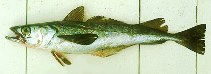 Merluccius gayi
ภาพโดย Busse, K.
รูปภาพหลายรูป | Google image
ภาพโดย Busse, K.
การจำแนกประเภท / ชื่อ ชื่อสามัญ | ชื่อพ้อง | Catalog of Fishes(สกุล, ชนิด) | ITIS | CoL | WoRMS | Cloffa
> Gadiformes (Cods) > Merlucciidae (Merluccid hakes)
Etymology: Merluccius: Latin, mar, maris = the sea + Latin, lucius = pike (Ref. 45335).
Eponymy: Claude Gay (1800–1873) was a French botanist. [...] (Ref. 128868), visit book page.
More on author: Guichenot.
Etymology: Merluccius: Latin, mar, maris = the sea + Latin, lucius = pike (Ref. 45335).
Eponymy: Claude Gay (1800–1873) was a French botanist. [...] (Ref. 128868), visit book page.
More on author: Guichenot.
Taxonomic Remarks
A different species/subspecies is recognized on the Peruvian coasts Merluccius peruanus Ginsburg, 1954, that is recognized in FishBase as a provisionally valid species. More studies are needed to clearly differentiate it (March 2021).
สิ่งแวดล้อม : สิ่งแวดล้อม / เขตภูมิอากาศ / ระดับความลึก / ระยะการกระจายสินค้า นิเวศวิทยา
เกี่ยวกับทะเล,น้ำเค็ม สัตว์หน้าดินในเขตน้ำลึก; สัตว์น้ำที่อาศัยและอพยพภายในทะเลเท่านั้น; ระดับความลึก 50 - 500 m (Ref. 1371). Deep-water; 5°S - 46°S, 81°W - 69°E (Ref. 54583)
การแพร่กระจาย อาณาเขต | พื้นที่จำแนกตาม FAO | ระบบนิเวศหลายระบบ | การปรากฏขึ้น,การเกิดขึ้น,พบ | ตำแหน่งบนแผนที่ | การแนะนำ | Faunafri
Southeast Pacific: off the coast of Chile from Arica to Chiloé Island.
ความยาวเมื่อครบกำหนดครั้งแรก / ขนาด / น้ำหนัก / อายุ
วัยเจริญพันธุ์: Lm ?, range 32 - ? cm
Max length : 87.0 cm TL เพศผู้/กระเทย; (Ref. 1371); common length : 50.0 cm TL เพศผู้/กระเทย; (Ref. 1371)
Max length : 87.0 cm TL เพศผู้/กระเทย; (Ref. 1371); common length : 50.0 cm TL เพศผู้/กระเทย; (Ref. 1371)
คำอธิบายสั้นๆ เครื่องมือที่ใช้ในการแยกชนิดสัตว์,สิ่งมีชีวิตออกจากกัน | สัณฐานวิทยา | ความยาวต่างๆ
เงี่ยงครีบหลัง (รวม) : 1; ก้านครีบอ่อนที่หาง (รวม) : 45 - 54; เงี่ยงครีบก้น: 0; ก้านครีบอ่อนที่ก้น: 36 - 42; สัตว์มีกระดูกสันหลัง: 49 - 53. Caudal fin margin usually concave. Color is silvery on back, silvery whitish on belly. M. gayi gayi and M. gayi peruanus differ by the total number of vertebrae, total number of gill rakers and relative length of head (Ref. 1371).
Body shape (shape guide): fusiform / normal; Cross section: oval.
Body shape (shape guide): fusiform / normal; Cross section: oval.
Occurs from the shallow continental shelf to the upper continental slope (Ref. 1371). Sometimes found off the bottom or in midwater (Ref. 1371). Migrates vertically to midwater at night to feed on fishes, squids and euphausiids (Ref. 27363). Moves to southern coastal areas in summer and migrates to northern deeper waters (200-500 m depth) in winter and spring (Ref. 27363). Spawning occurs at the end of the winter and during the southern spring (Ref. 58452). Marketed fresh and frozen (Ref. 1371) and eaten steamed, fried, boiled and microwaved (Ref. 9988). Also utilized as fishmeal (Ref. 1371).
วงจรชีวิตและพฤติกรรมการผสมพันธุ์ วัยเจริญพันธุ์ | การสืบพันธุ์ | การวางไข่ | เซลสืบพันธ์ของเพศเมีย(ไข่) | ความดกของไข่ | ตัวอ่อน
อ้างอิงหลัก
อัพโหลดข้อมูลอ้างอิงของคุณ | อ้างอิง | ผู้ประสานงาน | ผู้ร่วมมือ
Cohen, D.M., T. Inada, T. Iwamoto and N. Scialabba, 1990. FAO species catalogue. Vol. 10. Gadiform fishes of the world (Order Gadiformes). An annotated and illustrated catalogue of cods, hakes, grenadiers and other gadiform fishes known to date. FAO Fish. Synop. 125(10). Rome: FAO. 442 p. (Ref. 1371)
สถานะบัญชีแดงของ IUCN (Ref. 130435: Version 2025-2 (Global))
Data deficient (DD) ; Date assessed: 01 May 2008
CITES
Not Evaluated
ภัยคุกคามต่อมนุษย์
Harmless
การใช้ของมนุษย์
การประมง: เน้นการพาณิชย์
FAO - การประมง: การลงจอด, โปรไฟล์สายพันธุ์; Publication: search | FishSource | ทะเลรอบๆเรา
ข้อมูลเพิ่มเติม
พลวัตของประชากร
พารามิเตอร์การเจริญเติบโต
อายุสูงสุด / ขนาด
ความยาว-น้ำหนักสัมพันธ์
ความยาว-ความยาวสัมพันธ์
ความยาว-ความถี่
การแปลงมวล
การทดแทนที่
อุดมสมบรูณ์
พารามิเตอร์การเจริญเติบโต
อายุสูงสุด / ขนาด
ความยาว-น้ำหนักสัมพันธ์
ความยาว-ความยาวสัมพันธ์
ความยาว-ความถี่
การแปลงมวล
การทดแทนที่
อุดมสมบรูณ์
วงจรชีวิต
การสืบพันธุ์
วัยเจริญพันธุ์
ความสมบูรณ์พันธุ์/เหงือกที่เกี่ยวข้อง
ความดกของไข่
การวางไข่
การรวมตัวของสปอน
เซลสืบพันธ์ของเพศเมีย(ไข่)
การพัฒนาไข่
ตัวอ่อน
พลวัตของสัตว์น้ำวัยอ่อน
การสืบพันธุ์
วัยเจริญพันธุ์
ความสมบูรณ์พันธุ์/เหงือกที่เกี่ยวข้อง
ความดกของไข่
การวางไข่
การรวมตัวของสปอน
เซลสืบพันธ์ของเพศเมีย(ไข่)
การพัฒนาไข่
ตัวอ่อน
พลวัตของสัตว์น้ำวัยอ่อน
การแพร่กระจาย
อาณาเขต
พื้นที่จำแนกตาม FAO
ระบบนิเวศหลายระบบ
การปรากฏขึ้น,การเกิดขึ้น,พบ
การแนะนำ
BRUVS - วิดีโอ
อาณาเขต
พื้นที่จำแนกตาม FAO
ระบบนิเวศหลายระบบ
การปรากฏขึ้น,การเกิดขึ้น,พบ
การแนะนำ
BRUVS - วิดีโอ
กายวิภาคศาสตร์
พื้นที่เหงือก
สมอง
หินโสต
พื้นที่เหงือก
สมอง
หินโสต
สรีรวิทยา
องค์ประกอบของร่างกาย
สารอาหาร
การใช้ออกซิเจน
ประเภทการว่ายน้ำ
ระดับความเร็วในการว่ายน้ำ
เม็ดสีที่มองเห็นได้
เสียงปลา
โรคและปรสิต
ความเป็นพิษ (LC50s)
องค์ประกอบของร่างกาย
สารอาหาร
การใช้ออกซิเจน
ประเภทการว่ายน้ำ
ระดับความเร็วในการว่ายน้ำ
เม็ดสีที่มองเห็นได้
เสียงปลา
โรคและปรสิต
ความเป็นพิษ (LC50s)
พันธุศาสตร์
จีโนม
พันธุศาสตร์
ความไม่สมดุลทางเชื้อชาติ
อัตราพันธุกรรม
ความหลากหลายทางพันธุกรรม
จีโนม
พันธุศาสตร์
ความไม่สมดุลทางเชื้อชาติ
อัตราพันธุกรรม
ความหลากหลายทางพันธุกรรม
เกี่ยวข้องกับมนุษย์
ระบบการเพาะเลี้ยงสัตว์น้ำ
ประวัติการเพาะเลี้ยงสัตว์น้ำ
สายพันธุ์
กรณีซิเกวเทอรา
แสตมป์ เหรียญ อื่นๆ
ระบบการเพาะเลี้ยงสัตว์น้ำ
ประวัติการเพาะเลี้ยงสัตว์น้ำ
สายพันธุ์
กรณีซิเกวเทอรา
แสตมป์ เหรียญ อื่นๆ
เครื่องมือ
หนังสืออิเล็กทรอนิกส์ | คู่มือภาคสนาม | เครื่องมือที่ใช้ในการแยกชนิดสัตว์,สิ่งมีชีวิตออกจากกัน | ผู้มีความชำนาญในเรื่องความถี่ของความยาว | เครื่องมือในการศึกษาชีวประวัติ | ตำแหน่งบนแผนที่ |
จับ-MSY |
รายงานพิเศษ
ตรวจสอบการบำรุงรักษาตู้ปลา | ตรวจสอบเอกสารข้อเท็จจริงเกี่ยวกับสายพันธุ์ | ตรวจสอบเอกสารข้อเท็จจริงเกี่ยวกับการเพาะเลี้ยงสัตว์น้ำ
ดาวน์โหลด XML
หน้าสรุป | ข้อมูลสำคัญ | ชื่อสามัญ | ภาพถ่าย
แหล่งที่มาจากอินเตอร์เน็ต
AFORO (otoliths) | Aquatic Commons | BHL | Cloffa | Websites from users | Check FishWatcher | CISTI | Catalog of Fishes: สกุล, ชนิด | DiscoverLife | ECOTOX | FAO - การประมง: การลงจอด, โปรไฟล์สายพันธุ์; Publication: search | Faunafri | Fishipedia | Fishtrace | GloBI | Google Books | Google Scholar | Google | IGFA World Record | OneZoom | Open Tree of Life | OsteoBase: skull, spine | Otolith Atlas of Taiwan Fishes | PubMed | Reef Life Survey | Socotra Atlas | TreeBase | แผนภูมิชีวิตแบบต้นไม้ | Wikipedia: Go, ค้นหา | World Records Freshwater Fishing | บันทึกทางด้านสัตววิทยา
การประมาณค่าตามแบบจำลอง
อุณหภูมิที่ต้องการ (อ้างอิง 123201): 9.3 - 14, mean 10.9 °C (based on 38 cells).
ดัชนีความหลากหลายทางวิวัฒนาการ (อ้างอิง 82804): PD50 = 0.5000 [Uniqueness, from 0.5 = low to 2.0 = high].
Bayesian length-weight: a=0.01413 (0.00630 - 0.03168), b=3.05 (2.85 - 3.25), in cm total length, based on LWR estimates for this species & (Sub)family-body (Ref. 93245).
ระดับชั้นอาหาร (อ้างอิง 69278): 4.3 ±0.6 se; based on diet studies.
ความสามารถในการกลับคืนสู่ปกติ (อ้างอิง 120179): ขนาดกลาง, เวลาต่ำสุดที่จะทำให้ประชากรเพิ่มขึ้นเป็น 2 เท่าใช้เวลา 1.4 - 4.4 ปี (K=0.1-0.2; tm=2).
Prior r = 0.28, 95% CL = 0.18 - 0.42, Based on 3 full stock assessments.
สารอาหาร (Ref. 124155): Calcium = 8.76 [3.94, 31.98] mg/100g; Iron = 0.342 [0.068, 0.925] mg/100g; Protein = 17.6 [16.3, 18.9] %; Omega3 = 0.216 [0.103, 0.404] g/100g; Selenium = 22 [10, 49] μg/100g; VitaminA = 11.9 [2.5, 54.2] μg/100g; Zinc = 0.223 [0.154, 0.356] mg/100g (wet weight); based on nutrient studies.