>
Perciformes/Zoarcoidei (Eelpouts and pricklebacks) >
Zoarcidae (Eelpouts) > Lycodinae
Etymology: Lycodes: Greek, lykos = wolf + Greek, suffix, oides = similar to (Ref. 45335).
Eponymy: Rear-Admiral Sir James Clark Ross (1800–1862) discovered the Ross Sea and the Ross Ice Shelf and an island (1841) which Scott, on his first expedition, named Ross Island in his honour. [...] (Ref. 128868), visit book page.
Environment: milieu / climate zone / profondeur / distribution range
Écologie
marin démersal; profondeur 42 - 365 m (Ref. 11976). Polar
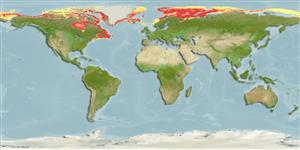
North Atlantic: just north of Iceland, northern Norway (Porsanger Fjord) and Barents Sea (but not in southern parts). Arctic Ocean: Kara Sea and Beaufort Sea.
Taille / Poids / Âge
Maturité: Lm ? range ? - ? cm
Max length : 31.0 cm TL mâle / non sexé; (Ref. 4695); poids max. publié: 63.60 g (Ref. 11976)
Description synthétique
Clés d'identification | Morphologie | Morphométrie
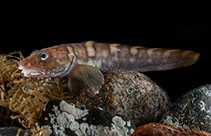
Vertèbres: 98 - 99. Pelvic fins small (Ref. 4695). Dark, with 5-8 short, light cross-bands on back and dorsal fins; light band (or spots) at nape; transverse light bands on body, never becoming a network in older fishes (Ref. 4695).
Body shape (shape guide): elongated.
Found on muddy bottoms (Ref. 4695). Benthic (Ref. 58426). Smaller individuals prey on smaller species like amphipods, isopods and small bivalves while larger ones prey on shrimps, euphausiids and fish (Ref. 13532).
Life cycle and mating behavior
Maturité | Reproduction | Frai | Œufs | Fécondité | Larves
Andriashev, A.P., 1986. Zoarcidae. p. 1130-1150. In P.J.P. Whitehead, M.-L. Bauchot, J.-C. Hureau, J. Nielsen and E. Tortonese (eds.) Fishes of the North-eastern Atlantic and the Mediterranean. volume 3. UNESCO, Paris. (Ref. 4695)
Statut dans la liste rouge de l'IUCN (Ref. 130435: Version 2025-1)
Menace pour l'homme
Harmless
Utilisations par l'homme
Outils
Articles particuliers
Télécharger en XML
Sources Internet
Estimates based on models
Preferred temperature (Réf.
123201): -1.6 - 2.6, mean -0.5 °C (based on 2194 cells).
Phylogenetic diversity index (Réf.
82804): PD
50 = 0.5000 [Uniqueness, from 0.5 = low to 2.0 = high].
Bayesian length-weight: a=0.00269 (0.00141 - 0.00516), b=3.22 (3.06 - 3.38), in cm total length, based on LWR estimates for this Genus-body shape (Ref.
93245).
Niveau trophique (Réf.
69278): 3.5 ±0.55 se; based on food items.
Résilience (Réf.
120179): Faible, temps minimum de doublement de population : 4,5 à 14 années (Preliminary K or Fecundity.).
Fishing Vulnerability (Ref.
59153): Low vulnerability (21 of 100).
🛈