



Sube tu fotos y Vídeos
Imágenes | Google image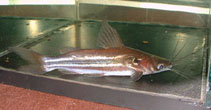 Mystus mysticetus
Foto de James, A.
Imágenes | Google image
Foto de James, A.
Clasificación / Nombres Nombres comunes | Sinónimos | Catalog of Fishes(Género, Especie) | ITIS | CoL | WoRMS | Cloffa
> Siluriformes (Catfishes) > Bagridae (Bagrid catfishes)
Etymology: Mystus: Greek, mystax = whiskered, used by Belon in 1553 to describe all fishes with whiskers (Ref. 45335).
More on author: Roberts.
Etymology: Mystus: Greek, mystax = whiskered, used by Belon in 1553 to describe all fishes with whiskers (Ref. 45335).
More on author: Roberts.
Entorno: milieu / zona climática / rango de profundidad / gama de distribución Ecología
; agua dulce demersal; potamodromo (Ref. 51243). Tropical
Distribución Territorios | Áreas FAO | Ecosistemas | Ocurrencias, apariciones | Mapa de puntos | Introducciones | Faunafri
Tamaño / Peso / Edad
Descripción breve Claves de identificación | Morfología | Morfometría
Radios blandos anales: 13 - 15; Vértebra: 34 - 37. Differs from all other species of Mystus in having eyes lateral, rather than dorsolateral, so that they are about equally visible viewed either from above or from below head (in other species eyes usually cannot be seen at all from directly below). Mouth nearly terminal, less downturned than in any other species of striped Mystus. Serrae of pectoral spine smaller and less erect than in any other striped Mystus. Adipose fin short but very high, originating far behind dorsal fin, its length about twice and its height slightly less than eye diameter. Gill rakers increase in number throughout life faster than in any other Mystus. The anal fin has slightly more rays (13-15) than other striped Mystus of Thailand (usually 12 or less), and its posterior border is distinctly falcate. Cranial fontanel extends posteriorly to about midway between level of posterior border of eye and base of supraoccipital process. Maxillary barbel extends posteriorly to beyond anal fin or to end of middle caudal fin rays (Ref. 26663). Side of body with 3 faint dark and 2 whitish stripes (Ref. 43281).
Body shape (shape guide): elongated.
Body shape (shape guide): elongated.
Facultative air-breathing in the genus (Ref. 126274); Often found in mixed schools with M. multiradiatus which congregate around tree limbs and other solid objects, browsing the hard surfaces for zooplankton, aquatic insects, crustaceans and rotifers. Move into flooded forests during the rainy season and returns to rivers in November and December in the lower Mekong. Oviparous, distinct pairing possibly like other members of the same family (Ref. 205). Marketed fresh or smoked on a skewer (Ref. 12693).
Ciclo vital y comportamiento de apareamiento Madurez | Reproducción | Puesta | Huevos | Fecundidad | Larva
Referencia principal
Suba sus referencias | Referencias | Coordinador | Colaboradores
Rainboth, W.J., 1996. Fishes of the Cambodian Mekong. FAO species identification field guide for fishery purposes. FAO, Rome, 265 p. (Ref. 12693)
Situación en la Lista Roja de la UICN (Ref. 130435: Version 2025-2 (Global))
Least Concern (LC) ; Date assessed: 20 February 2011
CITES
Not Evaluated
Amenaza para el ser humano
Harmless
Usos humanos
Pesquerías: comercial
FAO - Publication: search | FishSource |
Más información
Ecología Trófica
Alimentos (presas)
Composición de la dieta
consumo de alimento
Raciones de comida
Despredadores
Alimentos (presas)
Composición de la dieta
consumo de alimento
Raciones de comida
Despredadores
Dinámica de la población
Coeficiente del crecimiento para
Edades / tallas máximas
Longitud-peso rel.
Longitud-longitud rel.
Longitud-frecuencias
Conversión de masas
Reclutamiento
Abundancia
Coeficiente del crecimiento para
Edades / tallas máximas
Longitud-peso rel.
Longitud-longitud rel.
Longitud-frecuencias
Conversión de masas
Reclutamiento
Abundancia
Ciclo de vida
Reproducción
Madurez
Madurez/Gills rel.
Fecundidad
Puesta
Agregaciones de desove
Huevos
Desarrollo de los huevos
Larva
Dinámica larvaria
Reproducción
Madurez
Madurez/Gills rel.
Fecundidad
Puesta
Agregaciones de desove
Huevos
Desarrollo de los huevos
Larva
Dinámica larvaria
Distribución
Territorios
Áreas FAO
Ecosistemas
Ocurrencias, apariciones
Introducciones
BRUVS - Vídeos
Territorios
Áreas FAO
Ecosistemas
Ocurrencias, apariciones
Introducciones
BRUVS - Vídeos
Anatomía
Superficie branquial
Cerebro
Otolito
Superficie branquial
Cerebro
Otolito
Fisiología
Composición corporal
Nutrientes
Consumo del oxígeno
Tipo de natación
Velocidad de natación
Pigmentos visuales
Sonido de peces
Enfermedades y parásitos
Toxicidad (CL50)
Composición corporal
Nutrientes
Consumo del oxígeno
Tipo de natación
Velocidad de natación
Pigmentos visuales
Sonido de peces
Enfermedades y parásitos
Toxicidad (CL50)
Relacionados con el ser humano
Sistemas de acuicultura
Perfiles de acuicultura
Razas
Ciguatera cases
Sellos, monedas, varios
Sistemas de acuicultura
Perfiles de acuicultura
Razas
Ciguatera cases
Sellos, monedas, varios
Herramientas
Cuestionario orgánico | Libro electrónico | Guía de campo | Claves de identificación | Asistente para frecuencias de tallas | Herramienta de ciclo de vida | Mapa de puntos |
Catch-MSY |
Informes especiales
Comprobar el mantenimiento del acuario | Buscar fichas sobre especies | Consulte las hojas informativas sobre acuicultura
Descargar XML
Fuentes de Internet
AFORO (otoliths) | Aquatic Commons | BHL | Cloffa | Websites from users | Check FishWatcher | CISTI | Catalog of Fishes: Género, Especie | DiscoverLife | ECOTOX | FAO - Publication: search | Faunafri | Fishipedia | Fishtrace | GloBI | Google Books | Google Scholar | Google | IGFA World Record | OneZoom | Open Tree of Life | Otolith Atlas of Taiwan Fishes | PubMed | Reef Life Survey | Socotra Atlas | TreeBase | Árbol de la vida | Wikipedia: Go, búsqueda | World Records Freshwater Fishing | Zoobank | Expediente Zoológico
Estimaciones basadas en modelos
Índice de diversidad filogenética (Referencia 82804): PD50 = 0.5000 [Uniqueness, from 0.5 = low to 2.0 = high].
Bayesian length-weight: a=0.00813 (0.00354 - 0.01865), b=2.94 (2.77 - 3.11), in cm total length, based on LWR estimates for this Genus-body shape (Ref. 93245).
Nivel trófico (Referencia 69278): 3.1 ±0.42 se; based on food items.
Resiliencia (Referencia 120179): Medio, población duplicada en un tiempo mínimo de 1.4-4.4 años (Assuming Fec < 10,000).