>
Cypriniformes (Carps) >
Leuciscidae (Minnows) > Leuciscinae
Eponymy: The etymology is not explained by Bonaparte, and it may not be an eponym. However, Telestes was the name of the last king of ancient Corinth (748 BC) and of a poet of 5th-century Greece, so the name might refer to one of these. (Ref. 128868), visit book page.
More on author: Heckel.
Environment: milieu / Zona climática / intervalo de profundidade / distribution range
Ecologia
; Água doce bentopelágico. Subtropical; 44°N - 41°N, 16°E - 20°E
Europe: Cetina drainage, Croatia.
Tamanho / Peso / Idade
Maturidade: Lm ? range ? - ? cm
Max length : 25.0 cm TL macho/indeterminado; (Ref. 556)
Descrição suscinta
Chaves de identificação | Morfologia | Morfometria
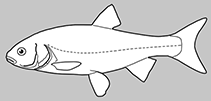
Diagnosed from its congeners by having the following characters: conspicuous black midlateral stripe; 58-66 + 3 scales along the lateral line; anal fin usually with 9½ branched rays; tip of snout rounded or blunt, snout projecting beyond tip of upper lip; dark brown peritoneum; and 6-8 gill rakers (Ref. 59043).
Body shape (shape guide): elongated.
Inhabits slows-flowing and still water (Ref. 59043). Occurs in water bodies on the low plains, with little current. Threatened due to pollution, habitat destruction and the introduction of other species (Ref. 26100).
Ciclo de vida ou comportamento de acasalamento
Maturidade | Reprodução | Desova | Ovos | Fecundidade | Larvas
Kottelat, M. and J. Freyhof, 2007. Handbook of European freshwater fishes. Publications Kottelat, Cornol and Freyhof, Berlin. 646 pp. (Ref. 59043)
Status na Lista Vermelha da UICN (Ref. 130435: Version 2025-1)
Ameaça para os humanos
Harmless
Uso pelos humanos
Pescarias: sem interesse
Ferramentas
Relatórios especiais
Baixar XML
Fontes da internet
Estimates based on models
Índice de diversidade filogenética (Ref.
82804): PD
50 = 0.5000 [Uniqueness, from 0.5 = low to 2.0 = high].
Bayesian length-weight: a=0.00813 (0.00374 - 0.01767), b=3.10 (2.92 - 3.28), in cm total length, based on LWR estimates for this (Sub)family-body shape (Ref.
93245).
Nível Trófico (Ref.
69278): 3.4 ±0.4 se; based on size and trophs of closest relatives
Resiliência (Ref.
120179): médio(a), tempo mínimo de duplicação da população 1,4 - 4,4 anos (Preliminary K or Fecundity.).
Fishing Vulnerability (Ref.
59153): Low vulnerability (15 of 100).
🛈